An uneven map
Linguists estimate that around 7,000 languages are spoken today, though the exact number depends on where one draws the line between a language and a dialect. They are distributed very unevenly. Papua New Guinea, with a population of around ten million, is home to more than 800 languages, the most of any country. Indonesia, Nigeria and India each have hundreds. By contrast, a handful of major languages, including English, Mandarin Chinese, Hindi, Spanish and Arabic, are spoken by billions of people as first or additional languages. Many languages have fewer than ten thousand speakers, and a large share are used only by small communities.
Why diversity clusters
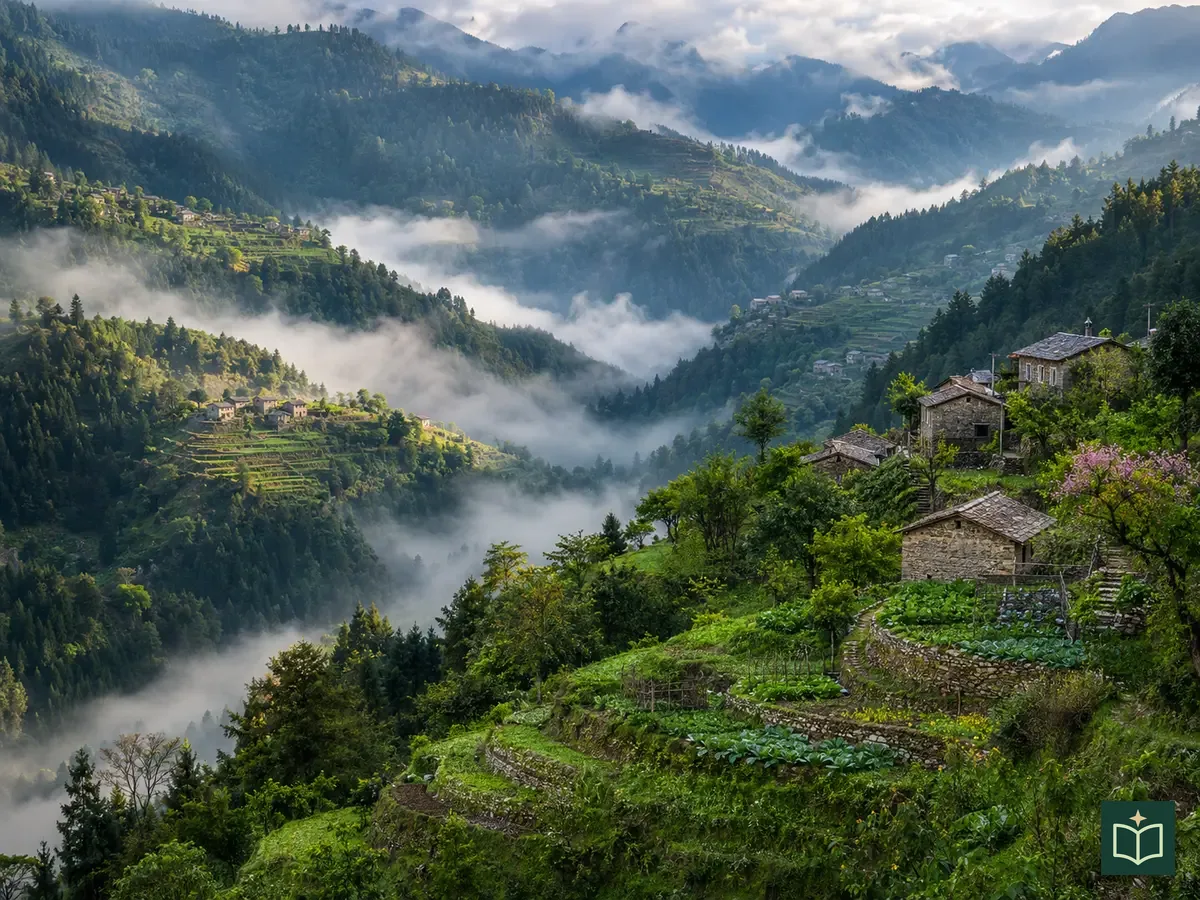
Language diversity tends to be highest in the tropics, in rugged terrain and on islands. Mountains and dense forest limit contact between communities, and small, self-sufficient farming societies have less need for a shared language with distant neighbours. Over generations, each group’s speech changes in its own way until varieties are no longer mutually intelligible. Research has also linked high diversity to long growing seasons, which make it easier for small groups to be self-sufficient. Conversely, open plains, large states, trade networks and empires tend to spread a few languages widely at the expense of others. Europe’s relatively low diversity partly reflects centuries of state-building.
Families that trace migrations
Languages are grouped into families descended from common ancestors. Indo-European includes languages from Hindi and Persian to English and Russian. Sino-Tibetan includes Chinese and Tibetan. The Afro-Asiatic family includes Arabic, Hebrew, Amharic and the Berber languages, along with ancient Egyptian. Austronesian spread across a vast area, from Madagascar to Hawaii and New Zealand, reflecting seafaring migrations over thousands of years. Niger–Congo contains the largest number of languages, including Swahili, Yoruba and Zulu. Comparing words and regular sound changes allows linguists to reconstruct ancestral languages and, combined with archaeology and genetics, to infer how and when peoples moved. Each family is, in effect, a record of ancient journeys.
Languages in the Gulf
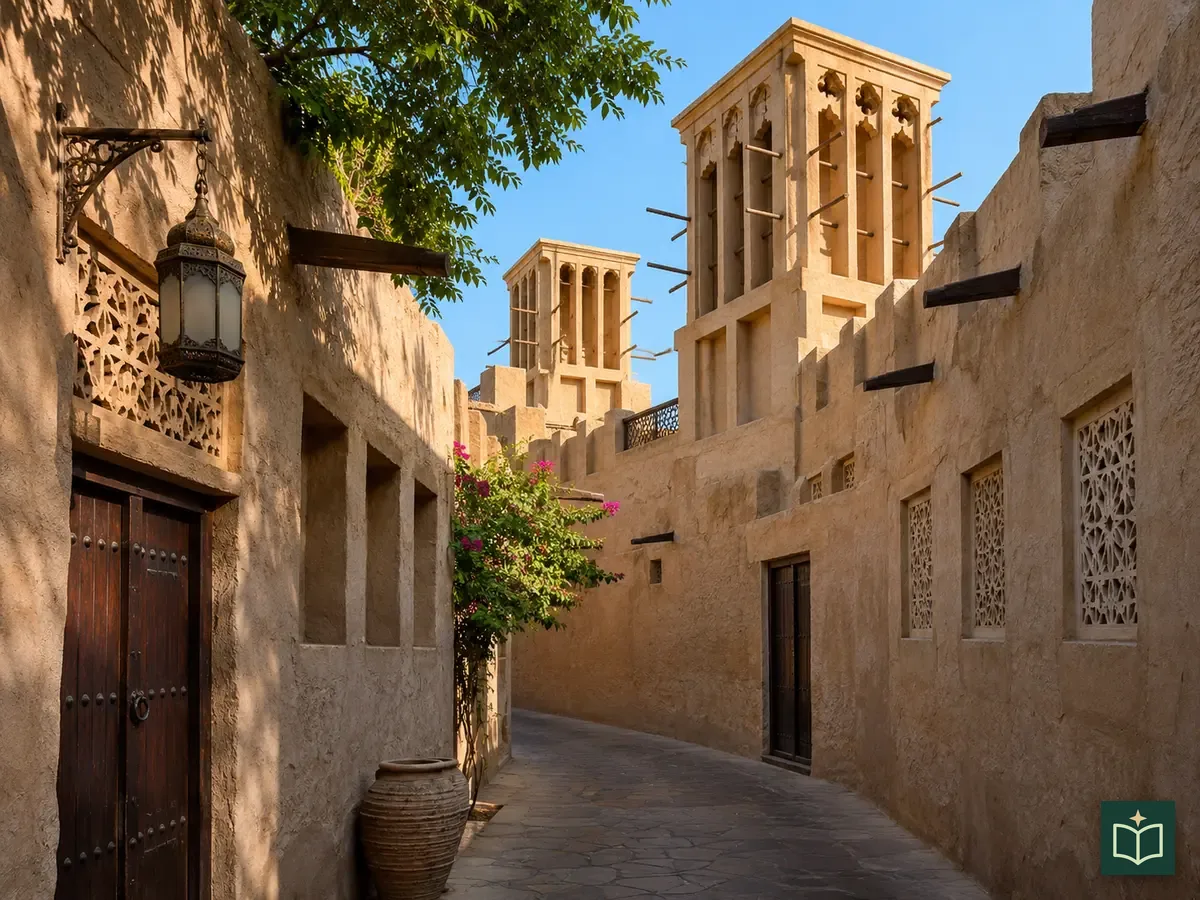
Arabic is the official language across the Gulf states, with a standard written form used in education and media alongside spoken Gulf dialects that differ from those of Egypt or the Levant. The region also hosts older languages, including the Modern South Arabian languages such as Mehri, Shehri, also called Jibbali, and Soqotri, spoken in Oman, Yemen and nearby areas, as well as Kumzari in Oman’s Musandam Peninsula. Because of their large international workforces, cities such as Dubai and Abu Dhabi are among the most linguistically diverse on Earth, where Hindi, Urdu, Malayalam, Tagalog, Bengali, Persian and English are heard daily alongside Arabic.
Endangered voices
Many languages are at risk. Catalogues estimate that around 40 percent of the world’s languages are endangered, many with fewer than 1,000 speakers left. The main cause is not people forgetting, but communities shifting to more widely used languages for education, work and media, so that children no longer learn their parents’ language at home. When the last fluent speakers die, a language becomes extinct, taking with it knowledge of local plants, places, history and ways of expressing ideas. UNESCO has declared 2022–2032 the International Decade of Indigenous Languages to support documentation, teaching and revitalisation around the world. Community-led programmes have proved most effective.
Revival and technology
Language decline is not always irreversible. Hebrew was revived as an everyday spoken language in the late nineteenth and twentieth centuries. Welsh, Māori and Hawaiian have gained speakers through immersion schools, broadcasting and official support. Digital technology brings both risk and opportunity: global platforms favour major languages, but recordings, dictionaries and keyboard tools make it easier to document and teach smaller ones. Machine translation and speech recognition are expanding to more languages, though many still lack the written data these tools need. For geographers, the language map remains one of the clearest records of how human history has unfolded across space.
Sources & further reading
Figures are rounded and widely published; check the linked organisations for the latest editions. These organisations do not endorse this website.