A continent too big to cross
In the 1850s, getting from the eastern United States to California was slow and risky. Travellers could go overland by wagon, a journey of four to six months across plains, deserts and mountains. Or they could sail around South America, or cross the isthmus of Panama, which took weeks and carried a risk of disease. The California Gold Rush and the admission of California as a state in 1850 made a better link urgent. Politicians argued for years about where a railroad should run, a question tangled up with disputes over slavery. The departure of Southern states in the Civil War cleared the way for a central route.
The government’s bargain
In 1862 President Abraham Lincoln signed the Pacific Railway Act. It chartered two companies: the Central Pacific, building east from Sacramento, California, and the Union Pacific, building west from Omaha, Nebraska, on the Missouri River. Instead of paying directly, the government gave each company strips of public land alongside the track, which they could sell, and loaned them government bonds for every mile completed. The loans were larger in mountains than on the plains. That system encouraged speed, because the more track a company laid, the more it earned. It also encouraged corner-cutting and fraud; the Crédit Mobilier scandal later exposed how insiders had profited.
Through the Sierra Nevada
The Central Pacific faced the hardest terrain first: the granite Sierra Nevada, just east of Sacramento. Crews blasted 15 tunnels, the longest of which, the Summit Tunnel, is about 500 metres through solid rock. Progress was sometimes only a few centimetres a day per face. Workers used black powder and later nitroglycerin, mixed on site, which was dangerous. Heavy winter snows buried camps and caused deadly avalanches, and the company later built kilometres of wooden snowsheds over the track. Every rail, locomotive and spike had to be shipped from the East Coast around South America or across Panama, because there were no ironworks in California capable of supplying them.
Who built it
The Central Pacific struggled to find enough workers until it began hiring Chinese immigrants in 1865. Chinese labourers soon made up around 90 per cent of its workforce; historians estimate that over the course of construction, between 15,000 and 20,000 Chinese workers were involved. They were paid less than white workers and often given the most dangerous tasks, and many died, though no reliable total exists. The Union Pacific relied heavily on Irish immigrants, Civil War veterans from both sides, freed African Americans and Mormon crews in Utah. Its route crossed the Great Plains, homeland of Lakota, Cheyenne, Arapaho and other nations, who resisted the line’s advance.
Promontory Summit
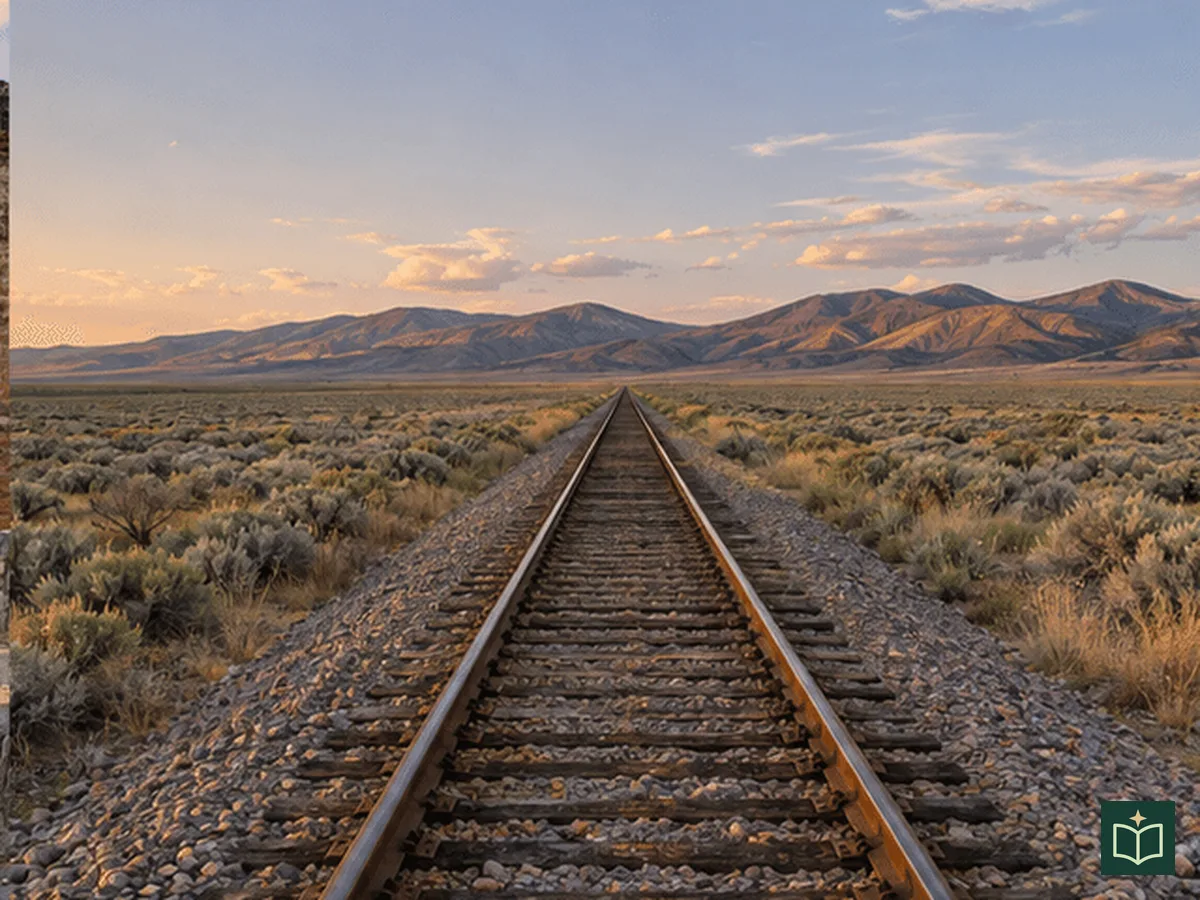
As the lines approached each other, the companies competed fiercely; on one day in April 1869 the Central Pacific laid ten miles of track. Because Congress had not fixed a meeting point, rival grading crews built parallel embankments past each other for many kilometres. Finally, a meeting point was agreed at Promontory Summit, in Utah Territory. On 10 May 1869, officials drove a ceremonial golden spike into the last tie, and a telegraph signal announced the news across the nation. In total, about 1,776 miles, or roughly 2,860 kilometres, of new track had been laid: about 690 miles by the Central Pacific and 1,086 by the Union Pacific.
A shrinking continent
With connections from the East, a journey from New York to San Francisco soon took about a week, rather than months. Freight and mail moved faster and far more cheaply, settlers poured west, and new towns sprang up along the line. The railroad tied California’s economy firmly to the rest of the country. The costs were also great. It sped the near-extermination of the bison, on which Plains peoples depended, and brought settlers and soldiers onto Indigenous lands. Chinese workers, so vital to its building, faced growing hostility, culminating in the Chinese Exclusion Act of 1882. Golden Spike National Historical Park now marks the meeting point.
Sources & further reading
- National Park Service · Golden Spike National Historical Park ↗
- Britannica · Transcontinental railroad ↗
Figures are rounded and widely published; check the linked organisations for the latest editions. These organisations do not endorse this website.