A continent called Sahul
During much of the last Ice Age, so much water was locked in ice sheets that sea levels were many tens of metres lower than today. Australia, New Guinea and Tasmania were joined into a single continent that scientists call Sahul. To the north-west, much of today’s Indonesia and Malaysia formed part of mainland Asia, a landmass known as Sunda. Between the two lay Wallacea, a chain of islands including Sulawesi, Timor and Lombok, separated by deep channels. Even at the lowest sea levels, those channels never dried out, so no land bridge ever joined Asia and Australia. Anyone reaching Sahul had to cross open water.
Crossing the sea
Reaching Sahul probably required a series of crossings between islands, at least one of them several tens of kilometres wide, depending on the route. Researchers have suggested two main paths: a northern route through Sulawesi to New Guinea, and a southern route through Timor to north-western Australia. No boats or rafts from this period survive, as they would have been made of wood, bamboo or bark. Yet the evidence shows that people did arrive, and in numbers. Genetic and demographic models suggest that the founding population was large enough to survive and grow, which implies deliberate, repeated voyages rather than a single accidental drift.
How old is the evidence?
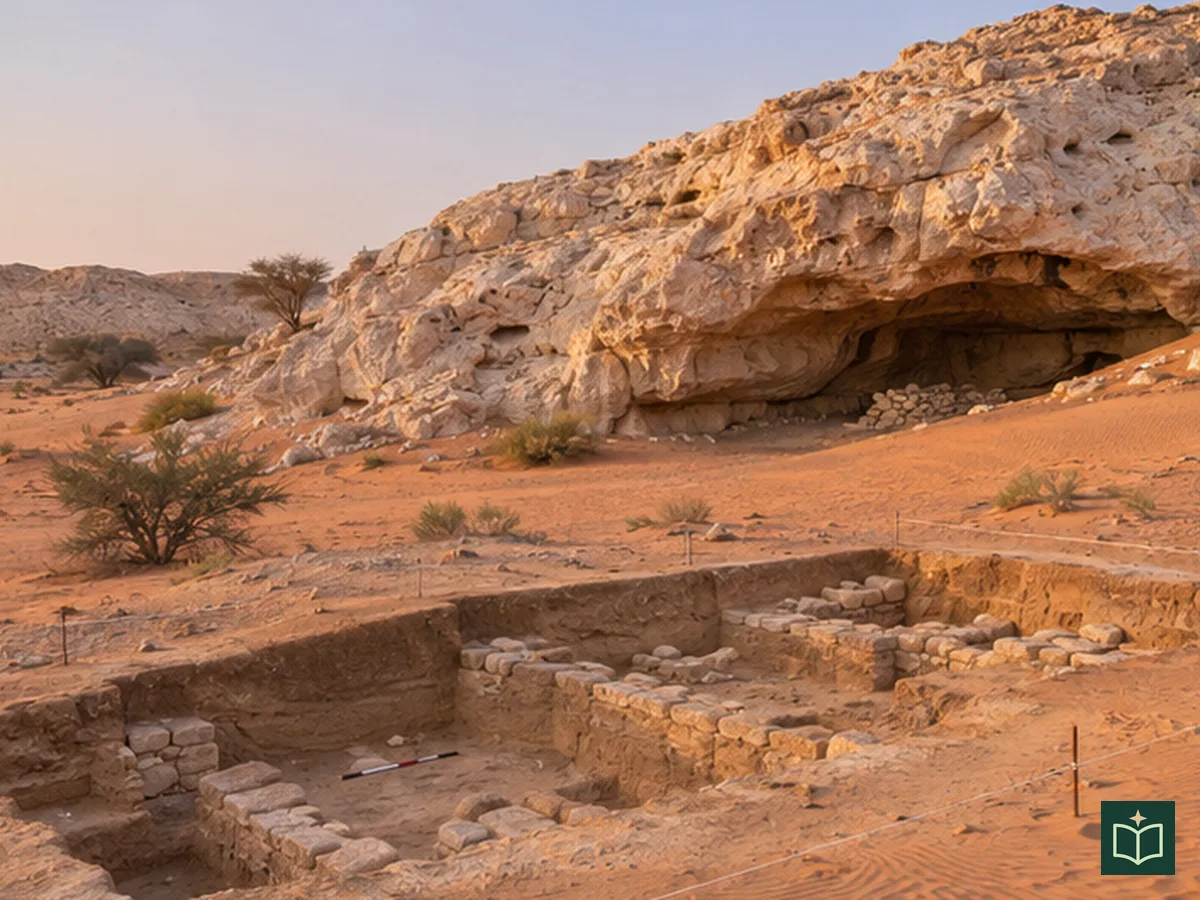
Dating the first arrival is difficult, because sea levels later rose and drowned the ancient coastlines where the earliest camps would have been. The oldest dates come from Madjedbebe, a rock shelter in Arnhem Land, in the Northern Territory, where excavations reported stone tools, ground ochre and fragments of ground-edge axes in layers dated to about 65,000 years ago. Some researchers question how securely those artefacts are tied to their layers. A broadly accepted minimum is at least 50,000 years, supported by several other sites. That makes Australia’s settlement one of the earliest long-distance movements of modern humans after they spread out of Africa.
Lake Mungo and early ritual
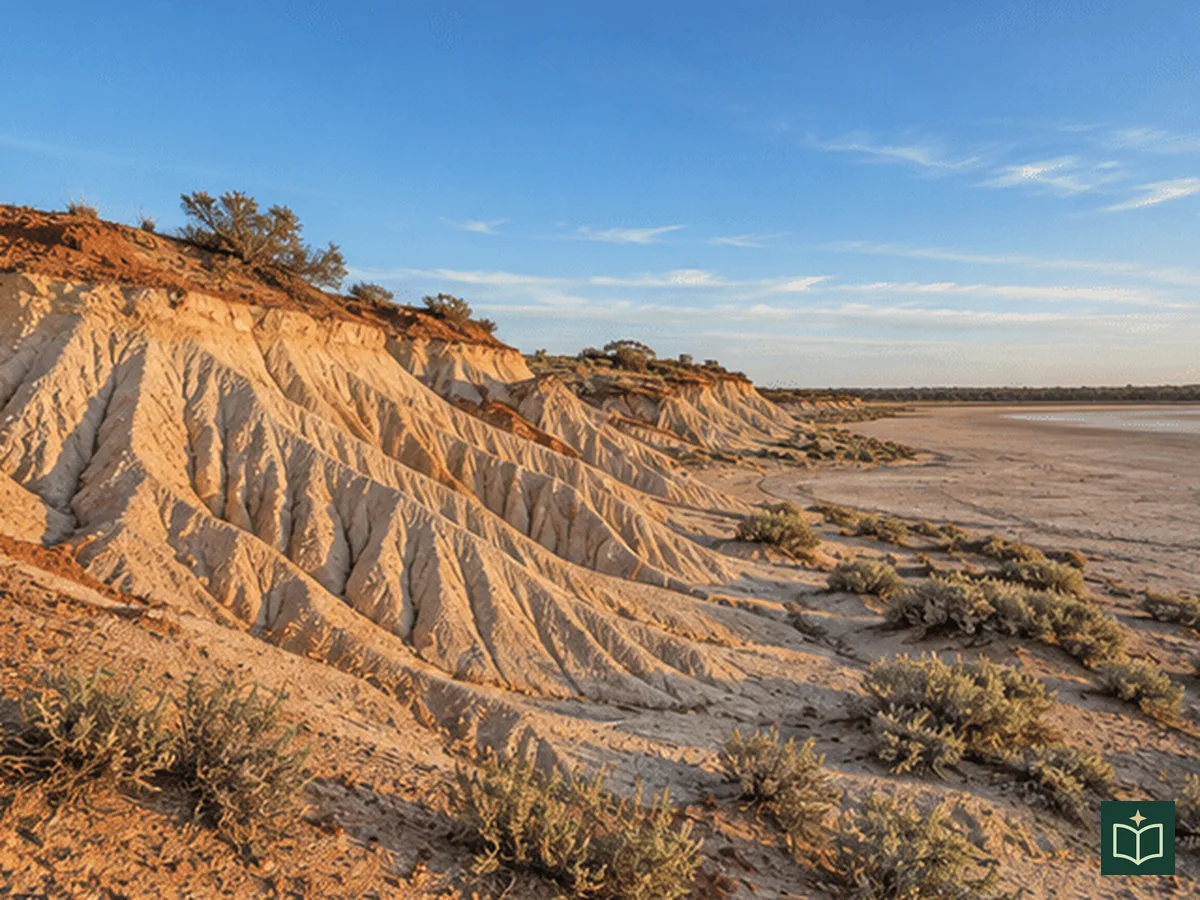
Some of the most remarkable early evidence comes from the Willandra Lakes in western New South Wales, now dry. In 1968 the geologist Jim Bowler found cremated remains of a young woman, known as Mungo Lady, and in 1974 the burial of a man, Mungo Man, laid on his back and sprinkled with red ochre. Both are about 40,000 years old and among the oldest known ritual burials in the world. The Willandra Lakes were listed as a UNESCO World Heritage Site in 1981. In 2017 Mungo Man’s remains were returned to his traditional custodians, the Barkindji, Mutthi Mutthi and Ngiyampaa peoples, for reburial.
Adapting to a whole continent
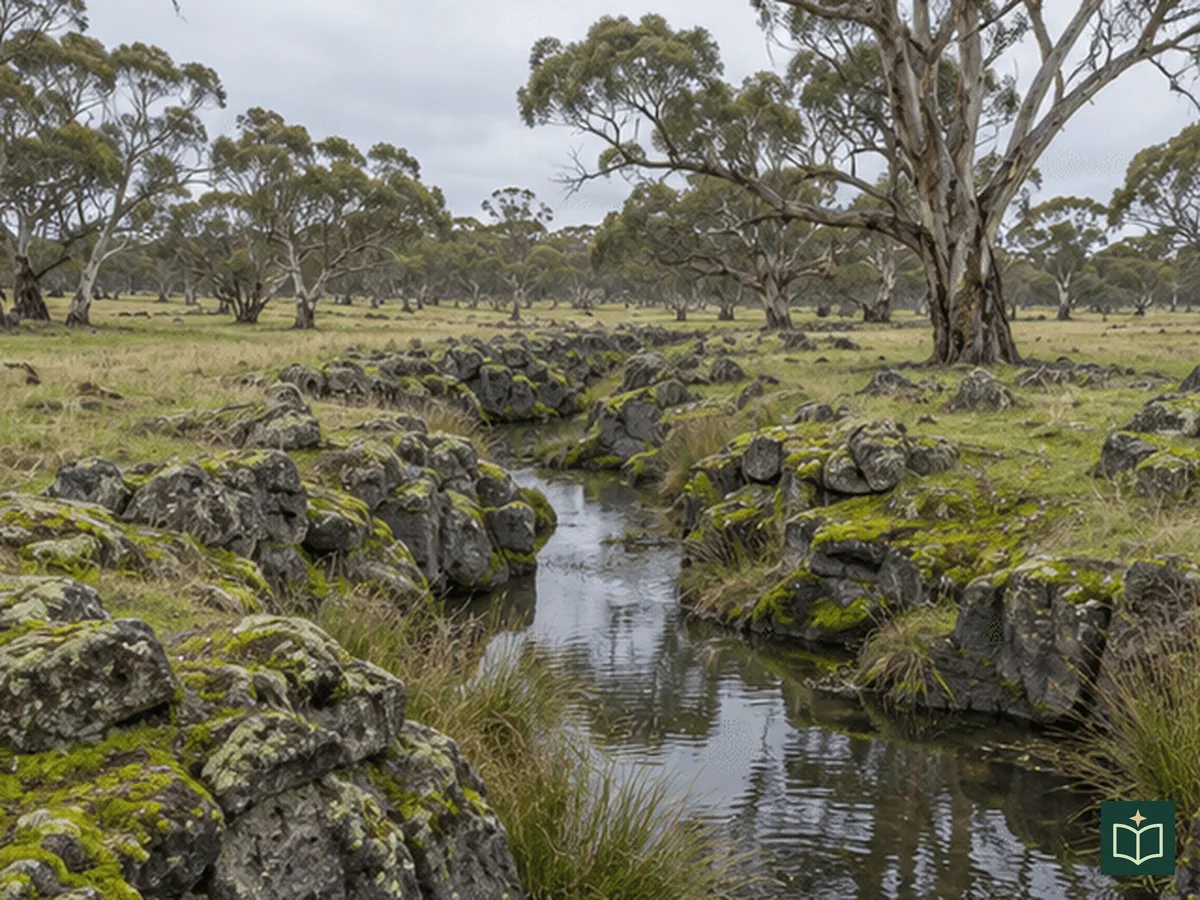
From their arrival points, people spread across Sahul, adapting to tropical coasts, rainforests, temperate woodlands, high mountains and arid deserts. Sites show people living in the cold south-west of Tasmania during the coldest part of the last Ice Age, and in the deserts of the interior. Rock art across the continent is among the oldest in the world; a painting of a kangaroo in the Kimberley region has been dated to about 17,300 years ago. Australia’s megafauna, including giant kangaroos, huge wombat-like diprotodons and large flightless birds, disappeared after humans arrived. How far people, climate change or both caused those extinctions remains debated.
The world’s oldest continuous cultures
As the ice melted, rising seas separated Tasmania around 12,000 to 10,000 years ago and later flooded the land bridge to New Guinea. Aboriginal and Torres Strait Islander peoples continued to develop rich, diverse cultures. By the time British colonists arrived in 1788, more than 250 Aboriginal languages were spoken, with many more dialects. Genetic studies indicate that Aboriginal Australians descend from one of the earliest groups to leave Africa, with a deep and long-continuous connection to the land. Aboriginal knowledge, held in Country, stories, songlines and law, describes this connection in its own terms, and remains living culture rather than history alone.
Sources & further reading
- AIATSIS · Australian Institute of Aboriginal and Torres Strait Islander Studies ↗
- UNESCO World Heritage · Willandra Lakes Region ↗
- Australian Museum ↗
Figures are rounded and widely published; check the linked organisations for the latest editions. These organisations do not endorse this website.