Before anaesthesia
For most of history, surgery was an ordeal of last resort. Patients were held down by assistants while surgeons cut as fast as they could. Alcohol, opium and other remedies dulled pain only slightly, and many patients went into shock. Speed was the surgeon's chief skill: the London surgeon Robert Liston was famous for amputating a leg in a few minutes or less. Operations inside the abdomen or chest were rarely attempted. Fear of the knife meant that many people avoided surgery until it was too late. There were earlier efforts at general anaesthesia, notably by the Japanese surgeon Hanaoka Seishū, who operated under a herbal preparation in 1804.
Laughing gas and ether
In 1800 the British chemist Humphry Davy noticed that nitrous oxide, known as laughing gas, relieved pain, and suggested it might be used in surgery, but the idea was not taken up. In the following decades both nitrous oxide and ether were inhaled at parties and stage shows for fun. In Georgia, the physician Crawford Long used ether during minor operations from 1842, but did not publish his results until later. In 1844 the dentist Horace Wells, of Connecticut, used nitrous oxide for tooth extractions. When he tried to demonstrate it in Boston in 1845, the patient cried out, and the audience judged it a failure.
Ether Day in Boston
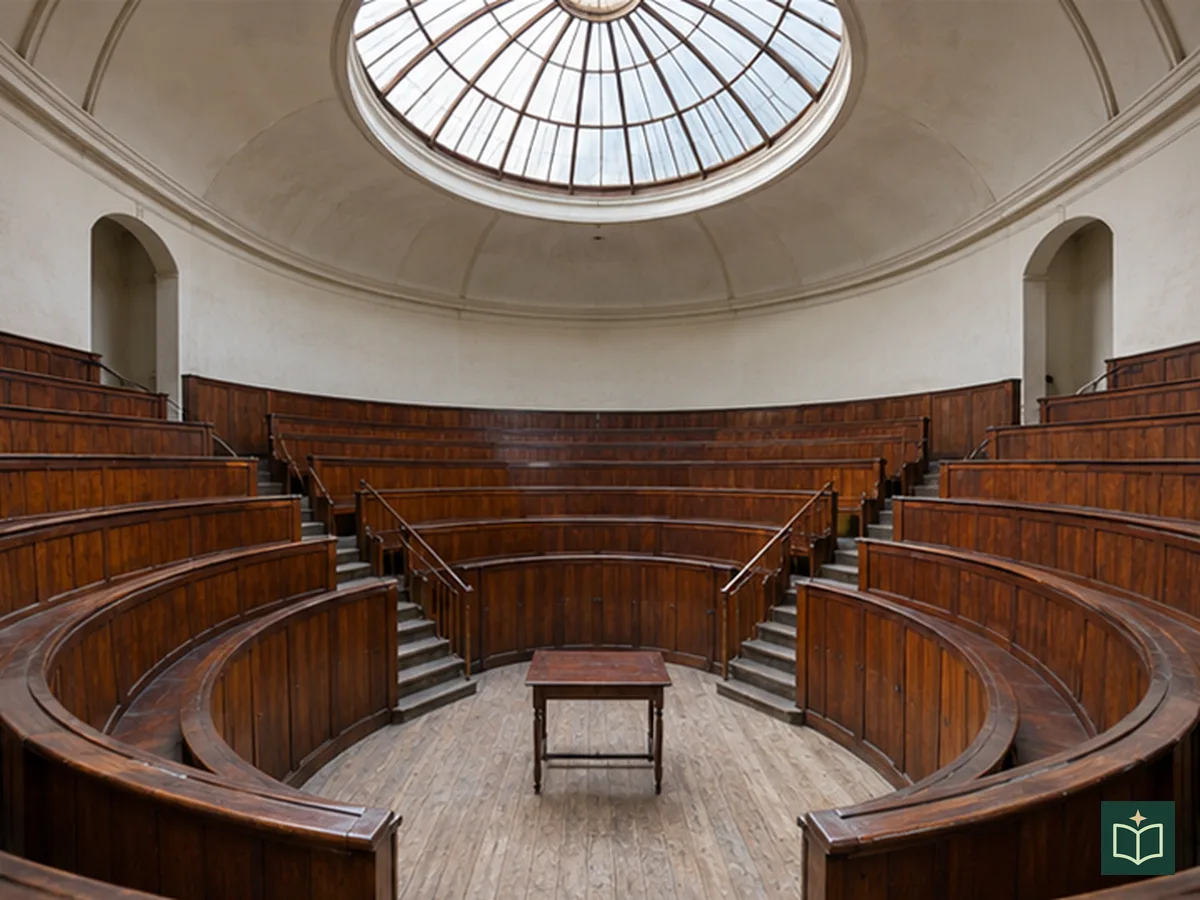
Wells's former partner, the Boston dentist William Morton, experimented with sulphuric ether, a more powerful agent. On 16 October 1846, in the operating theatre at Massachusetts General Hospital, Morton administered ether to a patient named Edward Gilbert Abbott. The senior surgeon, John Collins Warren, then removed a tumour from Abbott's neck while the patient lay quietly. Abbott later said he had felt no pain, only some awareness. The demonstration, before doctors and students, convinced the medical world. The theatre, now known as the Ether Dome, survives as a historic site. Weeks later the physician Oliver Wendell Holmes suggested the term anaesthesia, from the Greek for 'without sensation'.
A rapid spread
News crossed the Atlantic by ship within weeks. In December 1846 Liston in London amputated a leg under ether, and surgeons across Europe quickly followed. In November 1847 the Edinburgh obstetrician James Young Simpson introduced chloroform, which was easier to administer and less irritating, though more dangerous to the heart. Its use in childbirth was controversial until 1853, when Queen Victoria accepted chloroform for the birth of her eighth child, Prince Leopold. The first recorded chloroform death, of a fifteen-year-old girl in England in 1848, showed the risks. Careful dosing became a specialist skill, and anaesthesia slowly developed into a medical field of its own.
A bitter dispute
The discovery did not bring its pioneers happiness. Morton tried to patent his ether preparation, disguising it with additives under the name Letheon, and spent years seeking official recognition and reward. Wells, Long and the chemist Charles Jackson, who had advised Morton, all claimed priority. Wells died in 1848 after a period of distress and chloroform addiction. Morton died in 1868, still embroiled in the bitter controversy. Historians today generally credit several people: Long for the first use, Wells for the first serious attempt to bring it to medicine, and Morton for the public demonstration that brought anaesthesia into everyday surgery.
What changed, and what did not
Anaesthesia transformed surgery's possibilities. Surgeons could now work slowly and carefully, attempting operations deep inside the body. But the immediate result was not always safer surgery. Infection remained the great killer, and longer operations in unclean conditions sometimes increased the danger. Only when Joseph Lister introduced antiseptic methods from 1867, based on the germ theory, did the full benefits emerge. Together, anaesthesia and antisepsis laid the twin foundations of modern surgery. Today anaesthetists use precisely controlled drugs and continuous monitoring, and the risk of death from anaesthesia itself is very low, but the principle established in 1846 remains the same.
Sources & further reading
- Massachusetts General Hospital · Paul S. Russell, MD Museum of Medical History and Innovation ↗
- Wood Library-Museum of Anesthesiology ↗
Figures are rounded and widely published; check the linked organisations for the latest editions. These organisations do not endorse this website.