A problem of writing
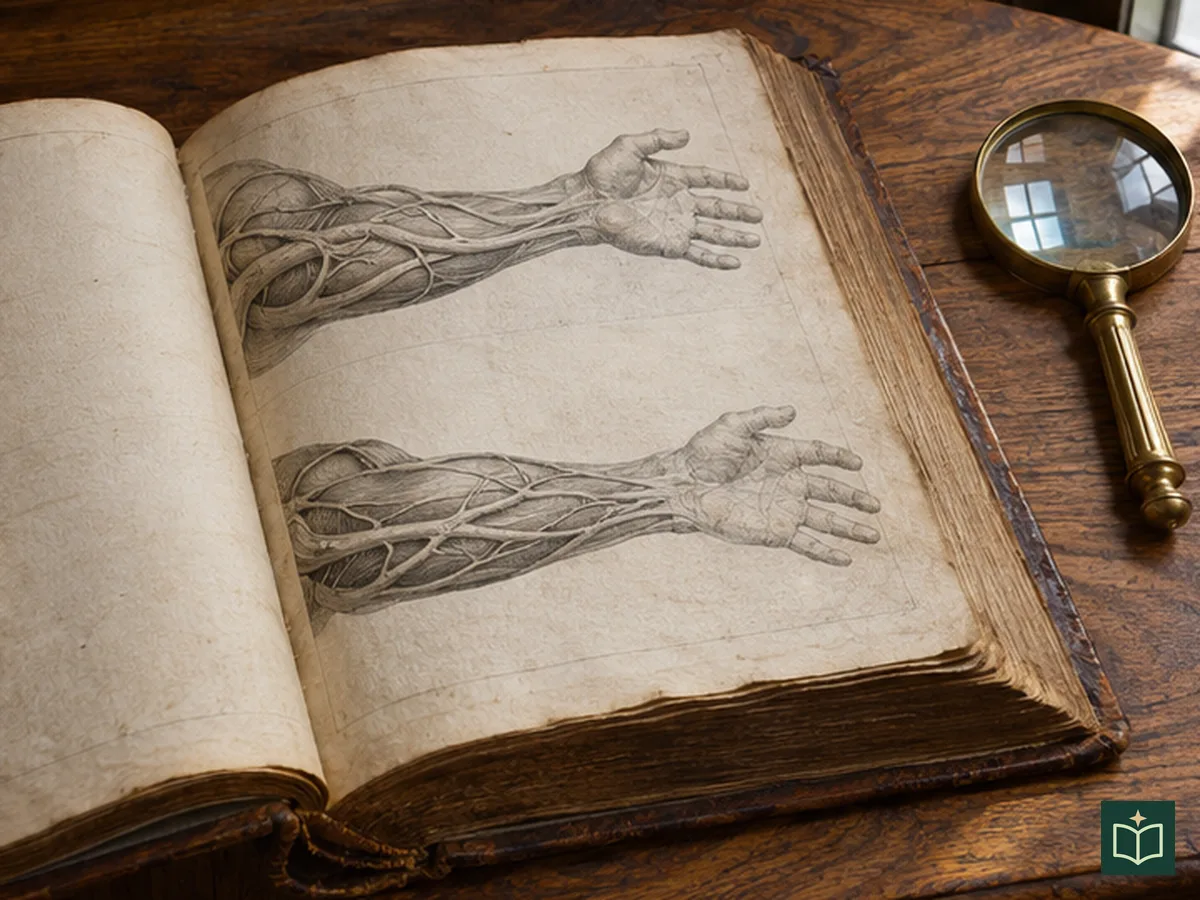
For centuries Koreans wrote mainly in Classical Chinese, using Chinese characters known in Korean as hanja. Korean and Chinese are very different languages, with different grammar and sounds, so writing Korean in characters was awkward. Several systems adapted characters to represent Korean words and endings, but they were complex. Learning to read required years of study, which only the elite could afford. King Sejong, who ruled the Joseon kingdom from 1418 to 1450, was a patron of science and scholarship. He sponsored work on rain gauges, sundials, water clocks and agriculture, and he wanted his people to be able to read and write their own language.
A new script in 1446
Sejong completed the new script in 1443 and announced it in 1446 in a document called Hunminjeongeum, meaning 'the correct sounds for instructing the people'. In his preface he noted that many ordinary people had things they wished to express but could not write them down, and that he had created 28 letters to help them. A longer companion volume, written by scholars of his Hall of Worthies, explained the design and gave examples. A copy of this explanatory edition was rediscovered in 1940 and was added to UNESCO's Memory of the World register in 1997. The modern name Hangul came into use in the early twentieth century.
Consonants that mirror the mouth
The design is unusually systematic. Five basic consonants represent the speech organs used to make them. The letter ㄱ, for a g or k sound, pictures the back of the tongue raised against the throat. The letter ㄴ, for n, shows the tip of the tongue touching the ridge behind the upper teeth. The letter ㅁ, for m, represents the closed mouth, ㅅ, for s, a tooth, and ㅇ, the round throat. Related sounds are made by adding strokes: ㄴ gains a stroke to become ㄷ (d) and another to become ㅌ (t), while ㄱ with a stroke becomes the stronger ㅋ (k).
Vowels from heaven, earth and people
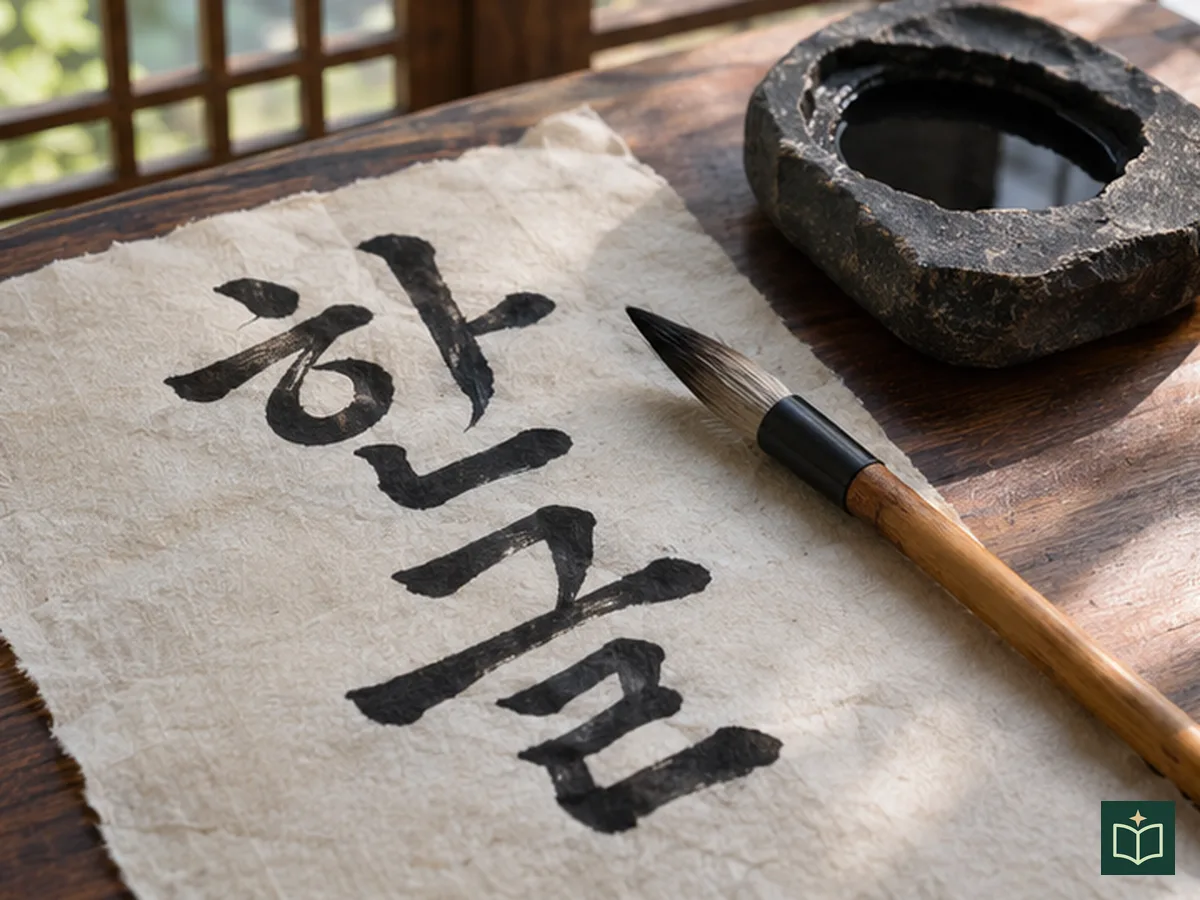
The vowels follow a different logic, drawing on Neo-Confucian philosophy. They are built from three elements: a dot representing heaven, a horizontal line representing the flat earth, and a vertical line representing a person standing between them. Combining the dot, now written as a short stroke, with the lines gives the other vowels, such as ㅏ (a), ㅓ (eo) and ㅗ (o). Letters are not written in a single line as in the Latin alphabet. Instead, consonants and vowels are grouped into square blocks, each representing one syllable. The word Hangul itself, 한글, is written as two blocks, each combining three letters.
Resistance and survival
Not everyone welcomed the new script. Some scholars argued that it would undermine the prestige of Chinese learning and Korea's place in the Chinese cultural world. For centuries, official documents and serious scholarship continued to be written mainly in Classical Chinese, and Hangul was often dismissed as a script for women, children and commoners. It was briefly suppressed in the early sixteenth century. Yet it spread through letters, poetry, religious texts and popular novels. In the late nineteenth century reformers promoted it as a national script, and under Japanese rule from 1910 to 1945 it became a symbol of Korean identity.
Learned in days
One of Sejong's scholars wrote that a clever person could learn the script in a morning and even a slow learner within ten days. That claim is close to true: many adults can learn to sound out Hangul in a few hours. The script is often credited as one reason for very high literacy in both Koreas today, though schooling and economic development matter more. Since 1446 the system has been simplified to 24 basic letters. South Korea celebrates Hangul Day on 9 October, and North Korea marks its own day in January. Linguists often cite Hangul as one of the most carefully designed writing systems ever created.
Sources & further reading
Figures are rounded and widely published; check the linked organisations for the latest editions. These organisations do not endorse this website.