Why the wall was built
After the Second World War, Germany was divided, and Berlin—deep inside East Germany—was split too. Millions left the East for the West through Berlin. In August 1961, East Germany sealed the border, building a wall that grew into a heavily guarded system with a ‘death strip’. More than 100 people are documented as having died trying to cross.
A year of change
By 1989, reforms in the Soviet Union under Mikhail Gorbachev had loosened Moscow’s grip. Hungary opened its border with Austria, and thousands of East Germans fled through it. Peaceful Monday demonstrations in Leipzig grew to hundreds of thousands. The East German leadership tried to ease pressure with new travel rules.
The briefing
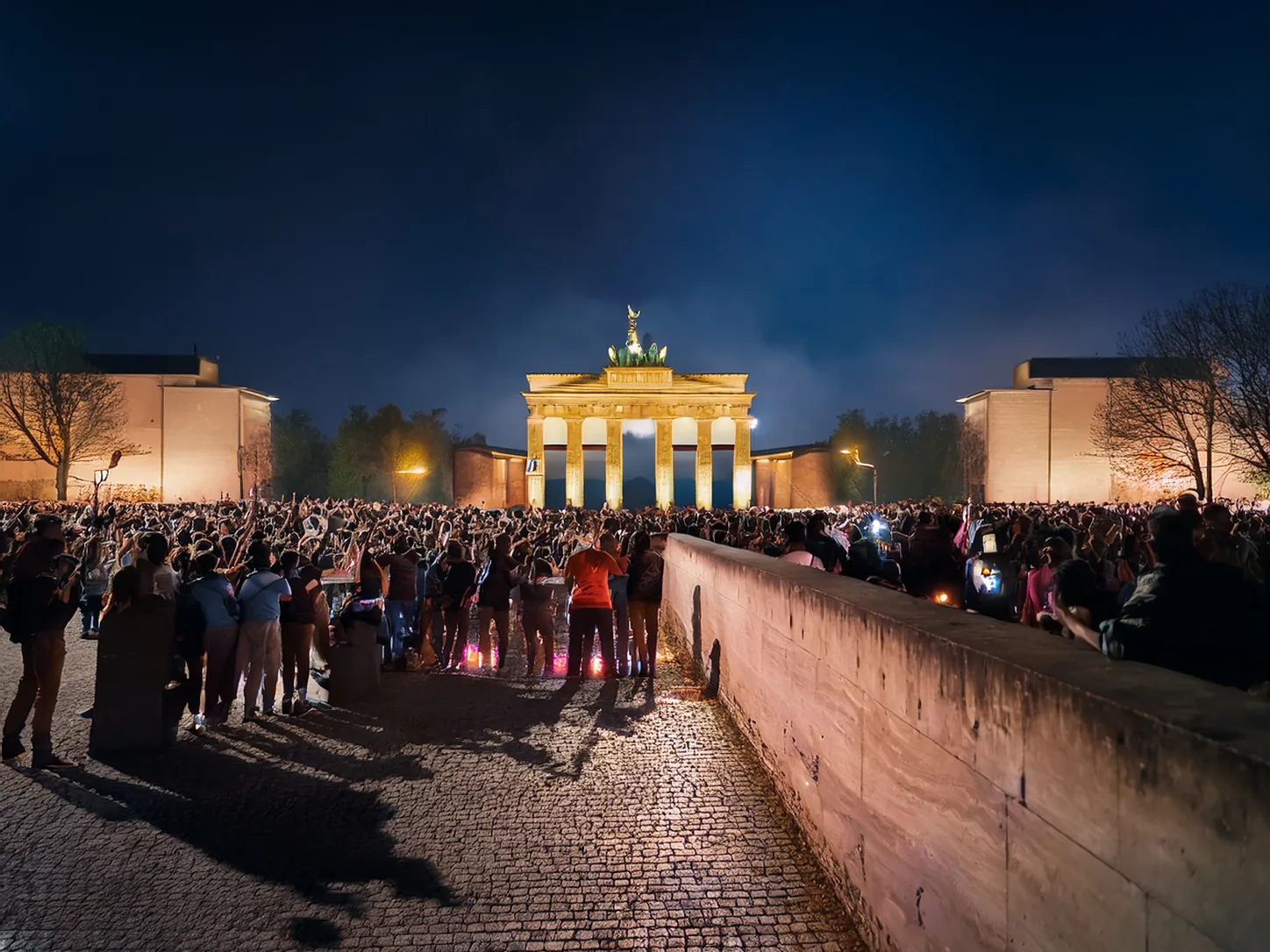
On the evening of 9 November, spokesman Günter Schabowski announced the travel changes at a live press conference. Asked when they took effect, he said, after checking his notes, that as far as he knew it was immediately. Crowds gathered at the crossings. With no clear orders, guards at Bornholmer Strasse opened the gate late that night, and others followed.
After the wall
People celebrated on top of the wall and began chipping pieces away. Within a year, Germany was reunified, on 3 October 1990. The Cold War order in Europe unravelled, and the Soviet Union itself dissolved in 1991. Sections of the wall remain as memorials, including the East Side Gallery and the Berlin Wall Memorial on Bernauer Strasse.
Sources & further reading
Figures are rounded and widely published; check the linked organisations for the latest editions. These organisations do not endorse this website.