Why missiles went to Cuba
In 1959 Fidel Castro's revolution took power in Cuba, just 145 kilometres from Florida, and the island soon aligned with the Soviet Union. In April 1961 a US-backed invasion by Cuban exiles at the Bay of Pigs failed, and Castro feared another attempt. Meanwhile the United States had far more long-range nuclear missiles than the Soviet Union and had placed medium-range Jupiter missiles in Italy and Turkey, close to Soviet territory. Soviet leader Nikita Khrushchev decided in 1962 to send nuclear missiles secretly to Cuba. He hoped to protect Cuba, narrow the strategic gap and answer the American missiles near his borders, all in one bold move.
The discovery
On 14 October 1962 an American U-2 reconnaissance plane photographed missile sites under construction in western Cuba. Analysts identified medium-range ballistic missiles able to reach Washington and much of the eastern United States. President John F. Kennedy was shown the images on 16 October, the first of the 'thirteen days'. He gathered a group of advisers, known as ExComm, to weigh options in secret. Some military leaders favoured air strikes followed by an invasion. Others worried that an attack would kill Soviet personnel and provoke retaliation, perhaps against West Berlin. After days of debate, Kennedy chose a middle course that applied pressure while leaving time to talk.
The quarantine
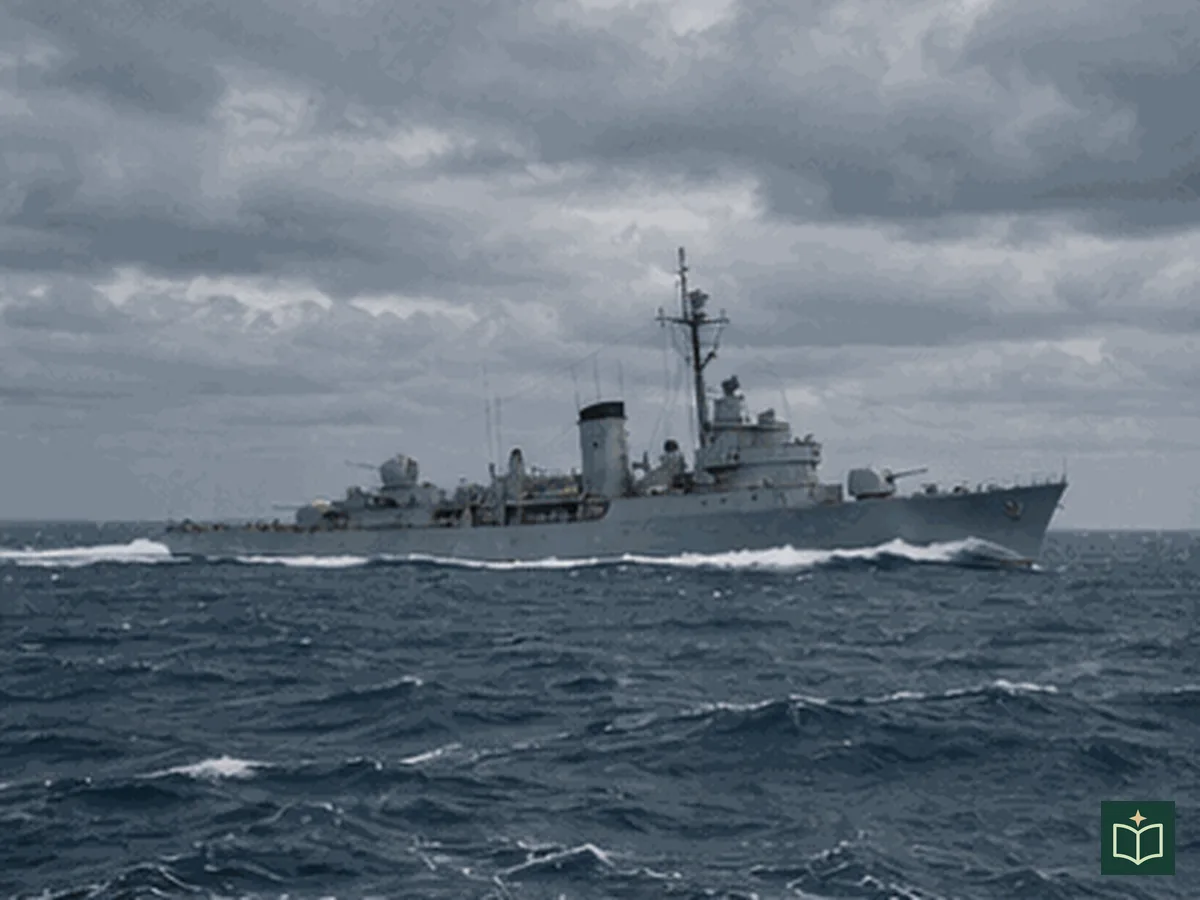
On 22 October Kennedy announced on television that missiles had been found and that the US Navy would impose a 'quarantine' around Cuba to stop further offensive weapons arriving. The word was chosen because a blockade is an act of war under international law. He demanded the missiles be removed and warned that any missile launched from Cuba would bring a full response against the Soviet Union. US forces moved to their highest alert level short of war. On 24 October several Soviet ships approaching the line slowed and turned back. Work on the missile sites in Cuba, however, continued, and the crisis entered its most dangerous phase.
Black Saturday
Saturday 27 October was the most perilous day. A Soviet surface-to-air missile shot down an American U-2 over Cuba, killing its pilot, Major Rudolf Anderson. Another U-2 strayed into Soviet airspace. At sea, US warships dropped practice depth charges to force Soviet submarines to surface; it later emerged that one submarine, B-59, carried a nuclear torpedo, and its senior officers reportedly disagreed over whether to use it. Khrushchev had sent two letters with different terms: the first offering withdrawal for a US pledge not to invade Cuba, the second also demanding removal of the Jupiter missiles from Turkey. Kennedy's team decided to answer the first publicly.
The deal
That evening the president's brother, Attorney General Robert Kennedy, met the Soviet ambassador, Anatoly Dobrynin. He confirmed the public offer of a non-invasion pledge and privately said the Jupiter missiles in Turkey would be removed within months, on condition that this part was kept secret. On 28 October Khrushchev announced on Moscow radio that the missiles in Cuba would be dismantled and shipped home. The Jupiters were quietly withdrawn in 1963. Because the Turkish element stayed secret for many years, the outcome was long portrayed as a clear American victory. Castro, who had not been consulted, was angry that the Soviet Union had negotiated over his head.
What changed afterwards
Both sides were shaken by how close they had come to nuclear war through miscalculation. In 1963 they set up a direct communication link between Washington and Moscow, known as the hotline, so leaders could exchange messages quickly. That year they also signed the Partial Test Ban Treaty, ending nuclear tests in the atmosphere, underwater and in space. The Soviet Union, embarrassed by the retreat, invested heavily in building up its own long-range missiles. Khrushchev was removed from power in 1964, partly because of the crisis. Scholars still study the thirteen days as a case of crisis management, showing the value of time, private channels and options that let an opponent step back.
Sources & further reading
- US Office of the Historian · The Cuban Missile Crisis, October 1962 ↗
- JFK Presidential Library · Cuban Missile Crisis ↗
Figures are rounded and widely published; check the linked organisations for the latest editions. These organisations do not endorse this website.