The plant and the test
The Chernobyl nuclear power plant stood in northern Ukraine, then part of the Soviet Union, about 100 kilometres north of Kyiv. Its four working reactors were of the RBMK type, a Soviet design using graphite to slow neutrons and ordinary water as coolant. On the night of 25–26 April 1986, the staff of Reactor 4 carried out a test to see whether, during a power cut, the turbines spinning down could keep cooling pumps running until backup diesel generators started. The test had been delayed by many hours, and the night shift was under pressure to complete it. Several safety systems had been disabled to allow it to proceed.
What went wrong
During the test, reactor power fell much lower than planned. To raise it, operators withdrew most of the control rods, leaving the reactor in an unstable state well outside its safe operating rules. When the test began at 1.23 am, cooling water flow fell and more of the water turned to steam. In the RBMK, steam absorbs fewer neutrons than water, so more steam meant more fission and more power, a flaw known as a positive void coefficient. Power began to surge. An operator pressed the emergency shutdown button, but the control rods had graphite tips, which briefly increased reactivity in the lower core as they entered.
The explosions
Within seconds, power rose to many times the reactor's normal output. Fuel overheated and shattered, and steam pressure exploded, lifting the reactor's heavy upper lid and wrecking the building. A second explosion followed moments later. Hot graphite and fuel were thrown out, starting fires, and the exposed core burned for about ten days, sending radioactive material high into the atmosphere. Firefighters and plant workers fought the blaze without knowing the scale of the radiation. Two workers died that night. Of 134 emergency workers diagnosed with acute radiation sickness, 28 died within months. Helicopters later dropped sand, lead, clay and boron onto the core to smother it.
Evacuation and fallout
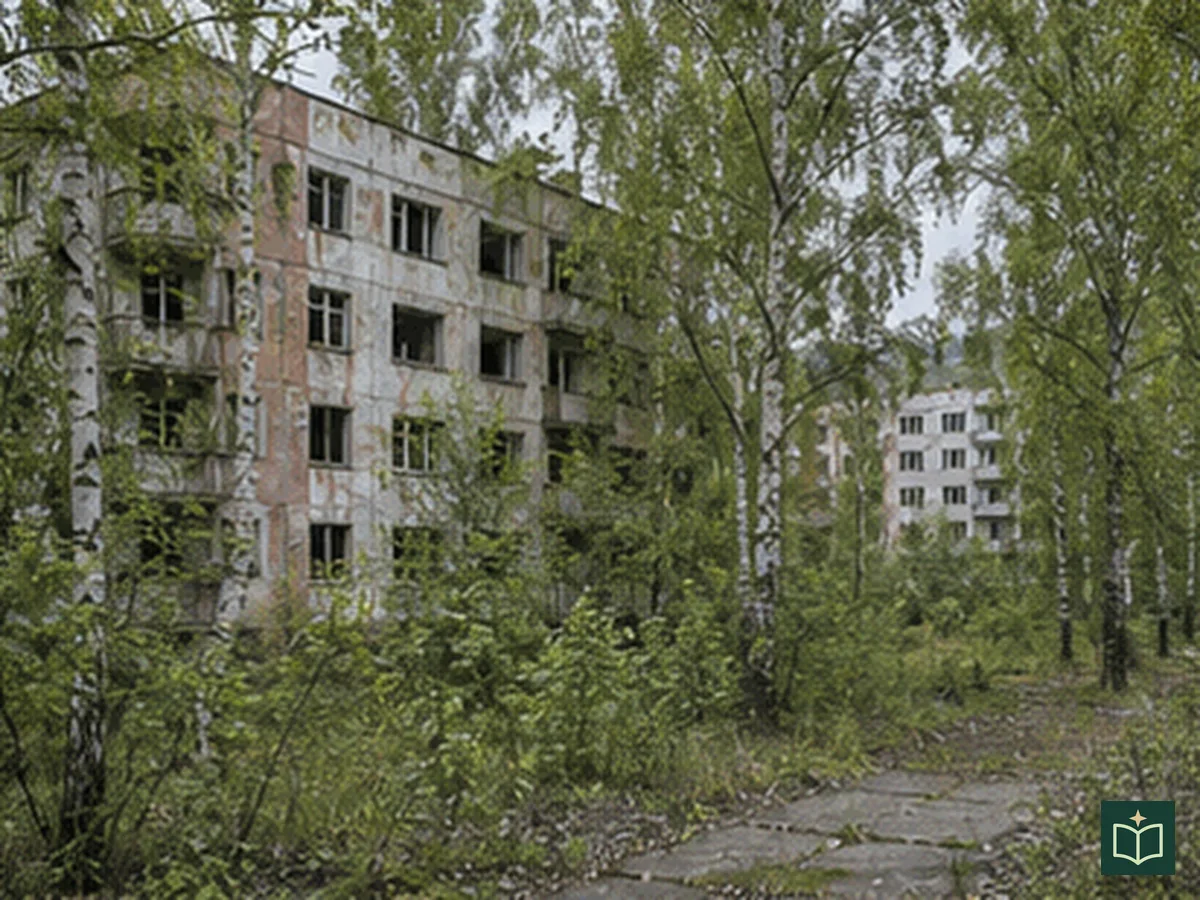
The nearby town of Pripyat, home to around 49,000 people, was evacuated about 36 hours after the explosion. Residents were told they would return in a few days; they never did. Over the following weeks, evacuation spread to a zone of around 30 kilometres, and in total over 100,000 people left their homes in 1986, with more resettled later. Soviet authorities said little publicly until radiation alarms at a nuclear plant in Sweden, more than 1,000 kilometres away, raised the alarm. Winds carried contamination across Belarus, Ukraine and Russia, and lighter traces across much of Europe. The heaviest contamination fell unevenly, depending on rainfall as the radioactive cloud passed.
Health effects
The most clearly established long-term effect is a large rise in thyroid cancer among people who were children or adolescents in the contaminated areas in 1986. Radioactive iodine entered milk from cows grazing on contaminated grass, and children drank it. Thousands of cases have been diagnosed, though thyroid cancer is usually treatable and deaths have been relatively few. United Nations scientific reviews have found no clear evidence of large increases in other cancers among the general population, but estimates of eventual deaths among the most exposed groups vary widely and remain debated. Evacuation, displacement and fear also caused serious mental-health and social harm, an often overlooked part of the toll.
The zone today
The exclusion zone remains largely closed to permanent residents, because long-lived isotopes such as caesium-137, with a half-life of about 30 years, still contaminate soil in many areas. Some elderly residents returned unofficially to their villages. In the absence of people, wildlife including wolves, elk and wild horses has become abundant. A concrete shelter was built over the ruined reactor in 1986, and in 2016 a huge steel arch, the New Safe Confinement, was slid over it to allow safe dismantling. The disaster led to safety upgrades in the remaining RBMK reactors and stronger international reporting rules. It remains, with Fukushima in 2011, one of only two accidents rated at the highest level on the international scale.
Sources & further reading
Figures are rounded and widely published; check the linked organisations for the latest editions. These organisations do not endorse this website.