Two separate worlds
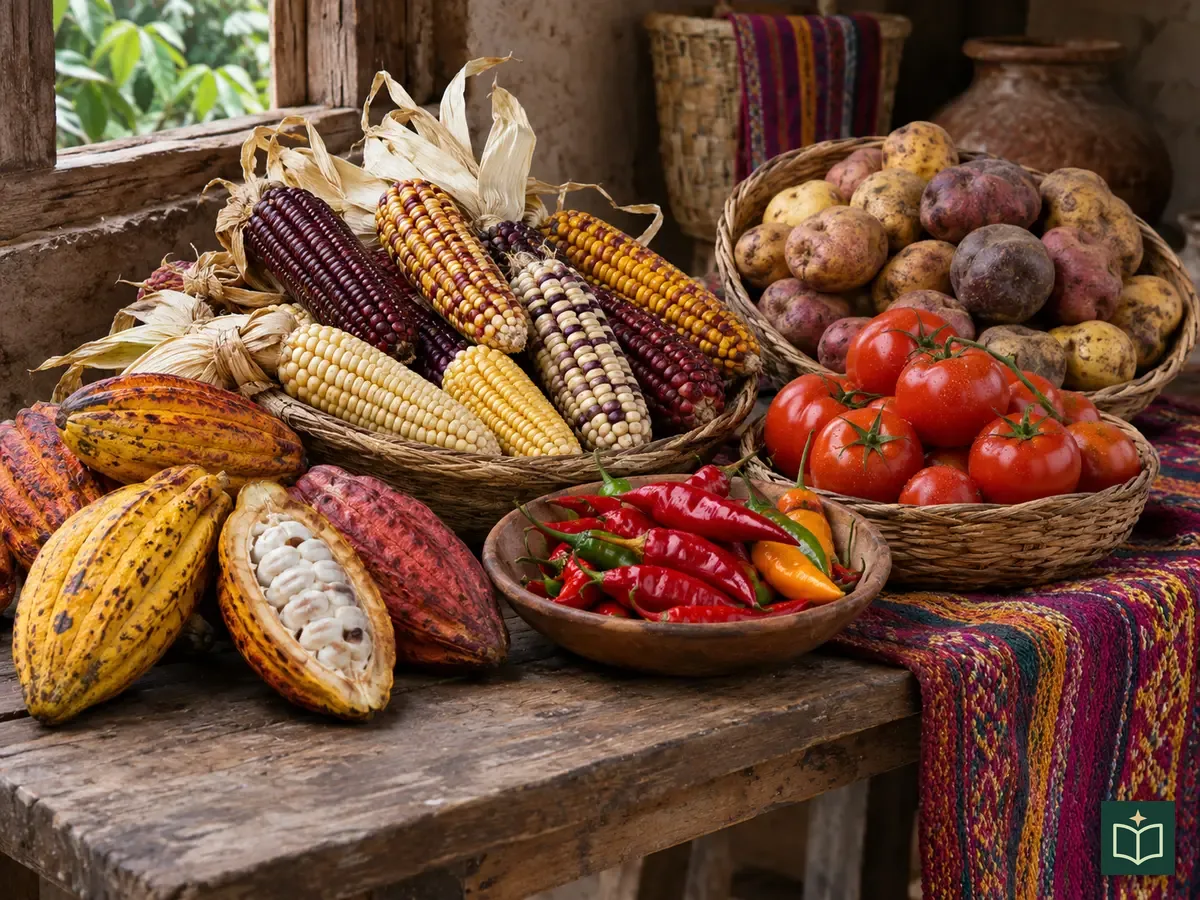
For many thousands of years, the Americas and the Afro-Eurasian landmass were biologically largely separate. People had crossed into the Americas long before, but plants, animals and diseases on each side developed independently. Indigenous Americans domesticated maize, potatoes, beans, squash, tomatoes, chillies, cacao and many other crops. Afro-Eurasia had wheat, rice, barley, cattle, horses, sheep, pigs and chickens. When Christopher Columbus’s voyage of 1492 opened sustained contact across the Atlantic, these separate worlds began to mix. The historian Alfred Crosby gave this process its name in his 1972 book The Columbian Exchange, which shaped how historians think about the period.
What went out from the Americas
American crops spread remarkably quickly. Maize became a staple in parts of Africa and southern Europe, and is now one of the world’s most important grains. The potato, domesticated in the Andes, became central to diets in Northern Europe, supporting population growth from the eighteenth century. Cassava became a staple across much of tropical Africa. Chillies reached India, Thailand and Korea, where they are now essential to cuisines that are hard to imagine without them. Tomatoes transformed Italian cooking. Tobacco and cacao created global industries. Many dishes now considered traditional depend on ingredients that crossed the Atlantic only a few centuries ago.
What went into the Americas
In the other direction came wheat, rice, sugar cane, coffee, bananas and citrus, along with horses, cattle, pigs, sheep and goats. Livestock spread rapidly across the grasslands of the Americas, changing landscapes and livelihoods. Horses transformed the lives of many Indigenous peoples of the Great Plains, enabling new forms of hunting and mobility. Sugar cane, grown on plantations in the Caribbean and Brazil, became one of the most profitable crops in the world. Its cultivation relied overwhelmingly on the forced labour of enslaved Africans, linking the Columbian exchange directly to the transatlantic slave trade. Crops and coercion travelled together. The consequences were immense.
Disease and catastrophe
The most devastating part of the exchange was disease. Europeans and Africans carried illnesses such as smallpox, measles, influenza and typhus, to which Indigenous Americans had no previous exposure and therefore little immunity. Epidemics spread ahead of colonists, sometimes reaching communities before Europeans themselves did. Combined with warfare, enslavement, displacement and famine, they caused a catastrophic population decline. Estimates of the pre-1492 population of the Americas, and of the scale of loss, vary widely, but many historians conclude that in some regions a large majority of the population died within the first century or so of contact. This was one of the largest demographic disasters in human history.
Beyond the Atlantic
The exchange was not only between Europe and the Americas. Spanish galleons sailing between Acapulco and Manila from 1565 carried American silver and crops across the Pacific to Asia, where sweet potatoes and maize helped support population growth in China. Portuguese traders introduced American crops to Africa and India. Asian goods, such as silk and porcelain, travelled the other way. The Columbian exchange therefore helped create the first truly global trading system. It also brought ecological change, as new plants, animals and weeds spread, sometimes becoming invasive and altering ecosystems in ways that continue to the present day. Its effects reached every continent.
Why it matters
The Columbian exchange shows that history is biological as well as political. Many modern staples, from fries and pizza sauce to curries with chillies, depend on it. So do patterns of population, agriculture and land use worldwide. It also reminds us of the profound human costs that accompanied European expansion, including epidemics, conquest and slavery. Some effects carried risks: Ireland’s dependence on the potato contributed to the scale of the Great Famine of 1845 to 1852, when a plant disease destroyed crops. Understanding the exchange helps explain why the world’s diets are global, and why biodiversity and biosecurity remain important concerns.
Sources & further reading
Figures are rounded and widely published; check the linked organisations for the latest editions. These organisations do not endorse this website.