Art made with machines
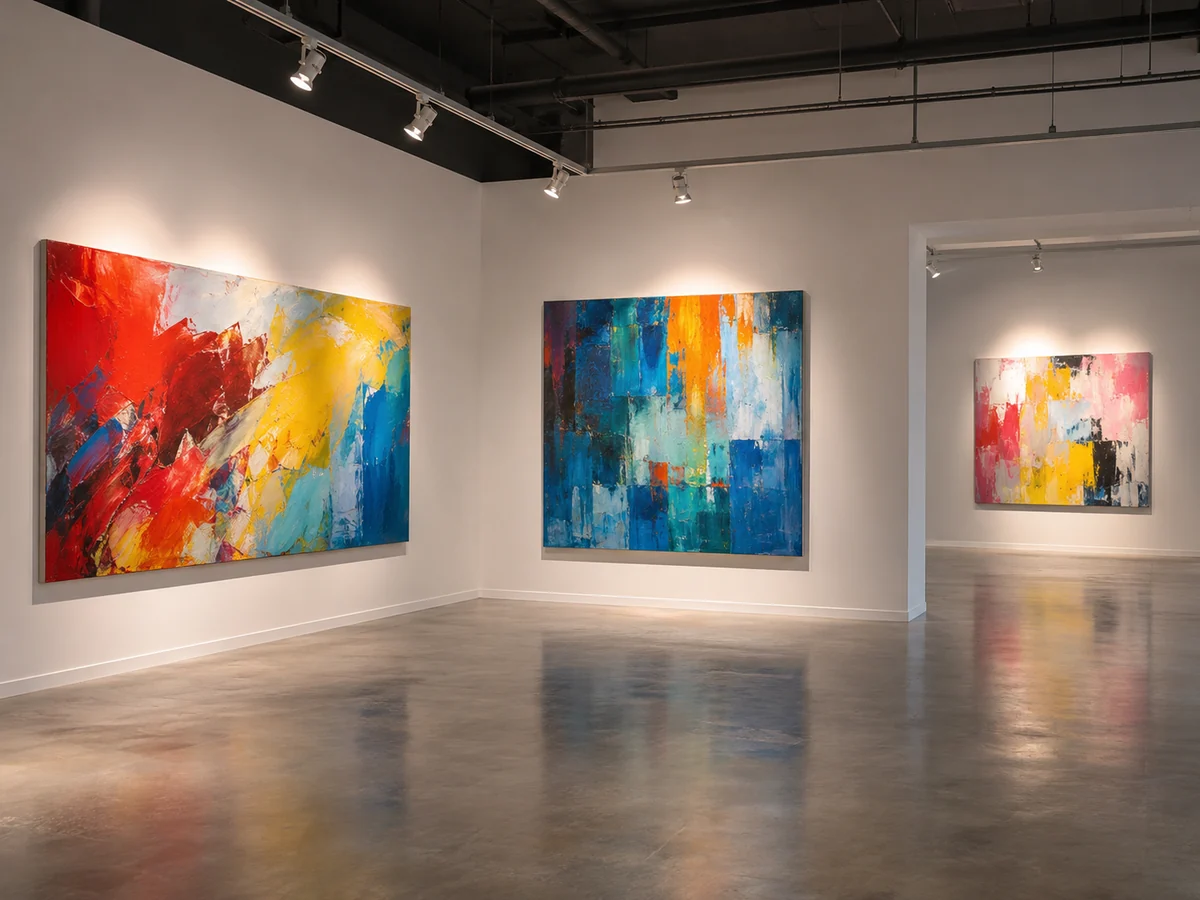
Artists have used computers to make art since the 1960s, writing programs that draw patterns or generate images. Some pioneers of computer art featured in modern exhibitions. Generative AI tools, which create images from text descriptions, made machine-assisted art far easier and more widespread from 2022. Millions of people now create AI images, and some professional artists use AI as one tool among many.
Early milestones
In 2018, Christie's sold a blurry portrait made with a generative AI model trained on thousands of historical portraits for more than 400,000 dollars, far above expectations. In 2022, an image made with the AI tool Midjourney won first prize in a digital art category at the Colorado State Fair, sparking outrage among some artists who felt the winner had not created the work himself. These moments brought AI art into public debate.
The Christie's sale
In February 2025, Christie's announced Augmented Intelligence, which it described as the first auction at a major auction house dedicated to art made using AI. It featured more than 30 works by artists including Refik Anadol, Holly Herndon and Mat Dryhurst, and earlier computer art pioneers. The online sale ran from 20 February to 5 March 2025 and raised 728,784 dollars, with 28 of 34 lots sold, and many first-time and younger bidders.
The protest
On 8 February 2025, an open letter called on Christie's to cancel the sale, arguing that many of the works were created using AI models known to be trained on copyrighted work without a licence, contributing to what it called mass theft of human artists' work. Thousands of people signed it. Christie's responded that the artists in the sale had strong, established practices and used AI to enhance their work, and its digital art director described AI learning as influence rather than theft.
Not all AI art is the same
Supporters of AI art point out that artists use AI in very different ways. Some train models on their own work or data, write their own code and spend months shaping results, while others type a short prompt into a commercial tool. Critics of the protest noted that some works in the Christie's sale used artists' own models. Many argue that the artist's vision, choices and process matter more than the tool.
The training data question
The deepest objection to AI art concerns how image generators were built. Many were trained on billions of images collected from the internet, including copyrighted artworks, without asking or paying the artists. Artists have filed lawsuits against AI companies, arguing this infringes their rights, while companies argue that training is a legitimate fair use. Courts in several countries are considering these questions.
Who owns AI art?
In the United States, the Copyright Office has said that copyright protects only works created by humans, so purely AI-generated images cannot be copyrighted, though works combining human creativity with AI can be protected for the human contributions. In January 2025, it published a report saying that prompts alone generally do not give enough control to make someone the author. Courts have upheld the human authorship requirement.
Artists' livelihoods
Illustrators, concept artists and designers report losing commissions to AI tools, and many worry about the future of creative careers. Others have found new opportunities, using AI to speed up parts of their work or to create new forms of art. Some companies now offer AI tools trained only on licensed or public domain images, and some platforms let artists opt out of training or label their work as off limits.
Art in the Gulf
The UAE and the Gulf have embraced digital and AI art in exhibitions and festivals, from Dubai's art events to installations at the Museum of the Future. Artists in the region are experimenting with AI in calligraphy-inspired works, immersive installations and digital collections. The same debates about authorship and training data apply, and cultural institutions are developing approaches to AI in the arts.
Why it matters
The AI art debate goes to the heart of what people value in creativity: skill, vision, effort, originality and human expression. It also raises practical questions about fairness and payment for the artists whose work trains AI. How courts, markets and audiences answer these questions will shape not only art, but every creative field touched by AI.
Sources & further reading
- NPR · Christie's AI art auction inspires protests, and more art (2025) ↗
- The Art Newspaper · Christie's AI art auction outpaces expectations (2025) ↗
- US Copyright Office · Copyright and Artificial Intelligence ↗
A balanced overview of an ongoing cultural and legal debate. Photograph: original AI-generated illustration (Adobe Firefly). Reference organisations do not endorse this website.