A metropolis in the highlands
Teotihuacan lies about 45 kilometres north-east of modern Mexico City, in a side valley of the Basin of Mexico, at around 2,300 metres above sea level. It began to grow in the last centuries BC, helped by fertile land, springs and nearby deposits of obsidian, the volcanic glass prized for sharp tools. Volcanic eruptions to the south may also have pushed people towards it. By around AD 500, the city covered about 20 square kilometres and housed perhaps 100,000 people. That made it one of the largest cities in the world at the time, comparable to major cities elsewhere and by far the biggest in the Americas.
Built to a plan
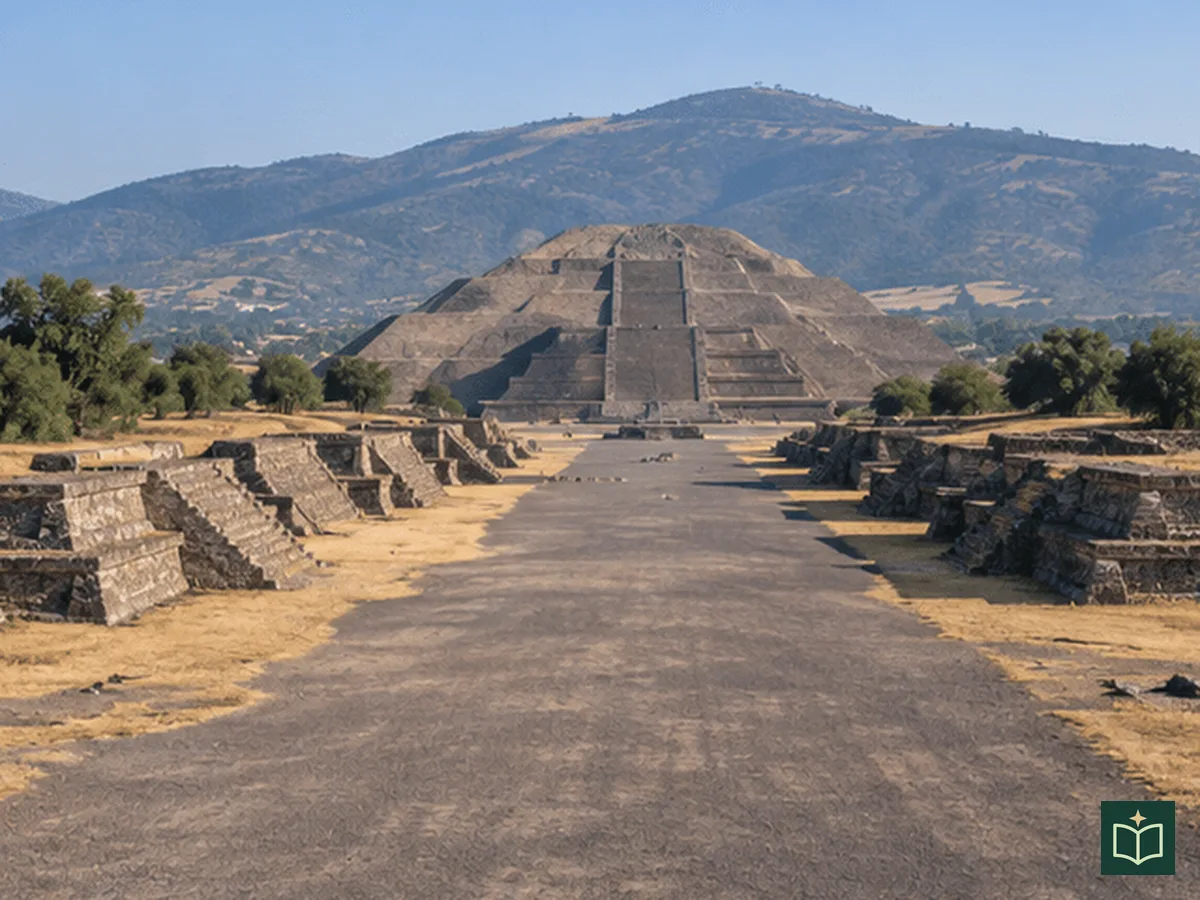
Teotihuacan was not a sprawl. Its builders set out a north-south axis, now called the Avenue of the Dead, running more than two kilometres, with streets and buildings laid out on a grid. Almost everything was aligned about 15 degrees east of true north, an orientation that researchers link to astronomical events and the surrounding mountains. Builders even redirected the San Juan River to fit the grid. Along the avenue stand the Pyramid of the Sun, one of the largest structures of the ancient Americas at about 65 metres tall today, and the Pyramid of the Moon at the avenue’s northern end, set against the outline of a mountain.
Apartment living
Most people lived in walled apartment compounds, of which archaeologists have mapped about two thousand. A typical compound held several related families, perhaps 60 to 100 people, around courtyards with drains, shrines and painted walls. Many compounds doubled as workshops for obsidian tools, pottery, figurines or textiles. Some neighbourhoods housed migrants: one district has houses and burials in the style of Oaxaca, more than 300 kilometres away, while another held people with ties to the Gulf Coast and Maya lowlands. Teotihuacan was a cosmopolitan city, and its influence reached far afield; inscriptions at the Maya city of Tikal record the arrival of Teotihuacan-linked newcomers in AD 378.
The Feathered Serpent and its tunnel
At the city’s heart was a vast enclosure the Spanish later called the Ciudadela, the citadel, containing the Temple of the Feathered Serpent. Its facade was carved with serpent heads emerging from feathered collars, an early form of a deity later known as Quetzalcoatl. Excavations found the remains of more than 200 people buried during its construction, many apparently sacrificed. In 2003 researchers discovered a tunnel running beneath the temple, sealed for centuries. When fully explored, it contained thousands of offerings, including jade, shells, pyrite mirrors and traces of liquid mercury. How the city was governed remains unclear, because unlike the Maya, Teotihuacan left no portraits or written names of individual rulers.
Fire and abandonment
Around AD 550, many of the major buildings along the Avenue of the Dead were burned and statues smashed. The fire targeted the civic and religious centre, which leads many archaeologists to suspect an internal uprising against the ruling elite rather than a foreign invasion, though nobody is certain. Drought and pressure on resources may have added strain. The population fell over the following century and the city lost its regional power, though smaller communities continued to live among the ruins. By the time the Aztecs arrived in the Basin of Mexico, in the fourteenth century, Teotihuacan had been a ghost of itself for some seven hundred years.
Named by later visitors
The city’s original name is unknown. Teotihuacan is a Nahuatl name given by the Aztecs, usually translated as “the place where the gods were created”. They believed the present era of the world, the Fifth Sun, began there when gods sacrificed themselves in fire. The Aztecs also named the main structures: the Pyramids of the Sun and Moon, and the Avenue of the Dead, from the mounds along it, which they took for tombs. Aztec rulers made pilgrimages to the ruins and placed Teotihuacan objects in their own temples. UNESCO listed the site in 1987, and it remains among the most visited archaeological sites in Mexico.
Sources & further reading
Figures are rounded and widely published; check the linked organisations for the latest editions. These organisations do not endorse this website.