The first Ferris wheel
The Ferris wheel is named after George Washington Gale Ferris Jr., an American engineer who designed a giant wheel for the World's Columbian Exposition in Chicago in 1893. Organisers wanted something to rival the Eiffel Tower, which had been the star of the Paris fair four years earlier. Ferris's wheel stood about 80 metres tall and had 36 cars, each able to carry dozens of passengers. It was a sensation, and it gave its name to every big wheel that followed.
How a big wheel works
Modern observation wheels look simple, but they are serious engineering. Most use a huge rim held in shape by steel cables, like a bicycle wheel, connected to a central hub and spindle. The wheel is supported by legs or an A-frame and turned slowly by motors, often so slowly that passengers can step on and off while it keeps moving. Enclosed, air-conditioned capsules rotate to stay level, and designers must account for wind, heat and the weight of thousands of riders.
Ain Dubai
The tallest observation wheel in the world is Ain Dubai, on Bluewaters Island next to Jumeirah Beach Residence. It stands 250 metres tall, nearly twice the height of the London Eye, and opened to the public in October 2021. Its name means Dubai Eye in Arabic. The wheel has 48 capsules, each able to hold up to around 40 people, and a full rotation takes roughly 38 minutes, offering views of the coastline, Palm Jumeirah and the city's skyline.
High Roller, Las Vegas
Before Ain Dubai, the record belonged to the High Roller in Las Vegas, which opened in 2014. At about 168 metres, it overlooks the famous Las Vegas Strip. Its 28 spherical glass cabins can each carry up to 40 passengers, and one rotation takes about 30 minutes. The wheel is lit by thousands of LEDs that can display changing colour patterns at night, making it a landmark across the city.
Singapore Flyer and Star of Nanchang
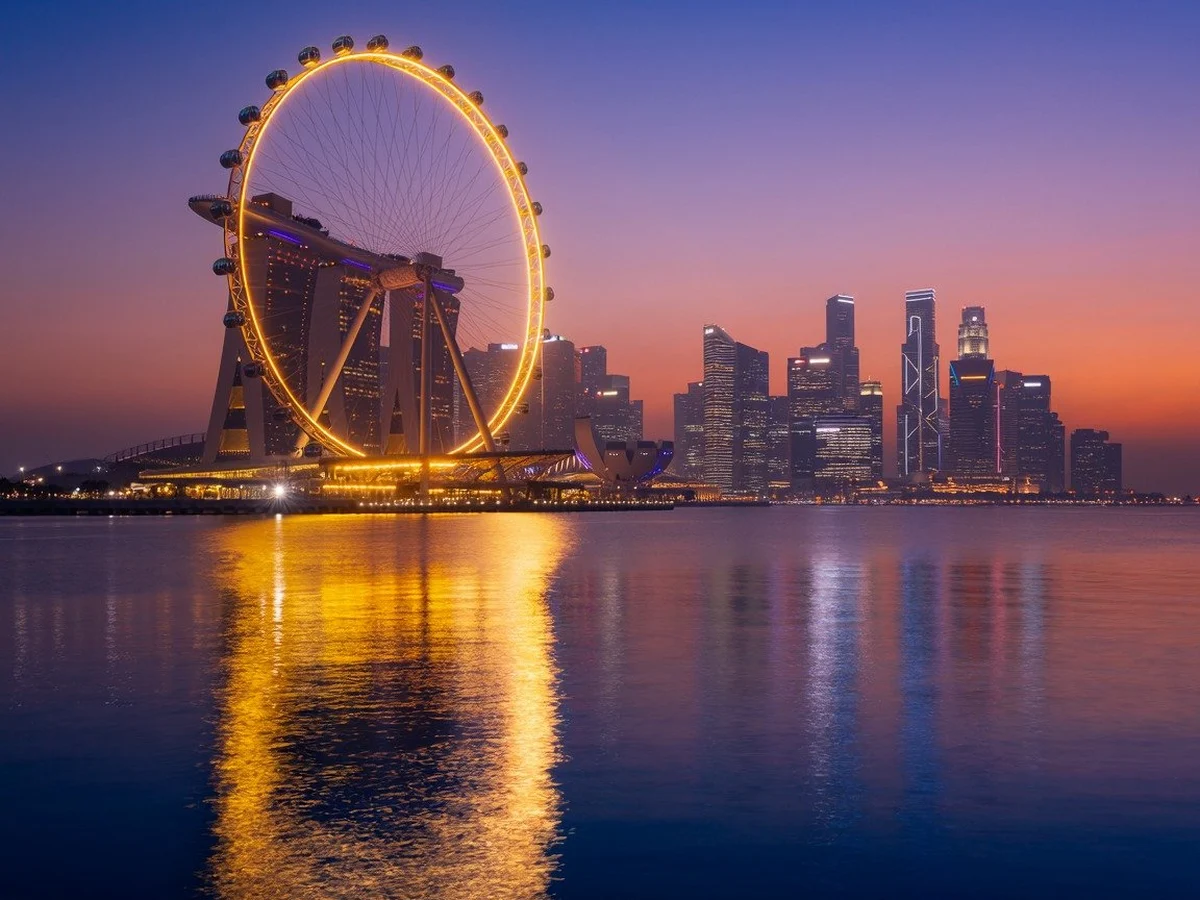
The Singapore Flyer opened in 2008 at 165 metres and held the world record until the High Roller overtook it. It stands at Marina Bay and, on clear days, offers views reaching into Malaysia and Indonesia. The Star of Nanchang in China, which opened in 2006 at 160 metres, briefly held the record before Singapore's wheel opened. Unlike most modern wheels, which are supported from one side, the Star of Nanchang is supported on both sides of its hub.
The London Eye
The London Eye, on the south bank of the River Thames, opened in 2000 as part of the city's millennium celebrations and was the world's tallest Ferris wheel at the time, at 135 metres. It was originally meant to be temporary, but it became so popular that it stayed. Its 32 capsules hold up to 25 people each. The London Eye helped spark a wave of giant wheels around the world, as cities saw how a wheel could become a symbol and tourist attraction.
Why cities build them
A giant wheel offers something few other attractions can: a slow, calm ride with sweeping views, suitable for families, older visitors and people who would never try a roller coaster. Wheels are cheaper and quicker to build than tall towers, and they can be placed on waterfronts or new developments to draw visitors. Many are used for private events, dinners and celebrations inside the capsules. They also become instantly recognisable features on city skylines and in postcards.
Wheels around the world
Below the very top of the ranking, giant wheels can be found across the world, from Asia to Europe and the Americas. Many are between 100 and 135 metres tall, placed on waterfronts, in theme parks or on top of shopping centres. Some are rebuilt or moved as cities change. Lists of the tallest wheels are updated often, as new projects open and older ones close.
Challenges at great heights
Building ever-taller wheels is not easy. Wind loads increase dramatically with height and size, and very tall structures can sway. Coastal wheels must resist salty air and humidity, while those in hot climates need powerful cooling for the capsules. Maintenance is constant, from checking cables and bearings to cleaning glass. Some proposed giant wheels in other cities were cancelled or delayed because of rising costs. As a result, wheels of this size remain rare and remarkable.
Sources & further reading
Heights are approximate and as commonly reported; operating status and rankings can change. Photograph: original AI-generated illustration (Adobe Firefly). Reference organisations do not endorse this website.