The densest element
Density is how much mass is packed into a given volume. Osmium has a density of about 22.59 grams per cubic centimetre, which makes it the densest element that occurs naturally. A one-litre block of osmium would weigh more than 22 kilograms, about the same as a large suitcase packed for a long trip. Its close neighbour on the periodic table, iridium, is almost as dense, and for many years scientists argued over which was heavier. Careful X-ray measurements eventually gave osmium a very narrow lead.
Where it sits on the periodic table
Osmium has the chemical symbol Os and the atomic number 76, meaning each atom has 76 protons. It belongs to the platinum group of metals, together with platinum, palladium, rhodium, ruthenium and iridium. These metals share many properties: they are rare, resistant to corrosion and often found together in the same ores. Osmium's atoms are heavy and arranged in a very tightly packed crystal structure, which is why so much mass fits into such a small space.
Discovery and name
Osmium was discovered in 1803 by the English chemist Smithson Tennant, who was studying the black residue left behind when crude platinum was dissolved in acid. In the same residue, he also discovered iridium. Tennant named osmium after the Greek word osme, meaning smell, because one of its compounds gives off a sharp, unpleasant odour. Iridium, by contrast, was named after Iris, the Greek goddess of the rainbow, for its many-coloured salts.
A difficult metal
Osmium is extremely hard but also brittle, so it cannot easily be bent, rolled or drawn into wire. It has a very high melting point of more than 3,000 °C. Working it usually means using powder metallurgy, pressing and heating fine osmium powder rather than casting the metal. In powdered form, osmium slowly reacts with oxygen in the air to form osmium tetroxide, a volatile and highly toxic compound that can damage the eyes and lungs. This makes careful handling essential.
How it is produced
There are no mines that dig only for osmium. It is recovered in very small quantities as a by-product of refining platinum and nickel ores, especially in South Africa and Russia. After the more valuable metals are extracted, chemists separate the remaining platinum-group metals one by one in a long series of chemical steps. World production is tiny compared with gold or silver, and because demand is small and specialised, osmium is not traded on major exchanges like other precious metals.
What it is used for
Because it is so hard and wear resistant, osmium is mainly used in alloys with other platinum-group metals. These alloys were used for the tips of high-quality fountain pens, record-player needles and instrument pivots, where tiny parts must resist wear for years. Osmium alloys are also used in some electrical contacts. In laboratories, osmium tetroxide, handled with great care, is used to stain fatty tissues so they show up clearly under electron microscopes.
Osmium as an investment?
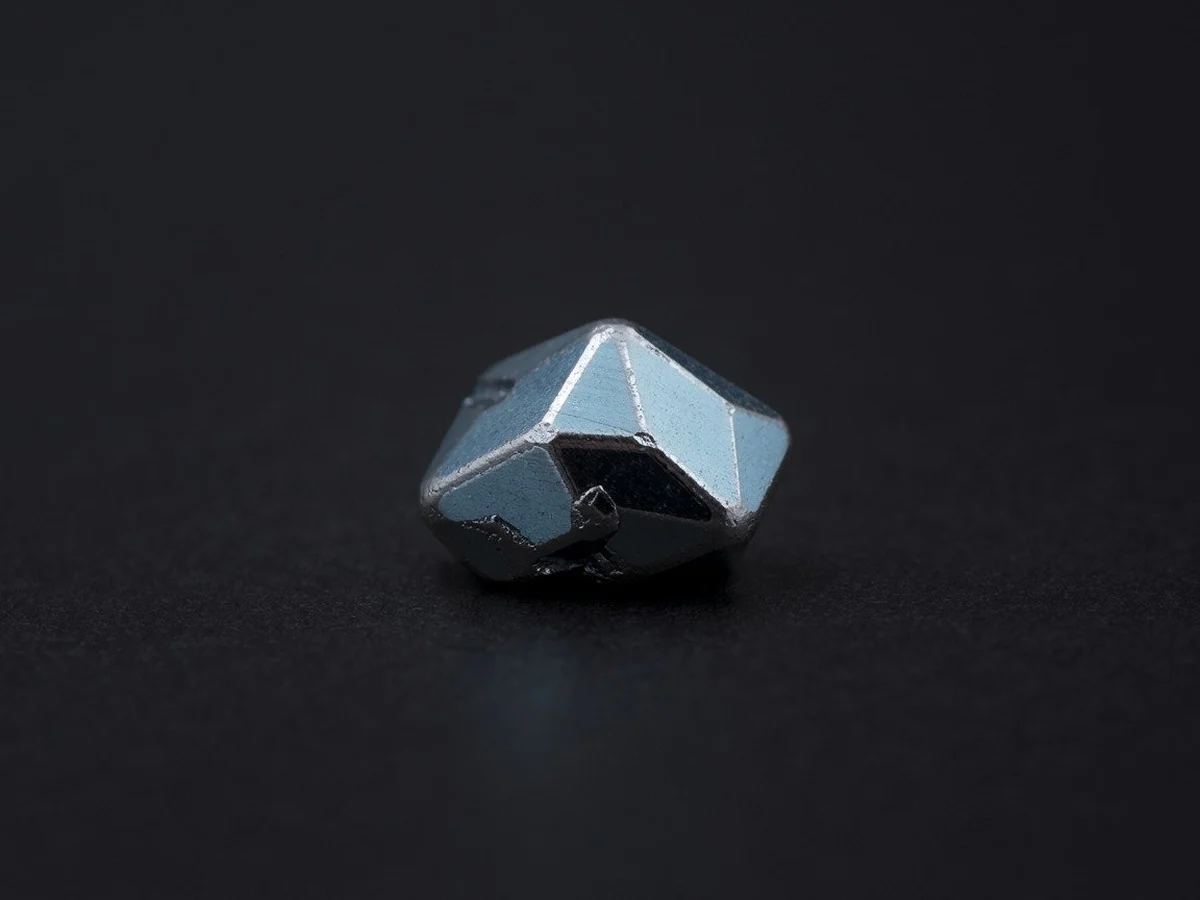
In recent years, a few companies have started selling crystallised osmium in small, sealed pieces as a collector's item or alternative investment. In crystallised form, the metal is stable and very shiny. However, osmium is far less liquid than gold or silver: there are few buyers, prices are not published in the same way, and resale can be difficult. Financial experts usually treat it as a niche curiosity rather than a mainstream store of value.
How it compares in price
Osmium is rare, but rarity alone does not set its price. Because demand is so small and specialised, the price of osmium has historically been less closely watched than gold, platinum or palladium. Small quantities sold to laboratories and collectors can carry large markups for refining, crystallising and certifying. That is another reason most people will never see a piece of osmium outside a museum or laboratory.
Dense, but not the heaviest
It is worth separating density from atomic weight. Some artificial elements, such as uranium and plutonium, have heavier atoms than osmium, but their atoms are spaced further apart, so they are less dense. Scientists have calculated that some very heavy synthetic elements, such as hassium, might be even denser than osmium, but they have only been made a few atoms at a time and decay quickly. Among the elements found in nature, osmium remains the champion of packing mass into space.
Sources & further reading
General information; not investment advice. Densities are approximate room-temperature values. Photograph: original AI-generated illustration (Adobe Firefly). Reference organisations do not endorse this website.