Energy in the tank
Petrol is an extremely dense store of energy. A litre holds about 34 megajoules, or roughly 9.5 kilowatt-hours, so a 50-litre tank carries around 475 kWh. That is several times more energy than even the largest car batteries hold. The real question is how much of it ends up doing useful work. The US Department of Energy, which tracks energy flows through vehicles, estimates that only about 12 to 30 per cent of the fuel's energy is used to move a conventional petrol car down the road. The rest leaves as heat, from the engine, the radiator, the exhaust pipe and the brakes.
The engine's heat problem
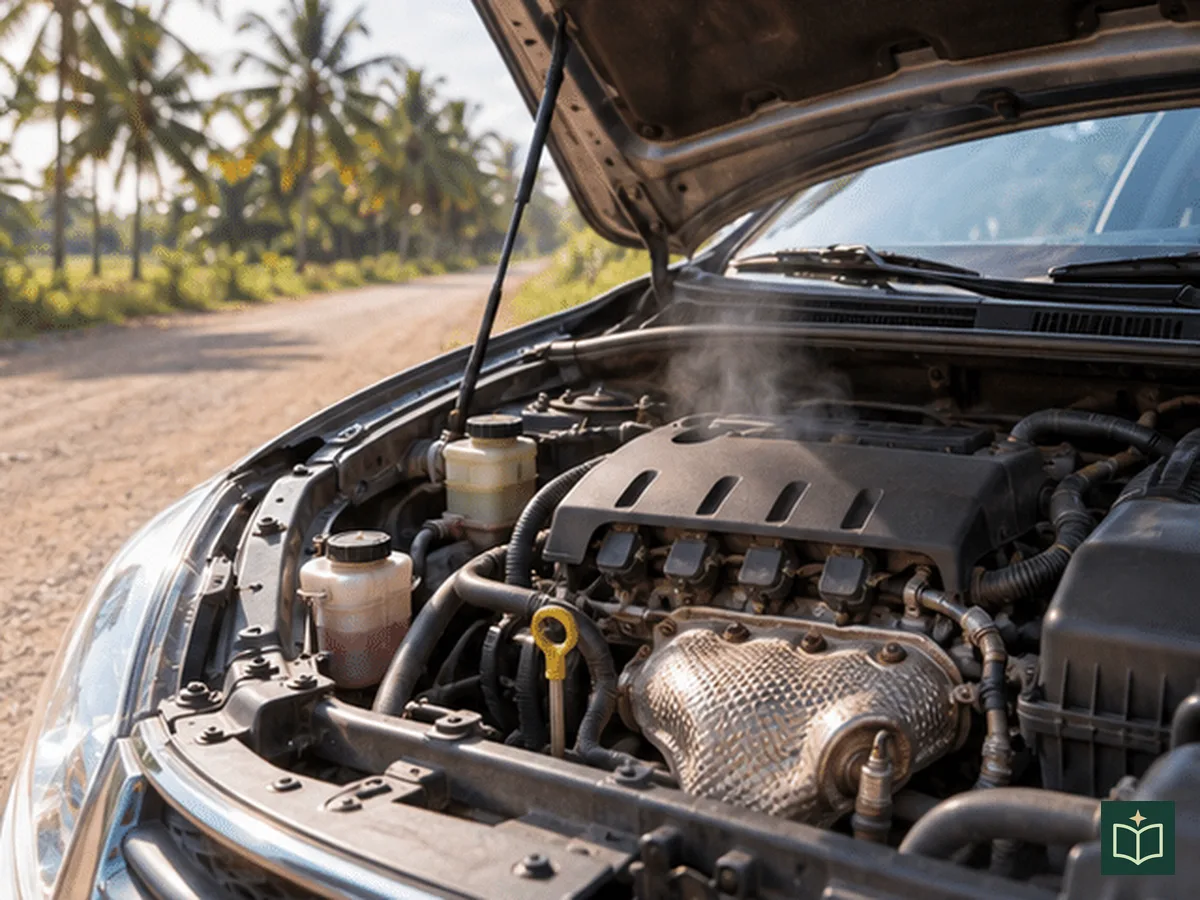
The biggest losses happen inside the engine, and they are not simply poor design. An internal combustion engine is a heat engine: it burns fuel to heat gas, which expands and pushes pistons. Physics limits how much of that heat can become motion, because the exhaust must leave hotter than the surrounding air. In typical driving, well over half of the fuel's energy becomes heat carried away by the cooling system and exhaust. Engines are at their best under fairly heavy load; at the light loads typical of city traffic, they work far below peak efficiency. Pumping air past a partly closed throttle and internal friction take further shares.
Idling, friction and accessories
Beyond the engine, smaller losses add up. Idling at traffic lights or in queues burns fuel while the car covers no distance, a notable drain in urban traffic. The gearbox and driveline lose a few per cent to friction. Accessories such as the alternator, power steering pump and, in hot climates especially, the air-conditioning compressor all take power from the engine. In summer heat, air conditioning alone can noticeably raise fuel use in slow traffic. Of the energy that does reach the wheels, part overcomes aerodynamic drag, which rises steeply with speed, part overcomes the rolling resistance of the tyres, and part goes into speeding up, only to become heat again when the brakes are applied.
A tank, followed through
Take an illustrative 50-litre tank holding about 475 kWh, and assume a fifth reaches the wheels: roughly 95 kWh actually moves the car. At 8 litres per 100 kilometres, the tank lasts about 625 kilometres. Now suppose an electric car of similar size needs the same 95 kWh at the wheels for those 625 kilometres. If around 80 per cent of the electricity drawn from the socket ends up as motion, after charging, battery and motor losses, it needs about 119 kWh from the grid, or about 19 kWh per 100 kilometres. The petrol car consumed 475 kWh of fuel for the same trip, four times as much energy at the point of use.
The electric chain
An electric car's motor is not a heat engine, so it avoids the main loss. Electric motors typically convert around nine-tenths of their electrical input into motion, and they draw almost nothing when the car is stationary. They can also run in reverse as generators, recovering some of the energy that would otherwise be lost in braking, which helps most in stop-start city driving. The losses that remain come from charging, battery heating and cooling, power electronics and the same drag and tyre resistance any car faces. The US Department of Energy estimates that electric cars turn the large majority of the electricity they draw from the grid into motion.
Counting further upstream
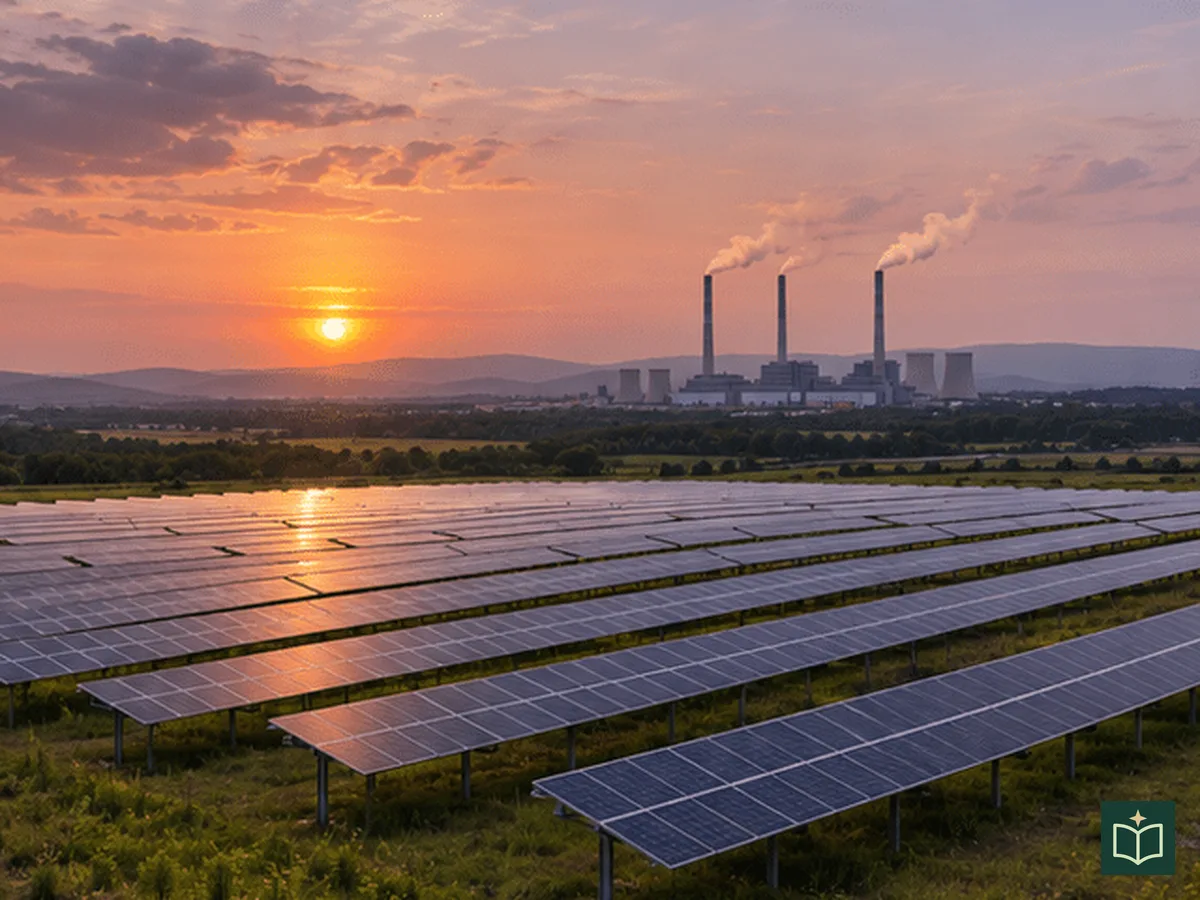
The comparison above stops at the fuel tank and the socket, and a fair accounting goes further back. Refining crude oil and delivering petrol consumes energy before it reaches the pump. Electricity also has upstream losses: a gas-fired power station converts perhaps 40 to 60 per cent of its fuel into power, and a few per cent more is lost in transmission. Solar and wind power have no fuel to lose, which is one reason energy statistics struggle to compare them directly with fossil fuels. Even with power-plant losses included, electric drivetrains generally need less primary energy per kilometre, though the carbon outcome depends on how the grid's electricity is generated.
Sources & further reading
- US Department of Energy · fueleconomy.gov, Where the energy goes ↗
- US Energy Information Administration · Gasoline explained ↗
Figures are rounded and widely published; check the linked organisations for the latest editions. These organisations do not endorse this website.