A protein fibre
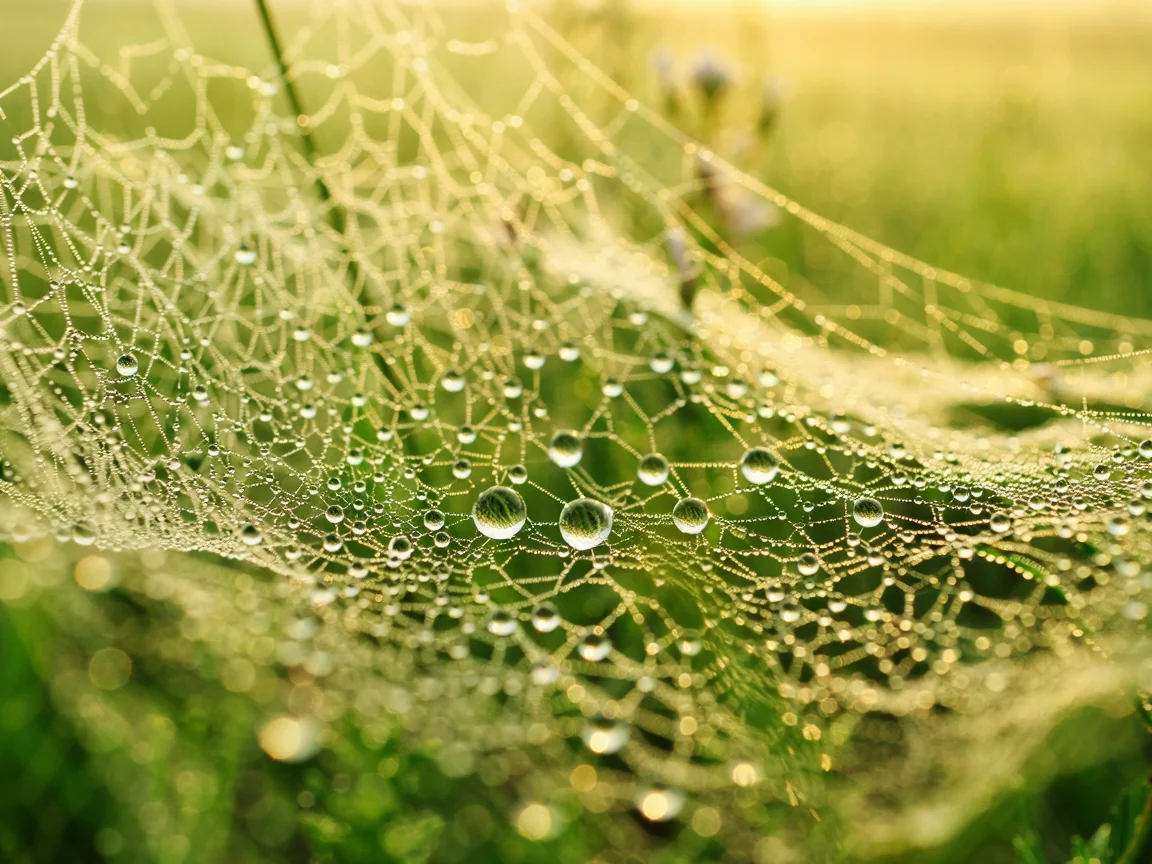
Spider silk is made of proteins called spidroins. Inside the spider they are stored as a thick liquid. As the liquid flows through a tapering duct, changes in acidity and shearing forces line up the molecules and turn them into a solid fibre, which the spider pulls out through its spinnerets.
Many silks for many jobs
An orb-weaving spider can make several types of silk from different glands. Strong dragline silk forms the frame and the spider's safety line. Stretchy, sticky capture silk forms the spiral that traps insects. Other silks wrap prey or build egg cases.
Strength plus stretch
Dragline silk is about as strong as high-grade steel by weight and can stretch by a large fraction of its length before breaking. That combination makes it extraordinarily tough, able to absorb the energy of a flying insect without snapping. Some spiders also use silk to drift on the wind, a behaviour called ballooning.
Copying the spider
Spiders are territorial and cannibalistic, so they cannot be farmed like silkworms. Researchers instead insert spider-silk genes into bacteria, yeast or even goats to produce silk proteins, then spin them into fibres. Possible uses include medical sutures, lightweight textiles and protective gear.
Sources & further reading
Material values are approximate and vary across studies. Photograph: original AI-generated illustration (Adobe Firefly). Reference organisations do not endorse this website.