Water that refuses to freeze
Water in the atmosphere does not automatically freeze at 0 °C. Tiny cloud droplets can remain liquid well below that temperature, a state called supercooling, because freezing needs a starting point. In nature, that starting point is usually an ice-nucleating particle, such as certain mineral dusts or biological fragments, on which ice can begin to form. Without enough of them, droplets can stay liquid down to around minus 38 °C, when they freeze spontaneously. Supercooled clouds are therefore common, especially in winter and at high altitudes. They matter because, in many mid-latitude clouds, most precipitation begins as ice crystals that grow, fall and may melt into rain on the way down.
Why silver iodide works
In 1946, the American atmospheric scientist Bernard Vonnegut discovered that silver iodide particles could trigger freezing in supercooled clouds at temperatures only a few degrees below zero. The reason is structural. Silver iodide forms crystals whose atomic arrangement closely resembles that of ordinary ice, so water molecules can line up on its surface as if continuing an existing ice crystal. Once ice forms, it grows quickly at the expense of nearby liquid droplets, because water vapour deposits more readily onto ice than onto liquid water at the same temperature. The ice crystals become heavy enough to fall. This seeding of cold clouds with ice-forming particles is known as glaciogenic seeding.
How seeding is delivered
Seeding operations release silver iodide in several ways. Aircraft can burn flares that emit a smoke of fine particles into the base or top of suitable clouds, or drop them from above. Ground-based generators on hillsides burn a solution containing silver iodide, relying on rising air to carry particles upward, a common approach in mountainous regions for winter snowpack programmes. Rockets and artillery shells have been used in some countries, sometimes for hail suppression. The quantities involved are small, typically grams per flare. Timing and targeting are critical: seeding only has a chance of working when clouds contain supercooled water and the right conditions for precipitation to develop and reach the ground.
Seeding in the Gulf
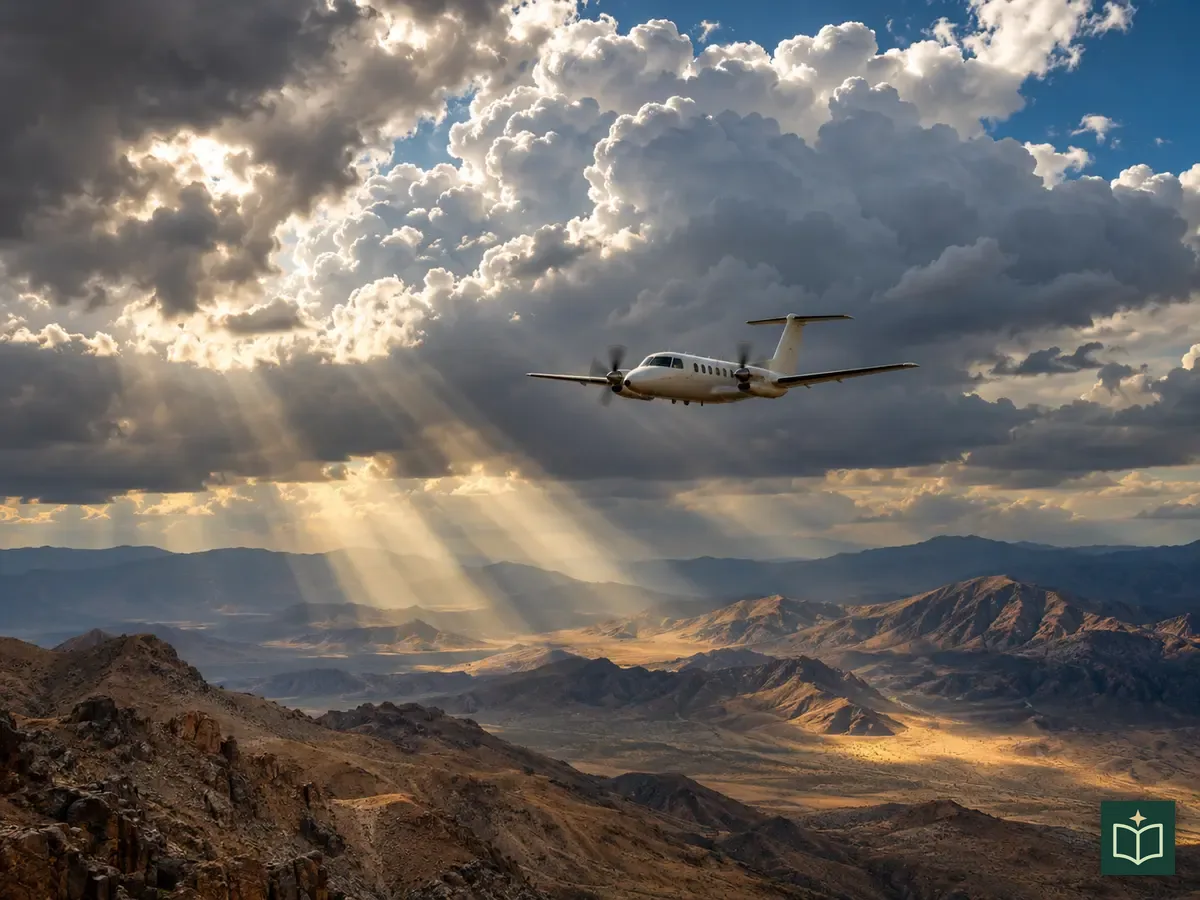
The UAE runs one of the world’s most active cloud seeding programmes, operated by its National Center of Meteorology, which uses aircraft to target suitable convective clouds, especially over mountainous areas in the east. Many of the region’s clouds are warm-based, so the programme relies mainly on hygroscopic seeding, which uses salt particles that attract water and help droplets grow, rather than relying on silver iodide alone. Since 2015, the UAE has also funded international research on rain enhancement through a dedicated research programme. The broader motivation is clear: the country receives very little rainfall each year and depends heavily on energy-intensive desalination for its fresh water.
What the evidence shows
Measuring cloud seeding’s effect is difficult because no one can observe what the same cloud would have done without seeding. Natural rainfall varies enormously, so researchers rely on randomised experiments, statistical comparisons and radar and aircraft measurements. Some studies, particularly of winter orographic clouds over mountains, have documented clear signals of seeding-induced snowfall in specific cases. Overall effects on seasonal rainfall are generally considered modest and highly dependent on conditions. The World Meteorological Organization has encouraged careful scientific evaluation and cautioned against exaggerated claims. Seeding cannot create clouds from clear skies or generate a storm system; it can at most change how existing clouds produce precipitation.
Safety and silver
Because silver iodide contains a metal, people sometimes worry about contamination. The amounts used in seeding are small, and silver iodide is poorly soluble in water. Studies of soils, snow and water downwind of long-running programmes have generally found silver concentrations well below levels considered harmful, although scientists continue to monitor for accumulation where seeding has continued for decades. Silver iodide is one of many uses of silver that consume relatively small amounts of the metal. Its significance lies less in tonnage than in an elegant piece of physics: a crystal that happens to imitate ice closely enough to persuade a cloud to change its behaviour.
Sources & further reading
Figures are rounded and widely published; check the linked organisations for the latest editions. These organisations do not endorse this website.