Gold for kings, copper for markets
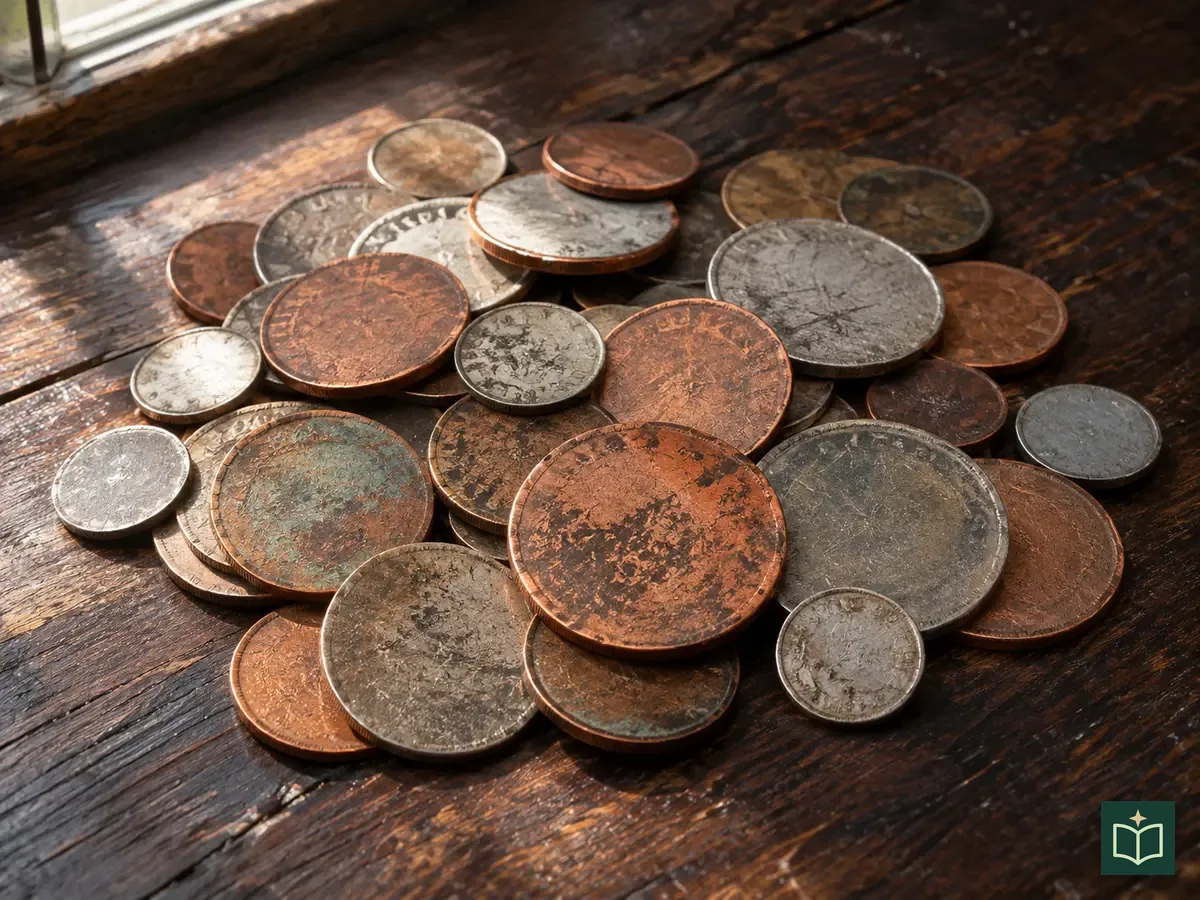
Gold and silver coins attract most historical attention, but most everyday transactions through history were paid in copper and bronze. Ancient China’s round cash coins, with their square central holes, were cast in bronze for well over two thousand years. Roman soldiers and traders used bronze and brass coins for small purchases, while silver and gold handled larger sums. Copper was abundant enough to be cheap, yet durable and easy to stamp, which made it ideal for low-value money. The pattern persisted for centuries: precious metals for savings and large payments, and copper-based coins for bread, fares and wages, the small change that kept markets moving.
Copper by the kilogram
When a coin’s value depends directly on its metal content, low-value metals produce awkward money. Sweden, a major copper producer in the seventeenth and eighteenth centuries, issued plate money: large rectangular slabs of copper stamped with their value. The largest pieces weighed close to 20 kilograms, so carrying a modest sum required a cart. The experiment illustrates a basic problem. If a coin must contain metal equal to its face value, cheap metals make heavy coins. Modern coins solved this by becoming token money, worth more as currency than as metal, with value guaranteed by the issuing authority rather than by the weight of copper they contain.
The useful alloys
Pure copper is soft and tarnishes, so most coins use alloys. Cupronickel, typically 75% copper and 25% nickel, gives a hard, silvery coin that resists wear; it is used in many countries, including for the US five-cent coin and for many coins that have circulated across the Gulf over the years. Nickel-brass and aluminium-bronze give a golden colour. The euro’s 10, 20 and 50 cent coins use Nordic gold, an alloy of about 89% copper with aluminium, zinc and tin, which contains no gold at all. Two-colour coins, such as the euro’s one and two euro pieces, combine different copper alloys in a ring and centre.
When the metal is worth too much
Token coins work only while their metal is worth less than their face value. If metal prices rise far enough, people may melt coins for their content, an example of Gresham’s law, the observation that money with higher intrinsic value tends to be hoarded or removed from circulation. Mints respond by changing materials. The US one-cent coin was mostly copper until 1982, when it switched to a zinc core with a thin copper plating, about 97.5% zinc by weight. British one and two pence coins moved from bronze to copper-plated steel in 1992, and the euro’s smallest coins are copper-plated steel. Their appearance stayed the same while their content changed.
Telling them apart
Because plated coins look like solid copper, collectors and recyclers use simple tests. Copper-plated steel coins are attracted to a magnet, while bronze and solid copper coins are not. Weight also differs: American cents made after the change are noticeably lighter than earlier ones. Vending machines check more than appearance, measuring a coin’s size, weight and electrical and magnetic properties, which vary with its alloy. This is one reason alloy choice matters to counterfeit resistance. Some modern coins use carefully engineered multi-layer materials that give a distinctive electromagnetic signature, making them harder to imitate with cheap substitutes while remaining inexpensive for the mint to produce in large numbers.
Why small change still matters
Coins are a small part of modern money, and their use has fallen as card and phone payments have spread, particularly in Gulf cities. Some countries have stopped producing their lowest-value coins altogether, rounding cash totals instead, partly because each coin costs more to make than it is worth. Yet coins remain important for many people and for some machines and transactions. For copper, the trend means coinage is now a minor use compared with wiring, electronics and construction. This explainer is educational and offers no investment advice; melting or exporting coins is restricted in some countries. Small change, in short, records centuries of compromise between metal, money and trust.
Sources & further reading
Figures are rounded and widely published; check the linked organisations for the latest editions. These organisations do not endorse this website.