Two kinds of floating ice
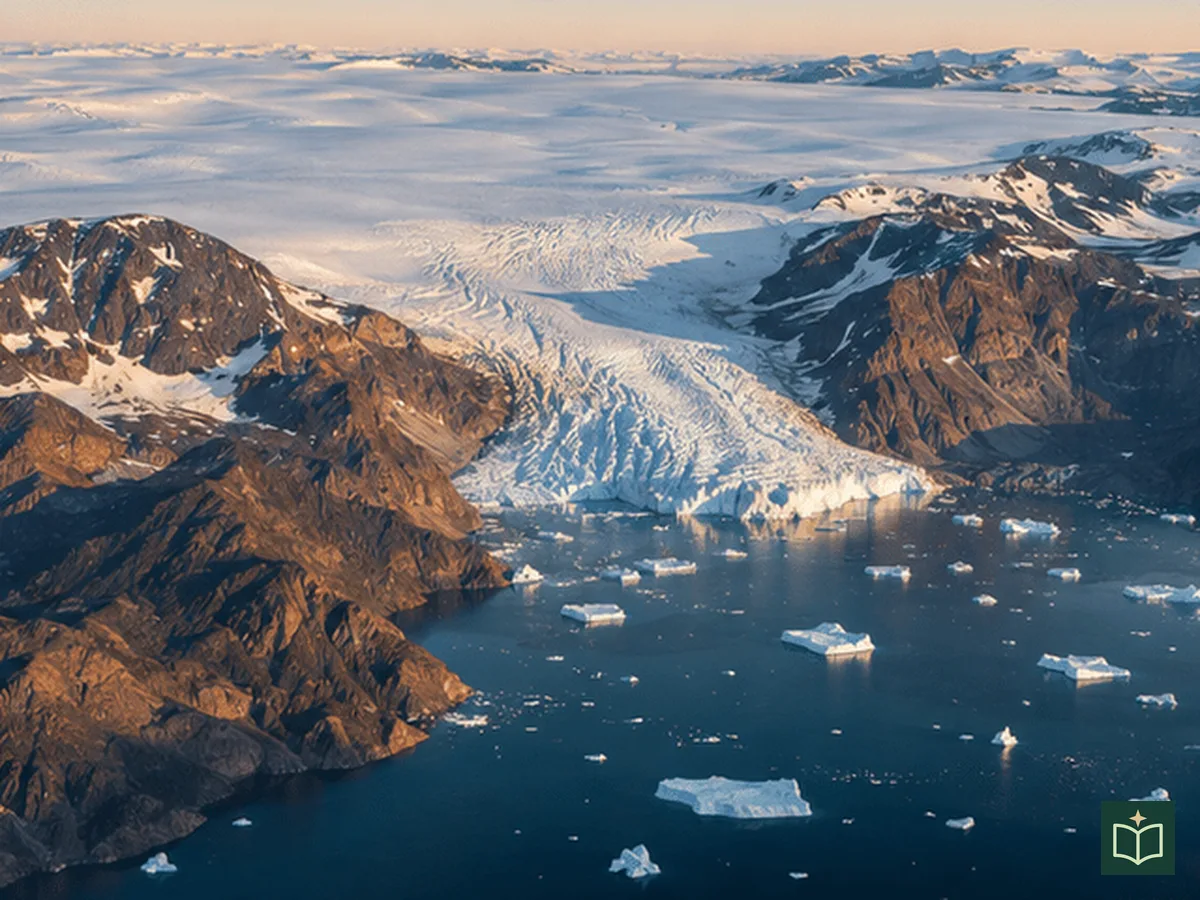
From a ship in polar waters, sea ice and icebergs can look alike, but they have very different origins. Sea ice is the ocean itself, frozen at the surface. It forms, grows and melts every year, covering millions of square kilometres around the Arctic and Antarctica. Icebergs are pieces of glaciers and ice sheets, formed on land from snow compressed over centuries and carried to the coast by flowing ice. When a glacier reaches the sea, chunks break off, a process called calving, and float away. Sea ice is made from salt water; icebergs are frozen fresh water that fell as snow.
How the sea freezes
Seawater freezes at around minus 1.8°C, lower than fresh water because of its salt. As it cools, tiny ice crystals form, creating a soupy layer called frazil ice. Waves can knit these into round pancakes, which then freeze together into a continuous sheet. Most of the salt is pushed out as the ice forms, draining as dense brine into the water below, which helps drive deep ocean currents. First-year sea ice is typically one to two metres thick. In the Arctic, ice that survives several summers can grow thicker, while ridges where floes collide pile up much higher. Sea ice extent peaks in late winter and shrinks in summer.
Mountains of glacier ice
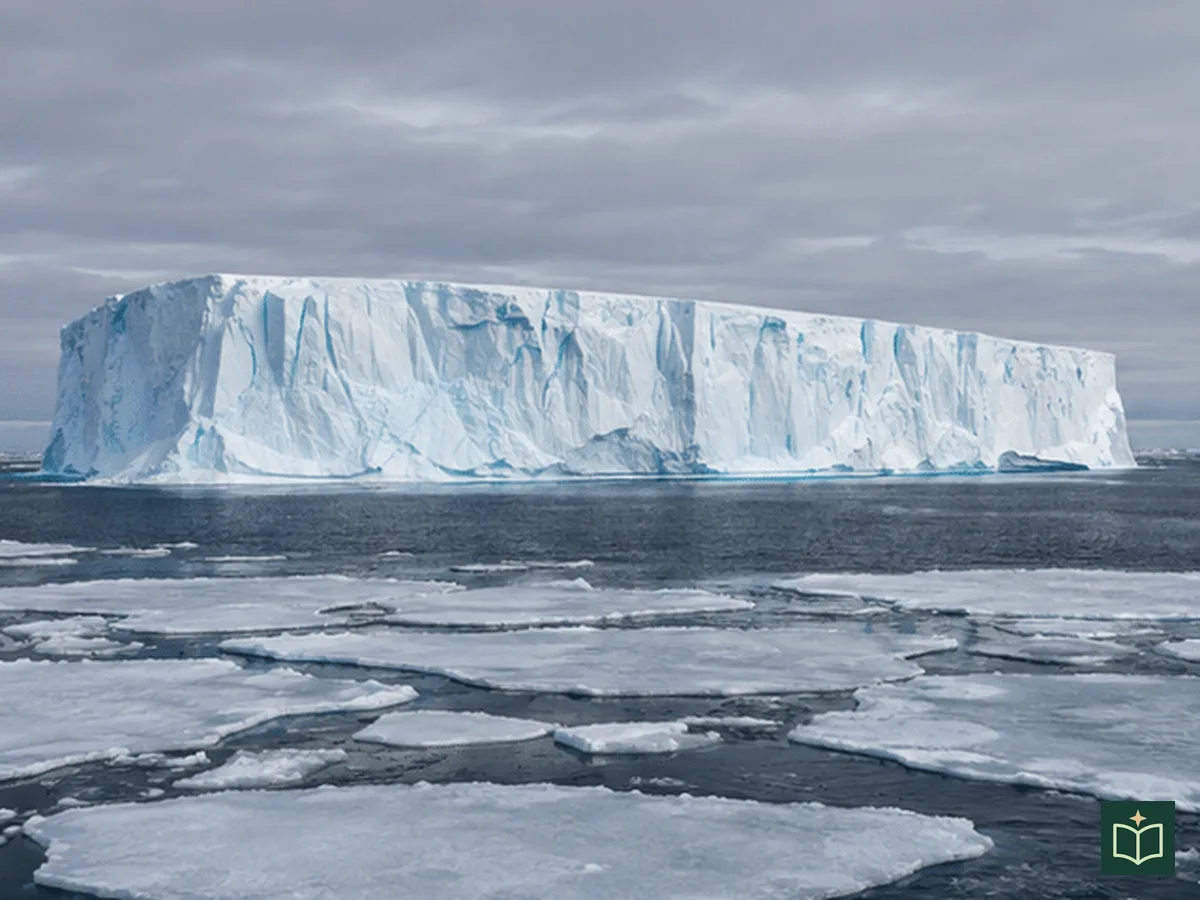
Icebergs come in every size, from small growlers the size of a car to tabular bergs the size of a small country. The largest calve from Antarctica’s floating ice shelves; one called B-15, which broke from the Ross Ice Shelf in 2000, covered roughly 11,000 square kilometres. Most of an iceberg hides underwater. Glacier ice has a density of about 917 kilograms per cubic metre and seawater about 1,025, so around 89 per cent of a floating iceberg lies beneath the surface. Icebergs from Greenland drift south into the North Atlantic shipping lanes, where one famously sank the Titanic in 1912.
Why melting floating ice barely matters
Floating ice already displaces its own weight of water, as Archimedes showed more than two thousand years ago. When it melts, the meltwater fills almost exactly the space the ice was displacing, so the sea level hardly changes. This is true for sea ice and for icebergs. Fresh meltwater is slightly less dense than salty seawater, so the level rises by a very small amount, but the effect is minor. The real rise happens earlier, at the moment a glacier pushes ice from land into the ocean, or when meltwater runs off an ice sheet. Ice on land is what counts.
Why sea ice still matters
Even though melting sea ice does not raise sea level significantly, its loss has major consequences. Bright ice reflects most of the sunlight that falls on it, while dark open water absorbs most of it. As Arctic sea ice shrinks, the ocean absorbs more heat, which melts more ice, a feedback that helps explain why the Arctic is warming several times faster than the global average. Satellites have tracked a marked decline in Arctic summer sea ice since records began in 1979. Polar bears, seals and walruses depend on the ice, as do Indigenous hunters, and its retreat is opening new shipping routes.
Watching both kinds of ice
Scientists monitor sea ice and land ice with different tools. Satellite sensors measure the area of sea ice daily, while radar and laser altimeters track its thickness. For ice sheets, satellites measure height changes and tiny variations in gravity caused by gains and losses of mass. Icebergs are tracked by national ice services and, in the North Atlantic, by the International Ice Patrol, set up after the Titanic disaster. Together these measurements answer two separate questions: how the polar oceans are changing, which affects climate and wildlife, and how much land ice is entering the sea, which decides how fast sea level rises.
Sources & further reading
- National Snow and Ice Data Center · Sea ice ↗
- NOAA · What is the difference between sea ice and icebergs? ↗
- NASA · Vital signs: Arctic sea ice ↗
Figures are rounded and widely published; check the linked organisations for the latest editions. These organisations do not endorse this website.