The launch
On 12 May 2025, shortly before a visit by the US President, Saudi Crown Prince Mohammed bin Salman announced the launch of HUMAIN, a company wholly owned by the Public Investment Fund, the kingdom's sovereign wealth fund. Chaired by the Crown Prince, HUMAIN was given a broad mandate: to operate and invest across the entire AI value chain, from data centres and cloud computing to AI models, products and services, and to accelerate AI adoption across the Saudi economy.
Big partnerships
Within days, HUMAIN announced agreements with major US technology companies, including Nvidia for advanced AI chips, AMD, Amazon Web Services and Qualcomm, reported to total around 23 billion dollars. Nvidia said it would supply hundreds of thousands of its most advanced processors over several years, starting with a first deployment of about 18,000 chips. Later in 2025 HUMAIN signed further deals, including a partnership with AirTrunk, backed by Blackstone, to develop data centres in the kingdom, and announced plans for a 10 billion dollar venture fund.
Data centres at scale
HUMAIN plans to develop about 1.9 gigawatts of data centre capacity by 2030, expanding to around 6 gigawatts by 2034. Saudi Arabia has advantages for this: abundant and relatively cheap energy, large areas of land and deep financial resources. The company's chief executive, Tareq Amin, said in 2025 that demand was strong enough that its existing and under-construction capacity had already been sold. The goal is for the kingdom to serve as a hub for AI computing for the region and for international customers.
Arabic AI and HUMAIN Chat
HUMAIN also builds AI models. Its flagship, ALLaM, an Arabic-first large language model originally developed by the Saudi Data and Artificial Intelligence Authority, was trained on more than 500 billion Arabic tokens, according to the company. In August 2025 HUMAIN launched HUMAIN Chat, a consumer app powered by ALLaM 34B that works in Arabic and English, aimed at the more than 400 million Arabic speakers worldwide, with an emphasis on cultural and linguistic accuracy.
Part of Vision 2030
HUMAIN fits within Saudi Arabia's Vision 2030 programme to diversify the economy away from oil. The Saudi Data and Artificial Intelligence Authority, established in 2019, sets national AI strategy and regulation. The kingdom aims to become one of the world's leading AI-ready economies and to create jobs and skills in technology. Large events such as the Future Investment Initiative in Riyadh have become stages for announcing AI investments and partnerships.
AI in Saudi public life
AI is spreading through Saudi government and business beyond HUMAIN. Government platforms use AI to process services, the national oil company Saudi Aramco applies AI to exploration, drilling and maintenance, and the giga-projects of Vision 2030, such as NEOM, are planned with digital and AI systems at their core. Universities including the King Abdullah University of Science and Technology run AI research programmes. These efforts create the demand that HUMAIN's data centres and models are designed to serve.
Regional competition
Saudi Arabia and the UAE are both pursuing ambitious AI strategies, sometimes in friendly competition for investment, talent and partnerships with US technology companies. The UAE moved earlier, with its AI minister in 2017, MBZUAI and G42, while Saudi Arabia has brought enormous financial scale through the Public Investment Fund. Qatar and other Gulf states are also investing. Together, they are turning the Gulf into one of the fastest-growing regions for AI infrastructure.
Challenges
Turning plans into reality will require solving hard problems: securing export approvals for advanced US chips, building and cooling data centres in extreme heat, attracting and training skilled engineers, and finding enough customers to use vast new capacity. Critics also raise questions about governance, privacy and the concentration of AI capabilities in state-linked entities. HUMAIN's progress over the next few years will show how far capital and energy can accelerate an AI industry.
Why it matters
HUMAIN represents one of the boldest national bets on AI anywhere. If it succeeds, Saudi Arabia could become a major supplier of AI computing and Arabic AI services, reshaping the regional technology landscape. For Arabic speakers, more competition among Arabic-first models should mean better tools in their own language. For the global AI industry, it adds another major customer and partner, and another sign that AI infrastructure is spreading beyond its traditional centres.
Sources & further reading
- PIF · HRH Crown Prince launches HUMAIN (2025) ↗
- Semafor · PIF's AI unit has already sold out its data center capacity (2025) ↗
- Arab News · How Saudi Arabia's Humain is pushing Arabic AI ↗
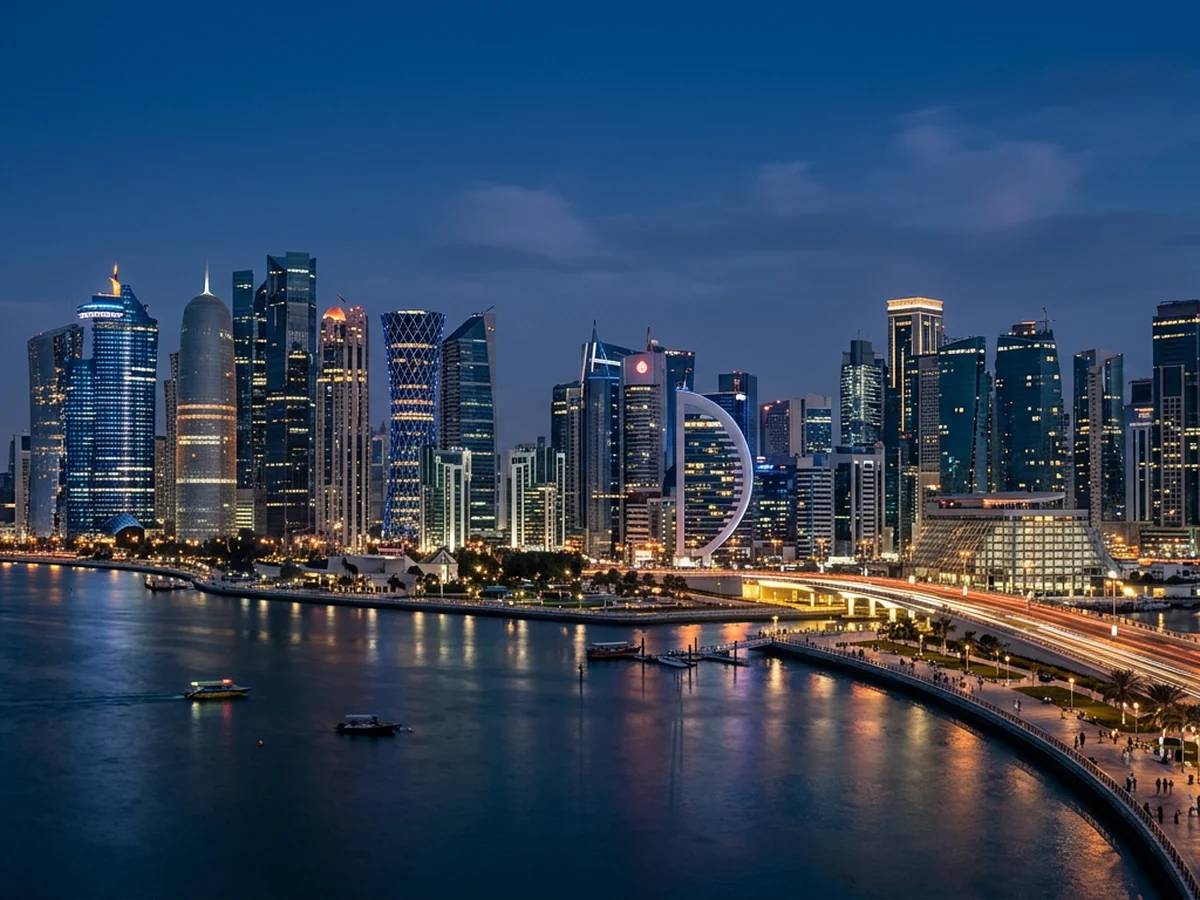
Company plans and figures are as reported and may change. Photograph: original AI-generated illustration (Adobe Firefly). Reference organisations do not endorse this website.