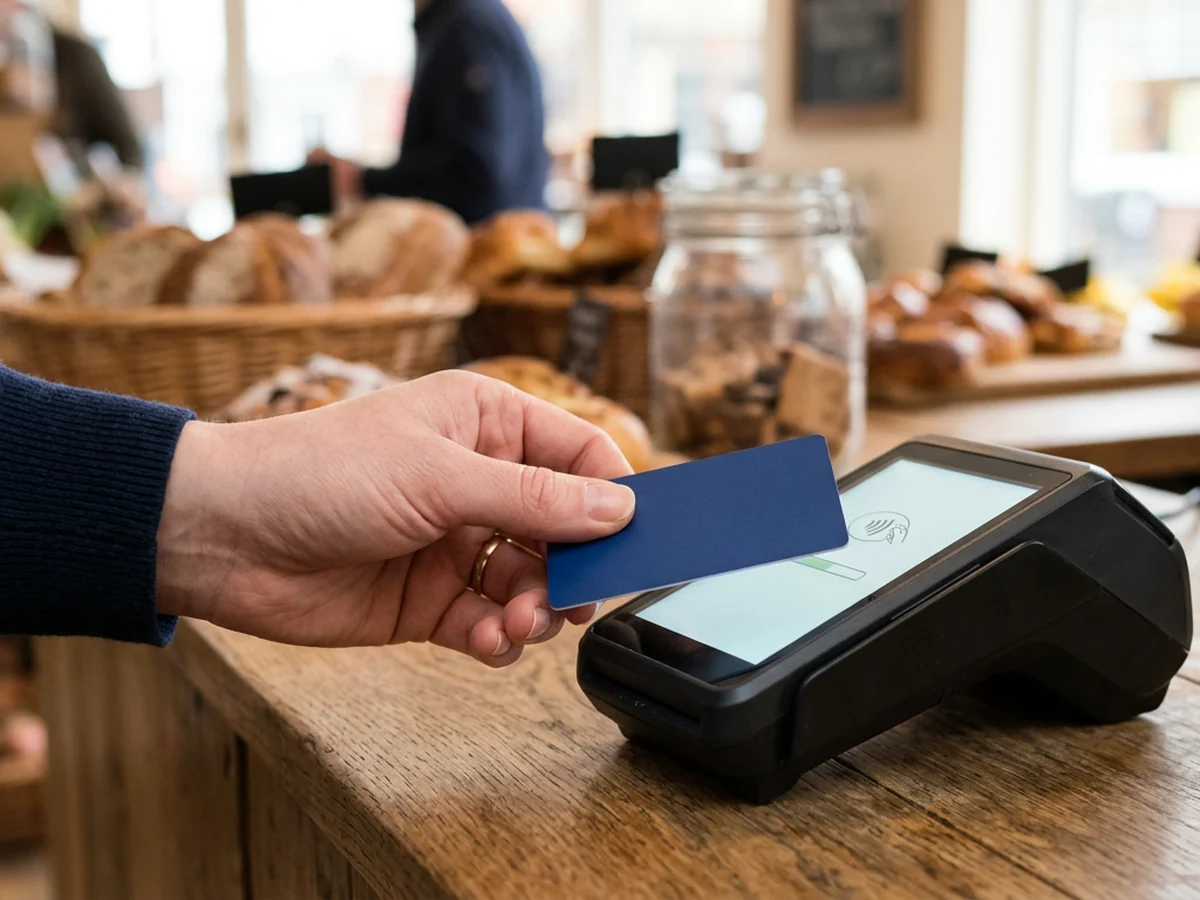
A decision in milliseconds
When you tap a card or pay online, the payment network and your bank must decide almost instantly whether to approve it. Behind that decision sit machine learning models trained on billions of past transactions. They consider dozens or hundreds of signals: the amount, the merchant, the location, the device, the time of day, how fast purchases are being made and how all of this compares with your usual behaviour. The result is a risk score that determines whether the payment goes through, is declined or triggers an extra check.
Why AI replaced rigid rules
Fraud prevention once relied heavily on fixed rules, such as blocking transactions above a certain amount in another country. Rules are easy for criminals to learn and work around, and they frequently block legitimate customers, a problem known as false positives. False declines frustrate customers and cost merchants sales. Machine learning adapts to new patterns, weighs many factors together and can be retrained as fraud tactics change, making it both more accurate and less intrusive.
What the industry reports
In Mastercard's 2025 payment fraud research, produced with Financial Times Longitude, organisations reported losing an average of about 60 million dollars to payment fraud over the past year. Many said AI was paying off: 83% said AI had significantly reduced false positives and customer churn, 42% of card issuers said AI had saved them more than 5 million dollars in fraud attempts over two years, and most reported faster investigations. These are self-reported figures, but they reflect broad industry experience.
Criminals adopt AI too
Fraudsters use generative AI to write convincing phishing messages in any language, clone voices, create deepfake videos and invent synthetic identities that blend real stolen data with fabricated details. Deloitte's Center for Financial Services projected that generative AI could enable fraud losses in the United States to reach 40 billion dollars by 2027, up from 12.3 billion in 2023. Payment leaders in Mastercard's survey named synthetic identity fraud and impersonation scams among the fastest-growing threats.
Beyond card payments
AI fraud detection also protects bank transfers, instant payments, insurance claims, loan applications and online accounts. Real-time payment systems, which move money in seconds, leave little time to stop a fraudulent transfer, so banks analyse behaviour such as unusual typing patterns or a customer being on a phone call while making a transfer, a sign they may be being coached by a scammer. Insurers use AI to flag suspicious claims, and lenders use it to detect fake documents.
Scam prevention, not just card fraud
A growing share of losses comes not from stolen card details but from authorised push payment scams, in which victims are tricked into sending money themselves, for example to someone posing as a relative, an investment adviser or a bank official. Because the customer authorises the payment, traditional fraud checks may not catch it. Banks now use AI to spot warning signs such as first-time payments to new recipients, unusual amounts and suspicious messaging, and to pause transfers for a warning or a call.
Privacy and fairness
Fraud models process sensitive personal data, so banks must comply with data protection laws and keep information secure. Models must also be monitored for unfair outcomes, for example if customers from certain areas or backgrounds are blocked more often without good reason. Regulators increasingly expect banks to explain how automated decisions are made and to offer customers a way to resolve wrongly blocked transactions quickly.
In the UAE
The UAE has one of the world's highest rates of digital and card payments, which makes fraud prevention a priority. UAE banks use AI-based monitoring and send real-time alerts, and the Central Bank and police regularly warn residents about impersonation scams, fake websites and calls from people pretending to be bank staff. Authorities stress that banks will never ask for one-time passwords or full card details by phone, a message that matters more as voice cloning spreads.
What customers can do
AI catches most fraud quietly, but customers remain the last line of defence against scams that trick them into authorising payments. Use the bank's official app, enable alerts and biometric logins, never share one-time codes, be suspicious of urgent requests even from familiar voices, and verify by calling a known number. If something seems wrong, contact the bank immediately; the faster a fraud is reported, the better the chance of stopping or recovering a payment.
Sources & further reading
- Mastercard · AI is helping banks save millions by transforming payment fraud prevention (2026) ↗
- Deloitte · Generative AI is expected to magnify the risk of deepfakes and other fraud in banking ↗
- Central Bank of the UAE · Consumer protection ↗
Industry figures are survey-based or projections; report suspected fraud to your bank immediately. Photograph: original AI-generated illustration (Adobe Firefly). Reference organisations do not endorse this website.