A word from Arabic
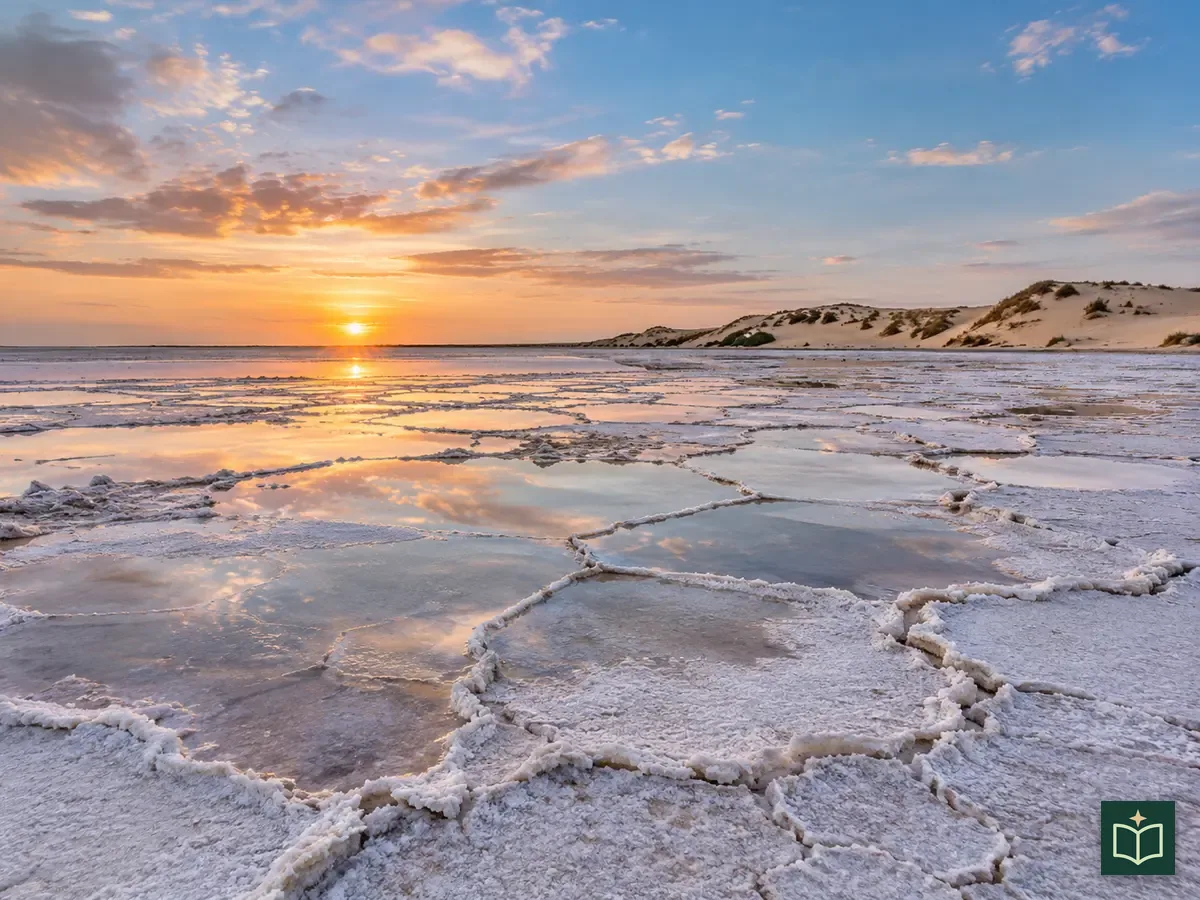
Sabkha is an Arabic word for a salt flat, now used by geologists worldwide. It describes a flat, barren surface of sand, silt and mud, crusted with salt and lying just above the water table. Coastal sabkhas form along low shores in hot, dry climates, where land slopes so gently towards the sea that a small rise in water level floods large areas. Inland sabkhas form in desert basins where groundwater reaches the surface. The coastline west of Abu Dhabi hosts one of the largest and most studied coastal sabkhas on Earth, stretching for hundreds of kilometres between the dunes and the lagoons.
How the salt builds up
The process is driven by evaporation. Along the Gulf coast, annual rainfall is typically less than 100 millimetres, while the potential for evaporation is many times higher. Seawater washes over the outer sabkha during high tides and storms, and saline groundwater seeps landward beneath it. In the heat, water is drawn upward through the sediment and evaporates, leaving its dissolved minerals behind. Gypsum crystals grow within the mud, while a crust of halite, ordinary salt, forms on the surface. Deeper down, gypsum can convert to anhydrite. The surface may look dry and firm, yet a soft, wet layer often lies just beneath.
Microbial mats and dolomite
Between the sabkha and the sea lies an intertidal zone covered in microbial mats, layered communities of cyanobacteria and other microbes that trap sediment and survive extreme salinity and heat. They resemble the builders of stromatolites, among the oldest evidence of life on Earth, so researchers study them for clues about early ecosystems. The sabkha also helped solve a geological puzzle. Dolomite, a common rock in ancient formations, rarely forms in modern settings. In the 1960s researchers found it forming in the Abu Dhabi sabkha, linked to saline, magnesium-rich groundwater, and the coast became a reference model for interpreting ancient evaporite rocks, including some that host oil and gas.
Building on salt
For engineers, sabkha is a challenging foundation. Its sediments can be weak and compressible when wet, and the crust may collapse when water dissolves the salts that bind it. The groundwater is highly corrosive to concrete and steel, so construction requires sulphate-resistant materials, protective coatings and careful drainage. Roads and pipelines crossing sabkha flats are often raised on embankments. As Abu Dhabi and its industrial zones expanded along the coast, ground improvement techniques such as compaction, replacing poor soil and driving piles became routine. Mapping where sabkha lies beneath the surface is therefore an early step in many Gulf construction projects.
Habitat and heritage
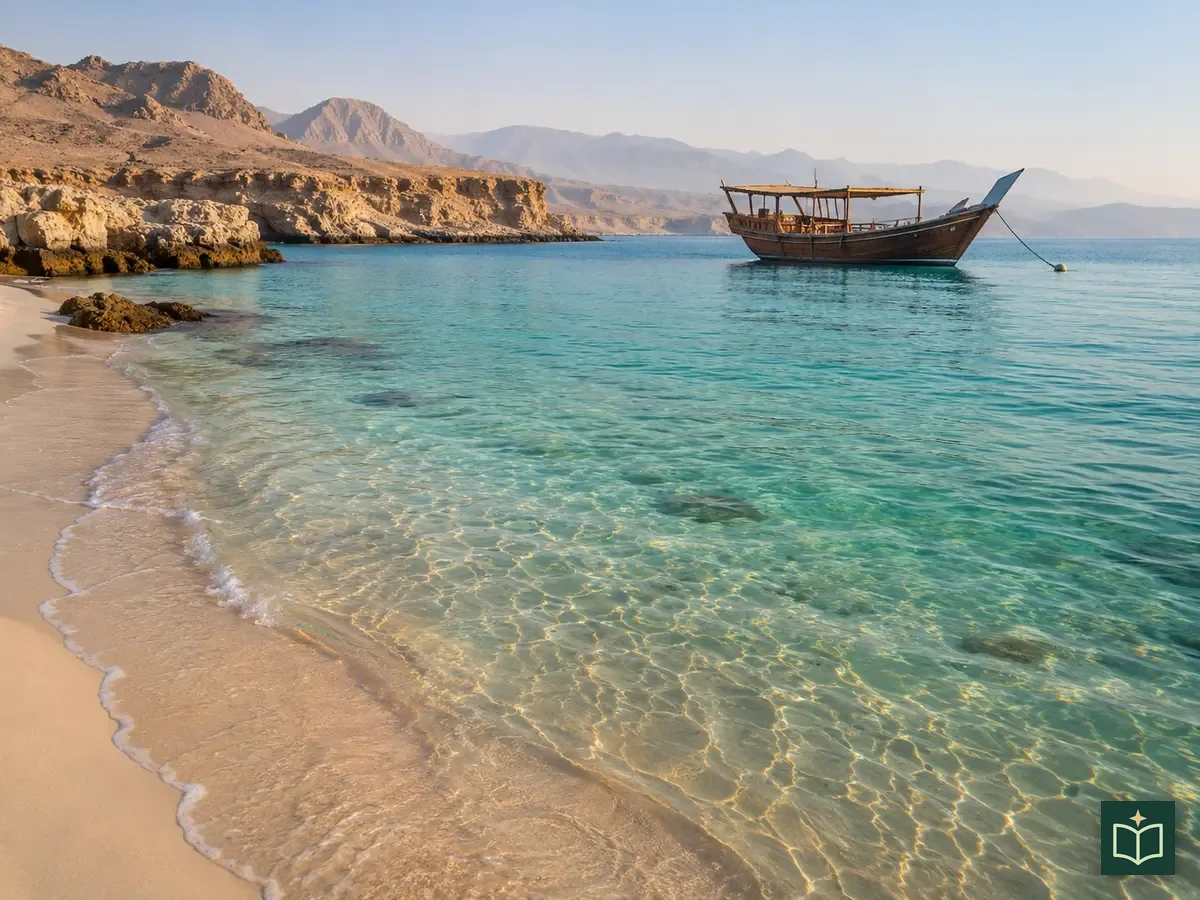
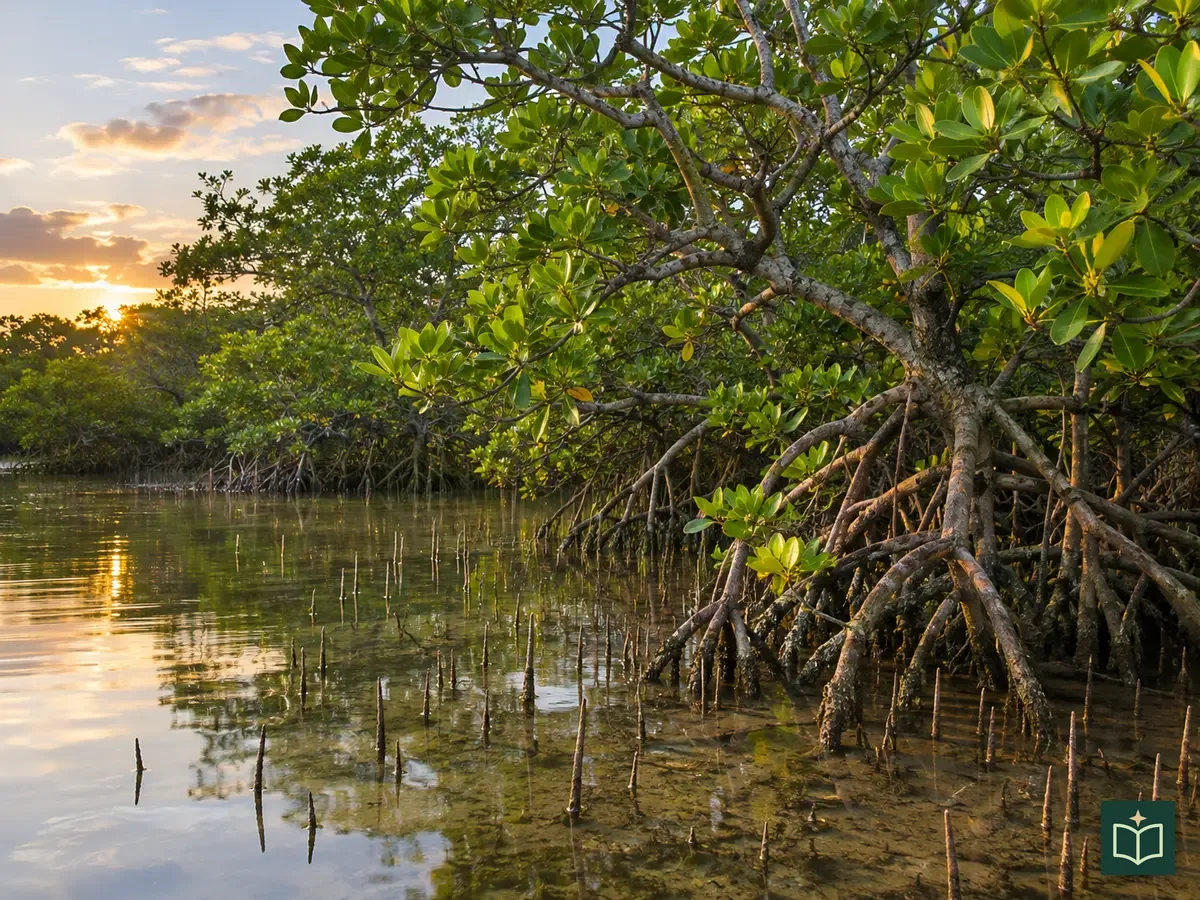
Sabkhas appear lifeless but form part of a wider coastal system that includes lagoons, seagrass beds, mangroves and coral reefs. Migratory shorebirds feed along the intertidal margins, and the microbial mats support specialist organisms. In the past, people harvested salt from sabkha surfaces and used the flats as routes along the coast. Some sabkhas preserve archaeological remains and records of sea-level changes over the past several thousand years, as the Gulf shoreline shifted after the last ice age. Protected areas along the Abu Dhabi coast now safeguard parts of this mosaic of habitats as development continues around them. Several of these areas are open to visitors on guided routes.
What to watch
Because sabkhas sit only slightly above sea level, they are sensitive to changes in sea level and storm patterns. A modest rise could push salt water further inland, alter groundwater flow and change where minerals form. Coastal development, dredging and land reclamation also modify how tides and sediments reach the flats. Scientists use sabkhas as analogues for salty environments on Mars, where orbiting spacecraft have detected sulphate and chloride minerals left by evaporating water. For now, the Abu Dhabi sabkha continues to serve as an open-air laboratory, where processes that built ancient rock formations can be watched operating today. Few places offer such a clear view of geology in action.
Sources & further reading
Figures are rounded and widely published; check the linked organisations for the latest editions. These organisations do not endorse this website.