A prosperous town on the bay
In the first century AD, Pompeii was a busy town of perhaps 10,000 to 12,000 people on the Bay of Naples, in southern Italy. It had a forum, temples, theatres, public baths, an amphitheatre, workshops, bakeries and elegant houses decorated with wall paintings. Vineyards covered the slopes of Vesuvius nearby, and few Romans thought of it as a volcano; it had been quiet for centuries. In AD 62 or 63, however, a strong earthquake damaged buildings across the region, and when disaster struck seventeen years later, many repairs were still unfinished. Smaller tremors in the days before the eruption were probably warnings that nobody recognised.
An eyewitness account
We know a great deal about the eruption because a witness wrote it down. Pliny the Younger, then 17, was staying across the bay at Misenum. Years later he described the event in two letters to the historian Tacitus. He saw a vast cloud rising from the mountain, spreading at the top like the branches of an umbrella pine. His uncle, Pliny the Elder, an admiral and naturalist, sailed with warships to help people on the coast and died at Stabiae. Volcanologists still call this kind of explosive eruption, with a towering column of gas and fragmented rock, a Plinian eruption, in honour of Pliny’s description.
Hours of falling pumice
The eruption began around midday. A column of gas, ash and pumice rose an estimated 30 kilometres or more, and winds carried the debris south-east, straight over Pompeii. For many hours, light pumice stones rained down, accumulating to a depth of almost three metres. Roofs collapsed under the weight and streets filled up. Many residents fled during this phase, and most of the population is thought to have escaped, although we do not know how many died elsewhere. Others stayed, sheltering indoors or hoping to save possessions, perhaps unaware of the greater danger to come. Some were killed by falling roofs and walls during the pumice fall.
The deadly surges
Early the next morning, the eruption column partly collapsed. That produced pyroclastic density currents: fast-moving, ground-hugging clouds of hot gas, ash and rock that can travel at more than 100 kilometres an hour. The first currents struck Herculaneum, closer to the volcano, where hundreds of people sheltering in boat sheds by the shore were killed instantly. Later surges reached Pompeii, killing everyone left in the town by heat and suffocation. Several metres of fine ash then sealed the ruins. Herculaneum was buried even more deeply, under about 20 metres of material, which carbonised wooden furniture, food and even papyrus scrolls in a library.
Plaster casts and preserved streets
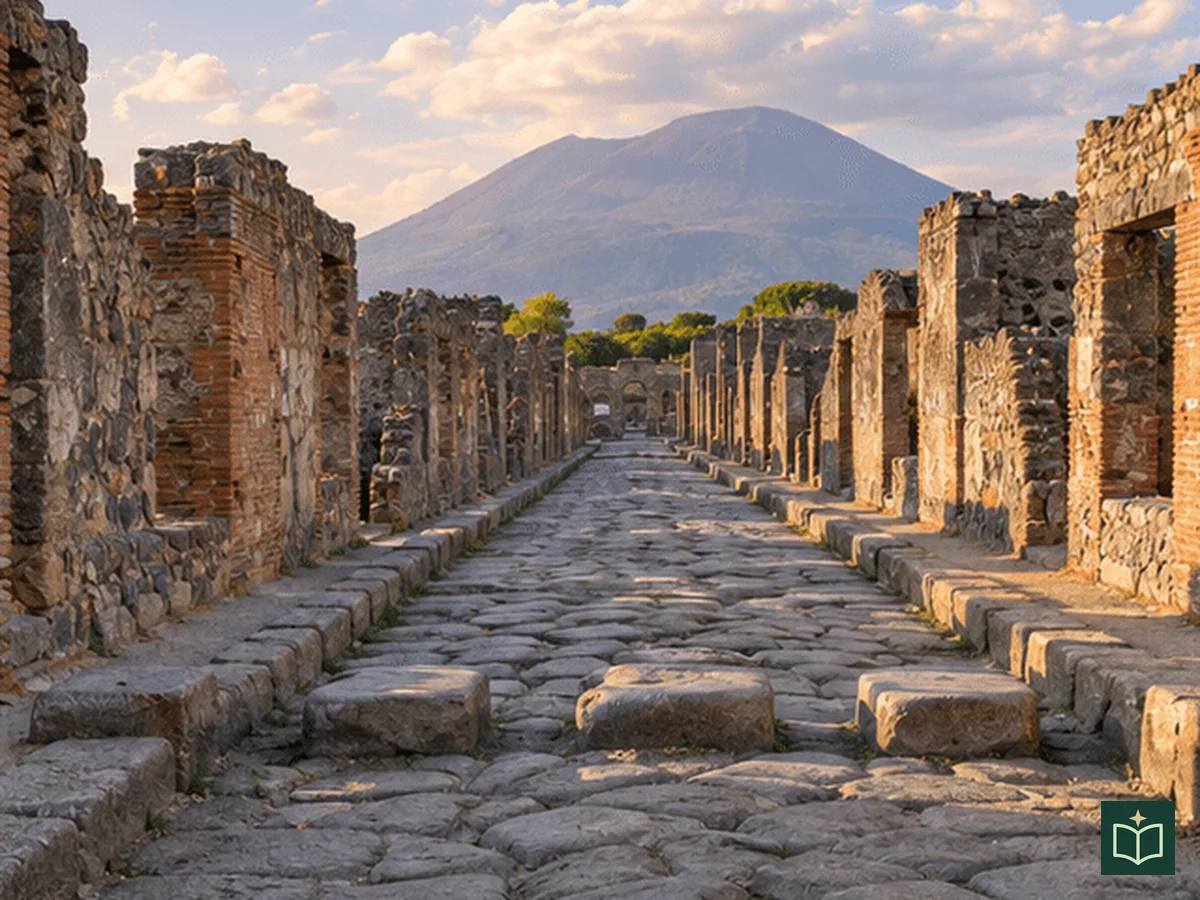
Organised excavation at Pompeii began in 1748. In 1863 the archaeologist Giuseppe Fiorelli noticed that bodies had decayed inside the hardened ash, leaving hollow spaces in their shape. By pouring plaster into these voids, he created casts that show victims’ final postures, clothing folds and even facial expressions. Skeletons of more than a thousand people have been found so far. Today around two-thirds of the town’s 66 hectares have been uncovered, and work continues. The archaeological areas of Pompeii, Herculaneum and Torre Annunziata were listed by UNESCO in 1997, and conservation of exposed walls, paintings and floors is a major ongoing challenge.
Everyday life revealed
Because the town was buried suddenly, Pompeii preserves ordinary details that rarely survive. Streets have stepping stones and ruts worn by carts. Dozens of street-food counters, called thermopolia, have jars set into their counters for hot food. Bakeries contain ovens and lava-stone mills, and carbonised loaves have been found. Walls are covered in graffiti, from election slogans and adverts for gladiator shows to jokes, insults and love messages. Laundries, workshops and shops show a busy commercial economy. Recent excavations continue to find vivid paintings and rooms used by enslaved workers, giving historians a fuller picture of who lived and worked in a Roman town.
Sources & further reading
- UNESCO World Heritage · Archaeological Areas of Pompei, Herculaneum and Torre Annunziata ↗
- Britannica · Pompeii ↗
Figures are rounded and widely published; check the linked organisations for the latest editions. These organisations do not endorse this website.