From penny to sea-green
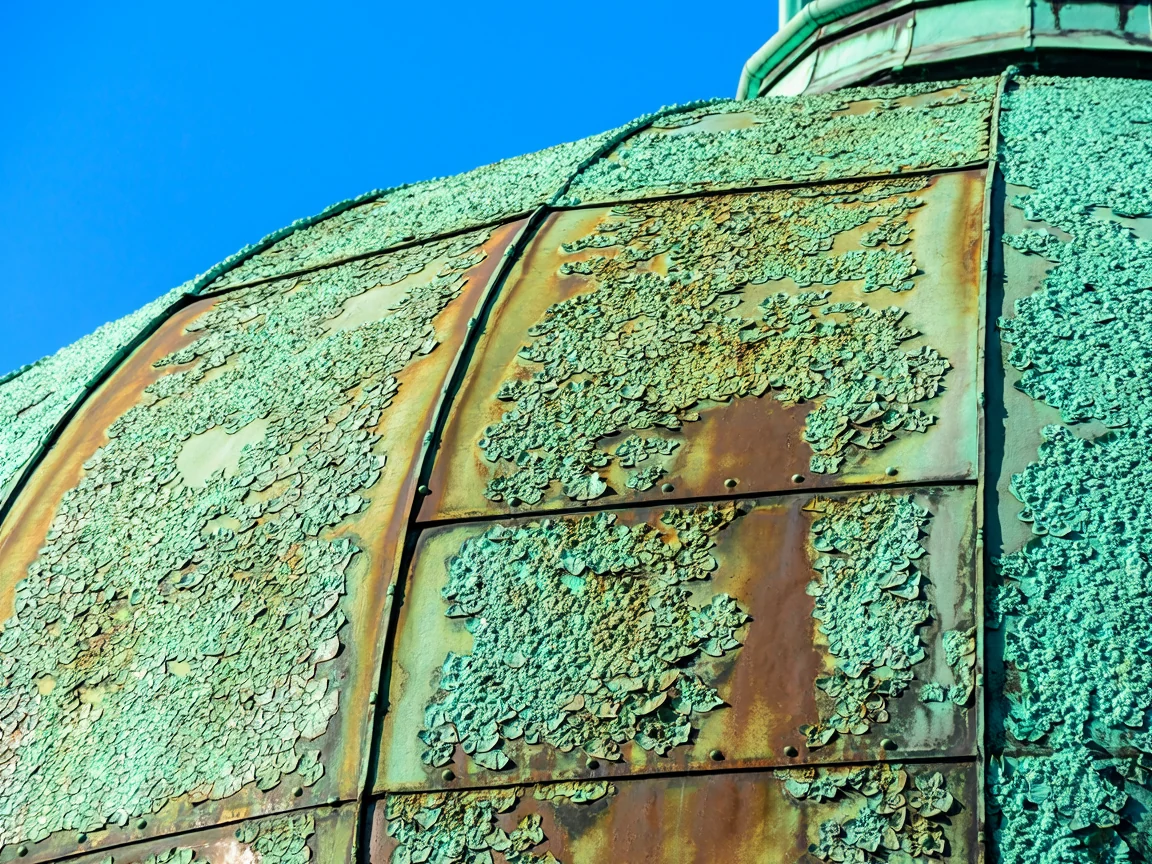
Freshly installed copper is a bright salmon colour. Within months it reacts with oxygen to form brown and then darker copper oxides. Over years, moisture and gases in the air turn the surface into a mixture of green minerals, chiefly basic copper sulphates and carbonates, and near the sea, chlorides.
Patina and verdigris
Patina is the general term for this weathered surface. Verdigris strictly refers to green copper acetates and related compounds formed when copper meets acids such as vinegar; it was once made deliberately as a pigment for paintings. In everyday speech, people often use verdigris for any green crust on copper.
A protective skin
The patina sticks firmly and is only slightly soluble, so it slows further corrosion. That is why copper roofs, gutters and statues can last for centuries. The Statue of Liberty, made of thin copper sheets, turned green within about thirty years of its unveiling in 1886.
Speeding or stopping it
Architects sometimes buy pre-patinated copper for an instant green look, or apply chemicals to accelerate the change. Owners who prefer the shine can polish and lacquer copper, but the coating must be maintained. Cleaning patina off historic monuments is usually avoided because it removes protection and original material.
Sources & further reading
Timescales vary with local climate and air quality. Photograph: original AI-generated illustration (Adobe Firefly). Reference organisations do not endorse this website.