An assembly on a rift
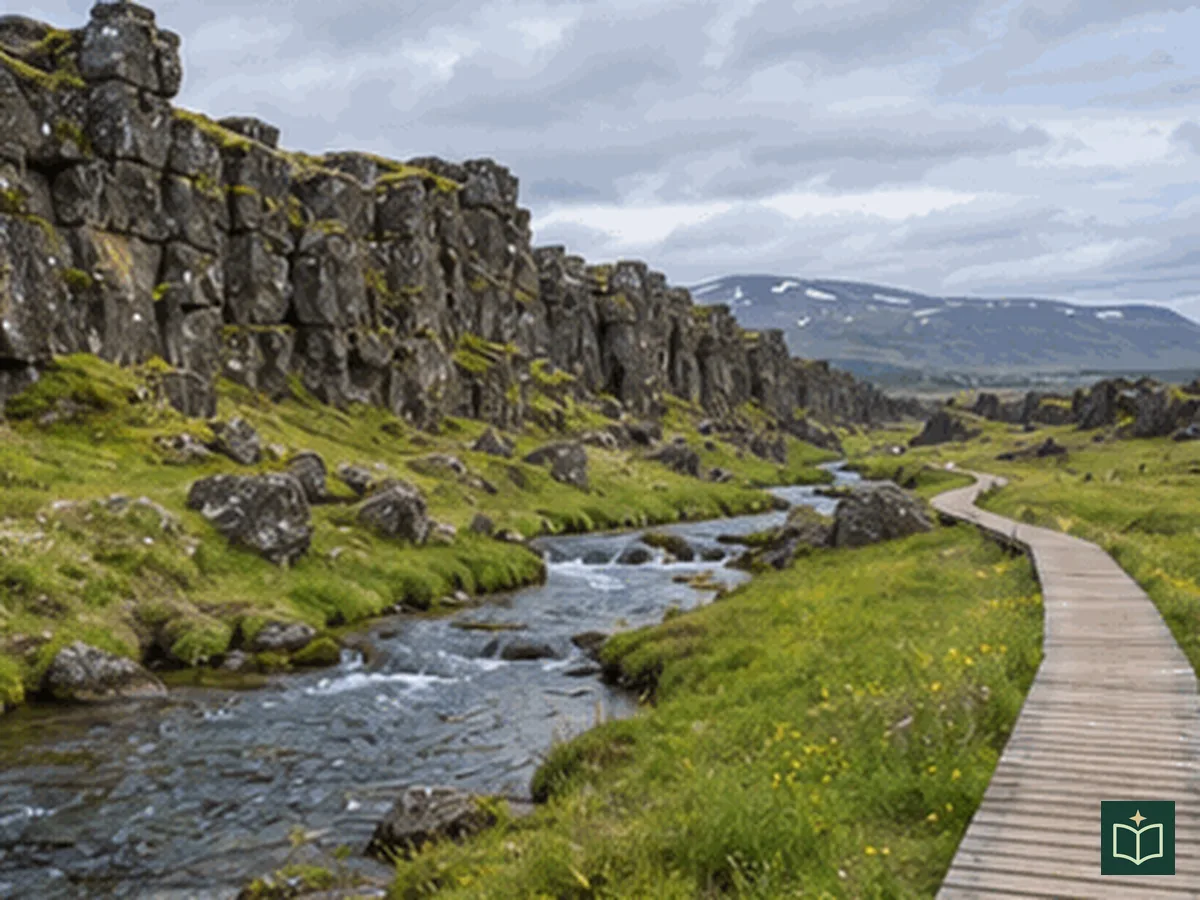
In 930, the chieftains of Iceland gathered at Þingvellir, a plain in the south-west of the island, to agree on a common law. The Althing they created met there each summer, in the open air, for more than eight centuries. A lawspeaker recited the law from a rocky outcrop, and disputes were settled in courts held at the same meeting. The site lies in a rift valley where the North American and Eurasian plates are pulling apart, and it is now a UNESCO World Heritage Site. The Althing was abolished in 1800 and restored in the 1840s, and it now meets in Reykjavík as Iceland’s national parliament.
Tynwald’s unbroken claim
The Isle of Man, in the Irish Sea between Britain and Ireland, claims the oldest continuous parliament in the world. Its Tynwald traces its origins to the Norse settlers who ruled the island, and a traditional founding date of 979 is often given, though early records are scarce. Tynwald still holds an open-air ceremony each year, usually on 5 July, at Tynwald Hill in the village of St John’s, where new laws are announced in English and Manx. Because the Althing was interrupted for several decades, the Isle of Man argues that Tynwald has the longer unbroken history, while Iceland’s assembly has the older recorded founding.
León and the idea of consent
The first assembly to include representatives of towns alongside nobles and clergy met in the Spanish kingdom of León in 1188. King Alfonso IX summoned it and issued decrees promising to respect property and justice and to consult his subjects on war and peace. In 2013 UNESCO added these decrees to its Memory of the World register as the oldest documentary evidence of the European parliamentary system. Catalonia’s Corts followed in 1283, with rules that the king had to call regular assemblies. These Iberian bodies were later absorbed into the Spanish crown, so they do not survive today, but they set early patterns for representation.
England, Scotland and Ireland
In England, the word parliament first appears for royal councils in the 1230s. The assembly called by Simon de Montfort in 1265 is often taken as a starting point, because it was the first to summon elected representatives of towns as well as counties. Edward I’s so-called Model Parliament of 1295 followed a similar pattern. Scotland’s first recorded parliament dates to about 1235, and Ireland’s parliament first met in 1297. Both later merged with England’s: Scotland in 1707 and Ireland in 1801. Scotland regained its own parliament in 1999, and the Republic of Ireland has had its own parliament, the Oireachtas, since independence.
Northern and central Europe
Sweden’s Riksdag traces its origins to a meeting at Arboga in 1435, when nobles, clergy, burghers and peasants were summoned together. The inclusion of peasants as a separate estate was unusual in Europe. The States General of the Netherlands first met in 1464 in Bruges, bringing together delegates from the provinces then ruled by the dukes of Burgundy. Poland’s Sejm, first convened as a general assembly in 1493, grew powerful enough that nobles elected the kings of the Polish–Lithuanian Commonwealth. Each of these bodies has been transformed many times, but each continues today as its country’s national legislature under the same name.
Councils and consultation
Parliaments are only one form of collective decision-making, and the list reflects the European tradition of written records. Many societies held councils of elders, tribal assemblies and consultative meetings long before 930, but few left documents that allow a firm date. In the Gulf, the custom of the majlis, where rulers receive citizens and hear petitions, has deep roots, and the principle of shura, or consultation, is part of Islamic political thought. Modern consultative and legislative bodies in the region are much younger: the UAE’s Federal National Council was established in 1971. Age alone does not measure how democratic or representative an assembly is.
Sources & further reading
- UNESCO World Heritage Centre · Þingvellir National Park ↗
- Tynwald · Parliament of the Isle of Man ↗
- UK Parliament · Living Heritage ↗
Figures are rounded and widely published; check the linked organisations for the latest editions. These organisations do not endorse this website.