How caves grow
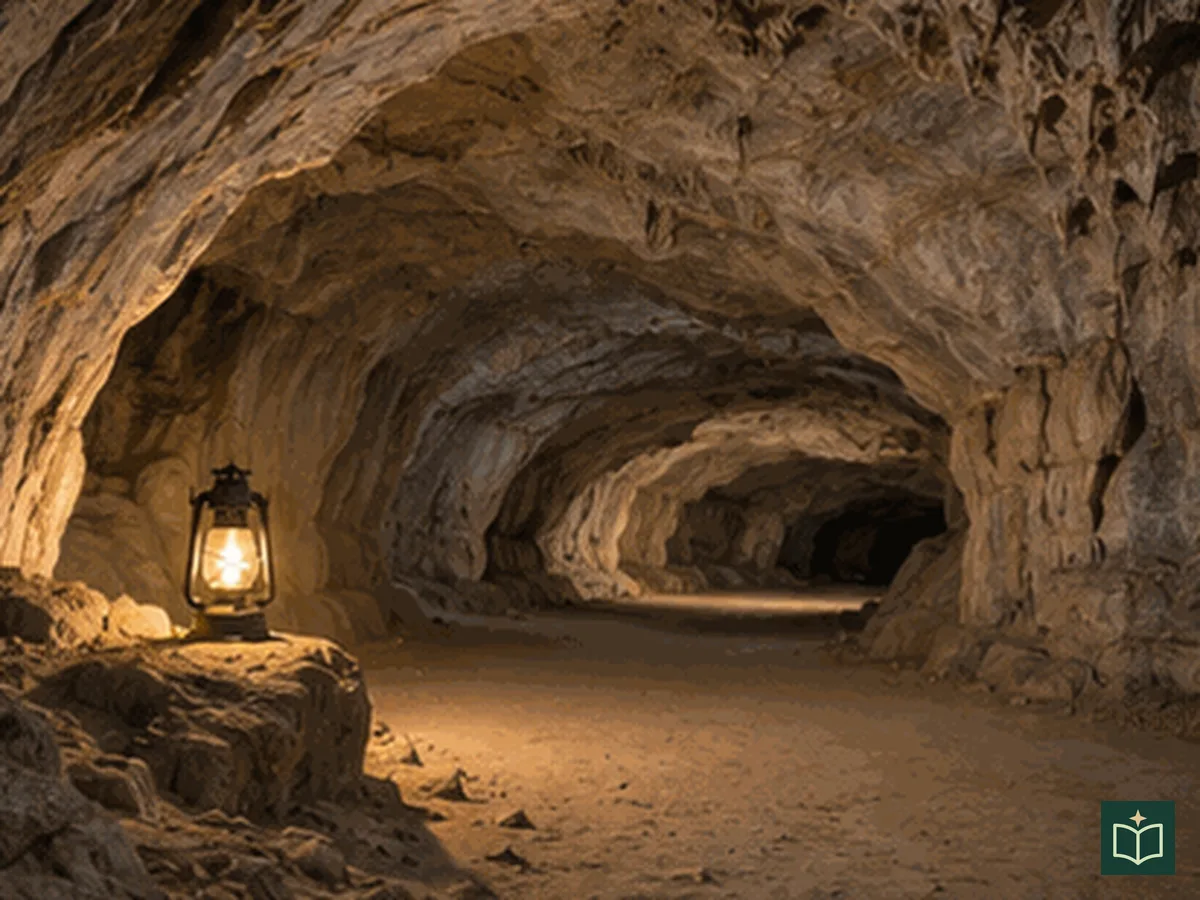
Most of the world’s longest caves form in limestone, a rock made largely of calcium carbonate. Rainwater picks up carbon dioxide from the air and soil and becomes a weak acid. As it seeps through cracks, it slowly dissolves the rock and widens the gaps into tubes and passages. Over hundreds of thousands of years, these channels join into networks that can stack on several levels as rivers cut deeper. A few long caves form in other ways. Some passages in gypsum and in volcanic lava tubes also run for many kilometres, but limestone systems dominate the list of the longest caves on Earth.
Mammoth Cave
Mammoth Cave, in Kentucky, has about 686 kilometres of surveyed passages, making it the longest known cave system by a wide margin. It formed beneath a protective cap of sandstone, which kept the limestone below from collapsing while water carved passage after passage. People explored its entrances thousands of years ago, and it was mined for saltpetre, used in gunpowder, during the war of 1812. It became a United States national park in 1941 and a UNESCO World Heritage Site in 1981. Explorers keep adding new passages, and in recent years connections with neighbouring caves have pushed its total past 680 kilometres.
Rivers beneath the jungle
Two of the longest systems are flooded caves beneath Mexico’s Yucatán Peninsula. Ox Bel Ha and Sac Actun are explored mostly by cave divers, who swim through passages filled with fresh and salt water. They formed when sea levels were lower during the ice ages and later flooded as the oceans rose. Their entrances are cenotes, natural sinkholes that the ancient Maya regarded as sacred and used as sources of water. Mapping them is slow and dangerous work: divers lay guidelines through dark tunnels and record distances and directions by hand. Each new connection between cenotes can add many kilometres to a system.
Measuring in the dark
Cave length is the total of all surveyed passages, added together. Cavers work in teams, stretching a measuring tape between survey stations and recording the distance, the compass bearing and the slope at each one. Today many teams also use laser distance meters and digital instruments that send readings to a tablet, and some use 3D laser scanners in large chambers. The data are turned into a map, which shows where unexplored leads remain. Only passages that have been surveyed count towards a cave’s official length. Simply walking or swimming through a passage is not enough to add it to the total.
Asia and the Middle East
China’s Shuanghedong, in Guizhou province, has grown rapidly in recent decades as Chinese and international teams have connected caves beneath a karst plateau. Clearwater Cave, in Malaysian Borneo’s Gunung Mulu National Park, is part of a region famous for giant chambers. The Arabian Peninsula is drier and its known caves are shorter, but Oman has notable ones. Al Hoota Cave in the Hajar Mountains has been developed as a show cave, and the Majlis al Jinn chamber in the Selma Plateau is among the largest single cave rooms in the world. Explorers continue to search these mountains for new passages that remain unmapped.
Why the list keeps changing
Cave rankings are less stable than most geographical records. A mountain’s height changes little, but a cave’s known length grows every time explorers find and survey a new passage. Several systems in this table have changed places in recent years, and the flooded caves of Yucatán in particular have grown quickly as divers have linked separate systems. Figures also differ slightly between sources, because they are published by different survey groups at different times. The values here are rounded from recent published surveys. What remains clear is that Mammoth Cave has held first place for decades and is likely to keep it.
Sources & further reading
- US National Park Service · Mammoth Cave ↗
- UNESCO World Heritage Centre · Mammoth Cave ↗
- US National Park Service · Jewel Cave ↗
Figures are rounded and widely published; check the linked organisations for the latest editions. These organisations do not endorse this website.