The giant near St Petersburg
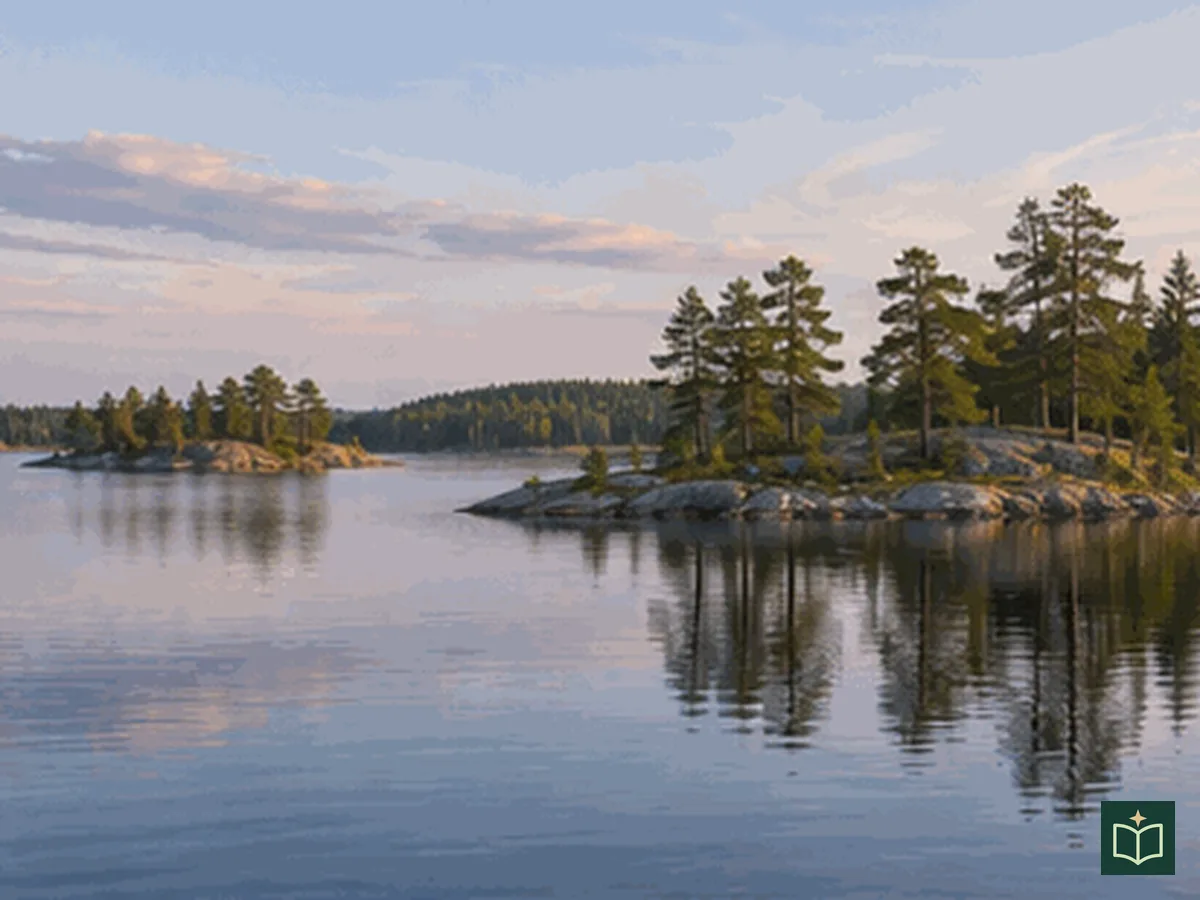
Lake Ladoga, north-east of St Petersburg, covers about 17,700 square kilometres, making it the largest lake that lies entirely in Europe. That is roughly 23 times the area of Bahrain. It drains into the Gulf of Finland through the Neva River, which flows through the centre of St Petersburg. Ladoga is deep in the north, where it fills a basin in ancient crystalline rock, and shallow in the south, where the bed is softer sediment. During the Second World War, when Leningrad was besieged, supplies were carried across its frozen surface in winter by truck along the so-called Road of Life.
What about the Caspian?
The Caspian Sea is much larger than any lake in this table, at about 371,000 square kilometres, and it is often described as the world’s largest lake. But it straddles the boundary between Europe and Asia, with most of its shores in Asia, and its legal status as a sea or lake has been debated by the five countries around it. For that reason it is usually left out of rankings of European lakes. Large reservoirs are also excluded. Several dammed stretches of the Volga in Russia, such as the Kuybyshev and Rybinsk reservoirs, have larger surface areas than most lakes here, but they are artificial.
Lakes left by the ice
Almost every lake in the table lies in a landscape shaped by ice. During the last ice age, a vast ice sheet centred on Scandinavia scraped across hard ancient rock, gouging out basins and leaving ridges of debris. When the ice melted, water filled the hollows. That is why Finland is known as the land of a thousand lakes and in fact has around 188,000 of them. Saimaa is not a single open body of water but a maze of connected basins, bays and islands. Lake Onega, Ladoga’s neighbour, holds more than 1,000 islands, including Kizhi, known for its wooden churches.
The Nordic lakes
Sweden has three lakes in the table. Vänern, at about 5,650 square kilometres, is the largest lake in the European Union. Vättern, long and narrow, is famous for its clear, cold water. Mälaren stretches inland from Stockholm, and the city itself was built where the lake meets the Baltic Sea. Finland’s Päijänne supplies drinking water to the Helsinki region through a tunnel more than 100 kilometres long. Lake Inari, in Finnish Lapland, lies north of the Arctic Circle and is frozen for about half the year. Lake Peipus, on the border between Estonia and Russia, is shallow and rich in fish.
Small lakes, large reputations
Many of Europe’s best-known lakes are far smaller. Lake Geneva, shared by Switzerland and France, covers about 580 square kilometres, and Lake Constance, shared by Germany, Austria and Switzerland, about 540. Hungary’s Lake Balaton is about 590. These lakes are famous because they sit among mountains and dense populations, and they are heavily used for tourism, water supply and transport. Ladoga is more than 30 times the size of Geneva, yet it is visited far less by international tourists. The difference shows how fame and size often have little to do with each other, especially in thinly populated northern regions.
Measurements and change
Lake areas are not fixed. Many shallow lakes expand and contract with the seasons, and estimates also depend on whether islands are counted and where the boundaries between connected basins are drawn. That explains why published figures for Saimaa and some Russian lakes vary from source to source. Lake Ilmen, south of Novgorod, can more than double in area during spring floods, which is why it is not included here. Climate change is also affecting northern lakes by shortening the period of winter ice cover, warming the water and altering fish populations, so scientists monitor these lakes closely over time.
Sources & further reading
Figures are rounded and widely published; check the linked organisations for the latest editions. These organisations do not endorse this website.