A cricket ground in first place
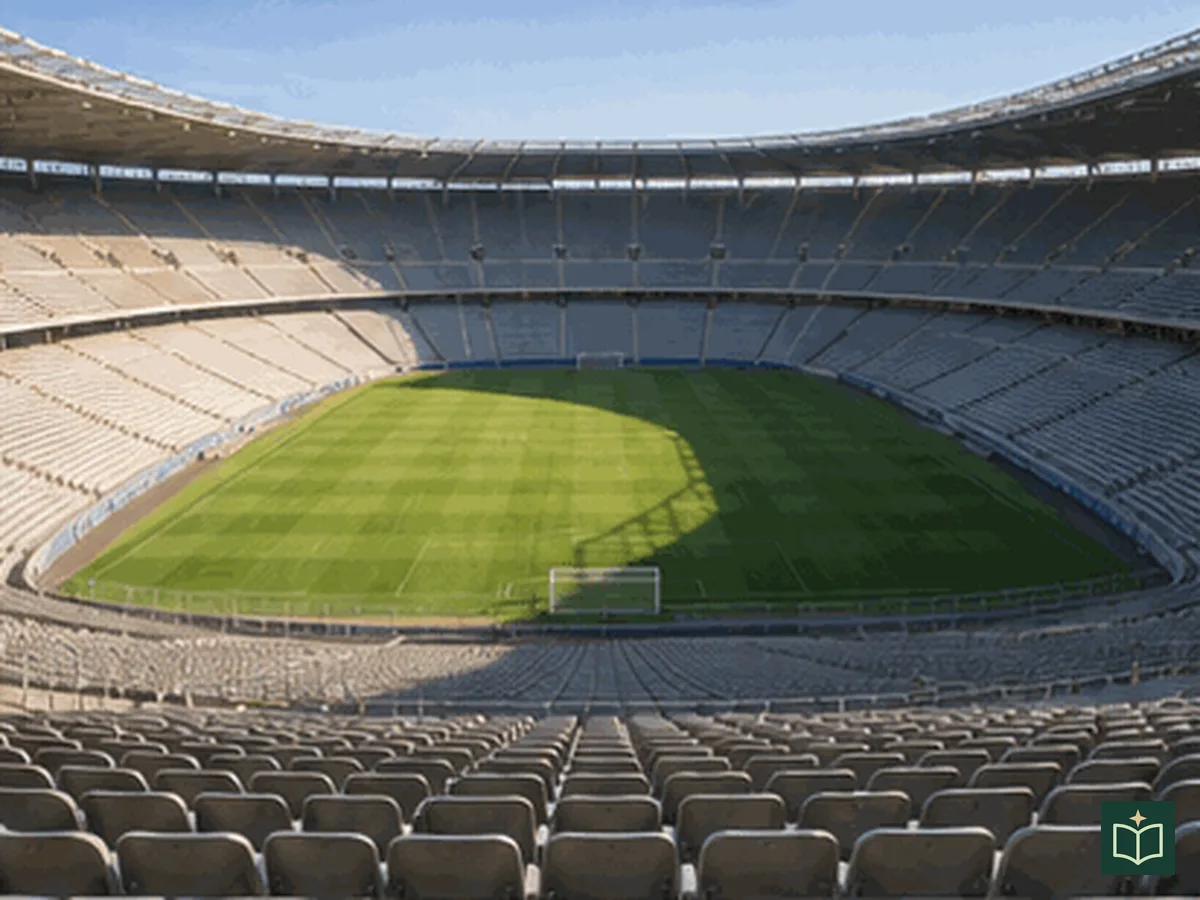
The Narendra Modi Stadium in Ahmedabad, in the Indian state of Gujarat, has a seating capacity of about 132,000. It replaced an older ground on the same site, called the Sardar Patel Stadium, and was completed in 2020. Its huge size reflects the popularity of cricket in India, where international matches can draw crowds that would fill most stadiums elsewhere twice over. It hosted the final of the 2023 Cricket World Cup. A cricket field is much larger than a football pitch, so the stadium is very wide, and its roof is held up by a ring of supports that avoid columns blocking spectators’ views.
An uncertain second place
Second on most lists is the Rungrado 1st of May Stadium in Pyongyang, North Korea, which opened in 1989. Its capacity was long stated as 150,000, and after renovation in 2014 it was given as about 114,000. These figures come from official North Korean sources and cannot be checked independently, so some analysts believe the real seated capacity is lower. The stadium is used for football, athletics and mass performances. Its roof is made of sixteen arches arranged in a ring, which some say resembles a magnolia blossom. Because of the uncertainty, some rankings place it lower or give it a range rather than a single figure.
America’s college giants
Eight of the ten largest stadiums are on American university campuses, built for college American football. Michigan Stadium, nicknamed the Big House, seats about 107,600. Beaver Stadium at Penn State, Ohio Stadium, Texas A&M’s Kyle Field and Louisiana State University’s Tiger Stadium follow, all above 100,000. These stadiums are full only a few Saturdays a year, but college football has a devoted following, and ticket sales, broadcasting deals and donations pay for regular expansions. Many began as modest bowls in the 1920s and have grown in stages, adding upper decks and private boxes. Their capacities change slightly almost every season.
Built into the ground
Many of the largest stadiums are partly sunk into the earth. Michigan Stadium was built in 1927 in a natural hollow, and much of its seating bowl lies below street level, so it looks surprisingly low from outside. Digging down has several advantages. The excavated soil can be used to build up the outer banks, fewer tall steel structures are needed, and spectators can enter at mid-height and walk down to their seats. Open bowls without roofs also avoid the cost of spanning huge distances. The trade-off is exposure to weather, which in cold climates limits when such stadiums can be used comfortably.
The Gulf and global events
Stadiums built for the FIFA World Cup or the Olympics are often smaller than these giants, because organisers want venues that can be used after the event. Qatar’s Lusail Stadium, the largest of the 2022 World Cup venues, drew a crowd of about 89,000 to the final. Some of Qatar’s other tournament stadiums were designed to be partly dismantled or reduced in size afterwards, and one was built largely from shipping containers so it could be taken apart. Gulf stadiums also use shading and cooling systems to make events possible in hot weather. These designs reflect a shift from sheer size towards flexibility and lasting use.
Why rankings differ
Stadium rankings vary because operators count in different ways. Some figures include standing areas, private boxes or temporary seats, while others count only permanent seats. Record attendances can be far higher than official capacity: the Maracanã in Rio de Janeiro reportedly held about 200,000 people at the 1950 World Cup final, when much of it was standing room. Modern safety rules have largely replaced standing terraces with seats, reducing capacities. Australia’s Melbourne Cricket Ground, at about 100,000, sits just outside this table. Planned renovations at several American stadiums may change the order, so the table should be read as a snapshot rather than a permanent record.
Sources & further reading
Figures are rounded and widely published; check the linked organisations for the latest editions. These organisations do not endorse this website.