Humble beginnings
Nvidia was founded in 1993 by Jensen Huang, Chris Malachowsky and Curtis Priem, reportedly after a meeting at a roadside diner in California. Its goal was to build chips that could render 3D graphics for video games and computers. In 1999, it launched the GeForce 256, which it marketed as the world's first graphics processing unit, or GPU. For years, Nvidia was best known to gamers, competing fiercely with rivals to make games look more realistic.
A chip built for parallel work
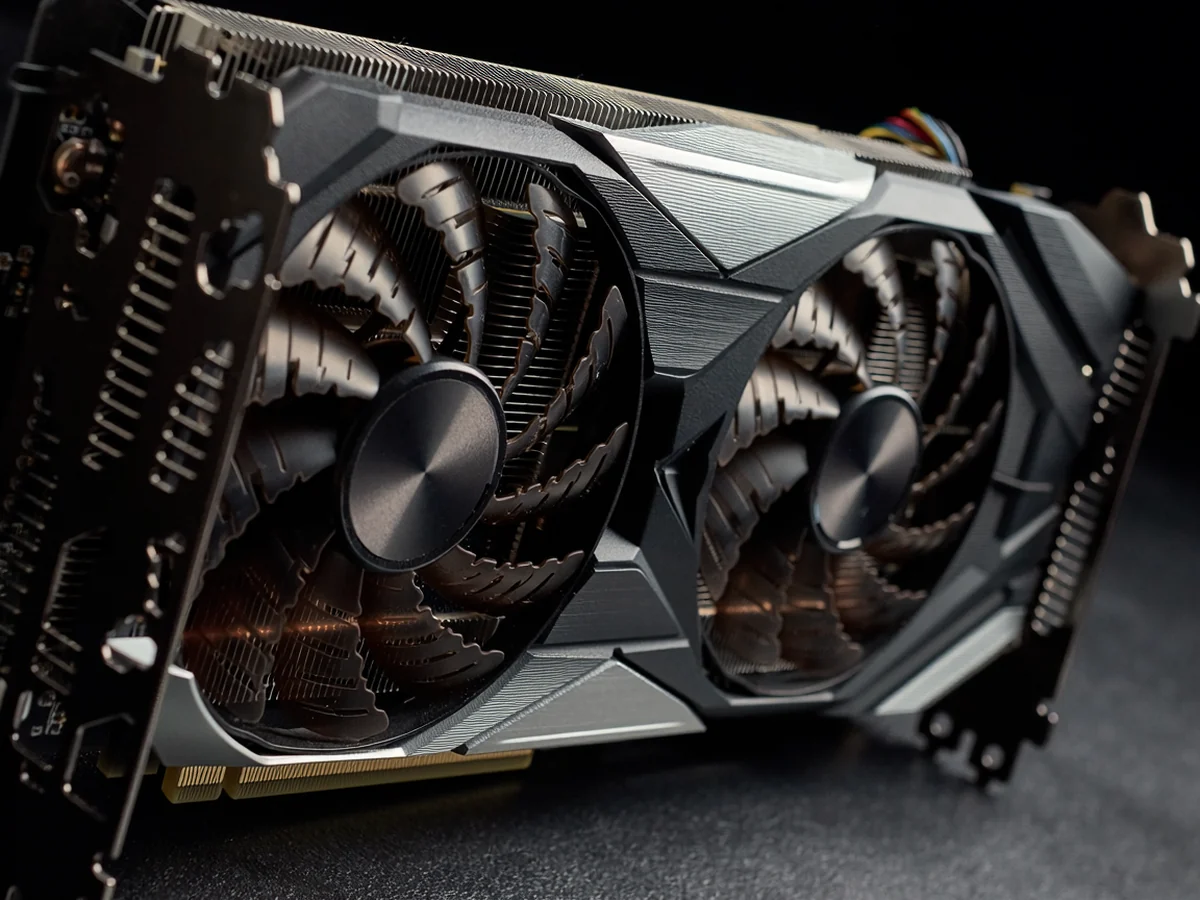
Graphics chips work differently from the central processors in ordinary computers. A CPU has a small number of powerful cores that handle tasks one after another, while a GPU has thousands of simpler cores that perform many calculations at the same time, ideal for calculating the colours of millions of pixels. Researchers realised that the same ability could speed up scientific calculations, which often involve doing the same operation on huge amounts of data.
The CUDA bet
In 2006, Nvidia introduced CUDA, a software platform that let programmers use its GPUs for general computing, not just graphics. It was a costly long-term bet that many investors questioned at the time. CUDA gave scientists and engineers tools to run simulations, analyse data and, eventually, train neural networks on Nvidia chips. Over the following years, a large ecosystem of software libraries and developers grew around CUDA, creating a powerful advantage that rivals still struggle to match.
The deep learning moment
In 2012, the AlexNet neural network, trained on two Nvidia gaming graphics cards, won the ImageNet image recognition contest by a wide margin, showing that GPUs could make deep learning practical. AI researchers and technology companies began buying Nvidia chips in large numbers. Nvidia responded by designing processors specifically for AI in data centres, such as the V100, A100 and H100, along with networking equipment and software to connect thousands of chips together.
The ChatGPT boom
The launch of ChatGPT in late 2022 triggered a race among technology companies to build and run large language models, which require enormous numbers of GPUs. Demand for Nvidia's H100 chips far exceeded supply, and the company's revenue and profits soared. Nvidia became a one trillion dollar company in 2023, then the first to reach four trillion dollars in July 2025 and five trillion dollars on 29 October 2025, ahead of Microsoft and Apple.
Dominance and its limits
Research firm IDC estimated that Nvidia held about 81% of the market for data centre AI chips by revenue. Its newer Blackwell chips and the upcoming Rubin generation are among the most sought-after products in technology. In October 2025, chief executive Jensen Huang said the company had visibility into about half a trillion dollars of orders for these chips through 2026. However, competitors including AMD and custom chips designed by Google, Amazon and others are trying to win market share.
Geopolitics
Because advanced AI chips have military and economic importance, the United States has restricted exports of Nvidia's most powerful products to China since 2022. Nvidia designed lower-performance versions for the Chinese market, but these too faced restrictions and uncertainty. In 2025, Huang said Nvidia's share of China's AI chip market had fallen from about 95% to close to zero. Chinese companies are working to develop domestic alternatives.
Made by others
Nvidia designs its chips but does not manufacture them. Most of its advanced processors are made by Taiwan's TSMC, which also assembles them with high-speed memory using advanced packaging techniques. This dependence on a single manufacturer in Taiwan is a strategic vulnerability for Nvidia and the AI industry. Supply of memory chips and packaging capacity has at times limited how quickly Nvidia can deliver its products.
Nvidia and the Gulf
Gulf countries have become major buyers of AI chips as they build large data centres. In 2025, the United States approved large exports of advanced chips to the UAE and Saudi Arabia as part of investment and technology agreements, including for the Stargate UAE campus in Abu Dhabi and projects by Saudi Arabia's Humain. These deals made the region one of the fastest-growing markets for AI computing outside the United States and China.
Why it matters
Nvidia's rise shows how a company that bet early on a technology, and built a strong software ecosystem around it, can become central to a global revolution. Its chips are the picks and shovels of the AI gold rush, used by almost every major AI developer. Its fortunes are closely watched as a barometer of the AI boom, and its enormous market value has also prompted debate about whether AI investment has run ahead of real economic returns.
Sources & further reading
- Fortune · Nvidia is officially the world's first 5 trillion dollar company (2025) ↗
- AP via ABC7 · Nvidia is the first 5 trillion dollar company ↗
- Nvidia · CUDA Zone ↗
Market values change daily; figures refer to the dates stated. This is not investment advice. Photograph: original AI-generated illustration (Adobe Firefly). Reference organisations do not endorse this website.