A metal with two names
In 1801 the English chemist Charles Hatchett analysed a black mineral from New England held in the British Museum and found a new element, which he called columbium. Decades later, the German chemist Heinrich Rose distinguished it clearly from its close chemical twin, tantalum, and named it niobium, after Niobe, daughter of Tantalus in Greek myth. Both names were used for a century, with American metallurgists favouring columbium. Chemists formally settled on niobium in 1949, though the old name lingers in some industry usage. Niobium is a soft, grey, ductile metal with a high melting point of about 2,477 °C, and it resists corrosion well.
How a pinch strengthens steel
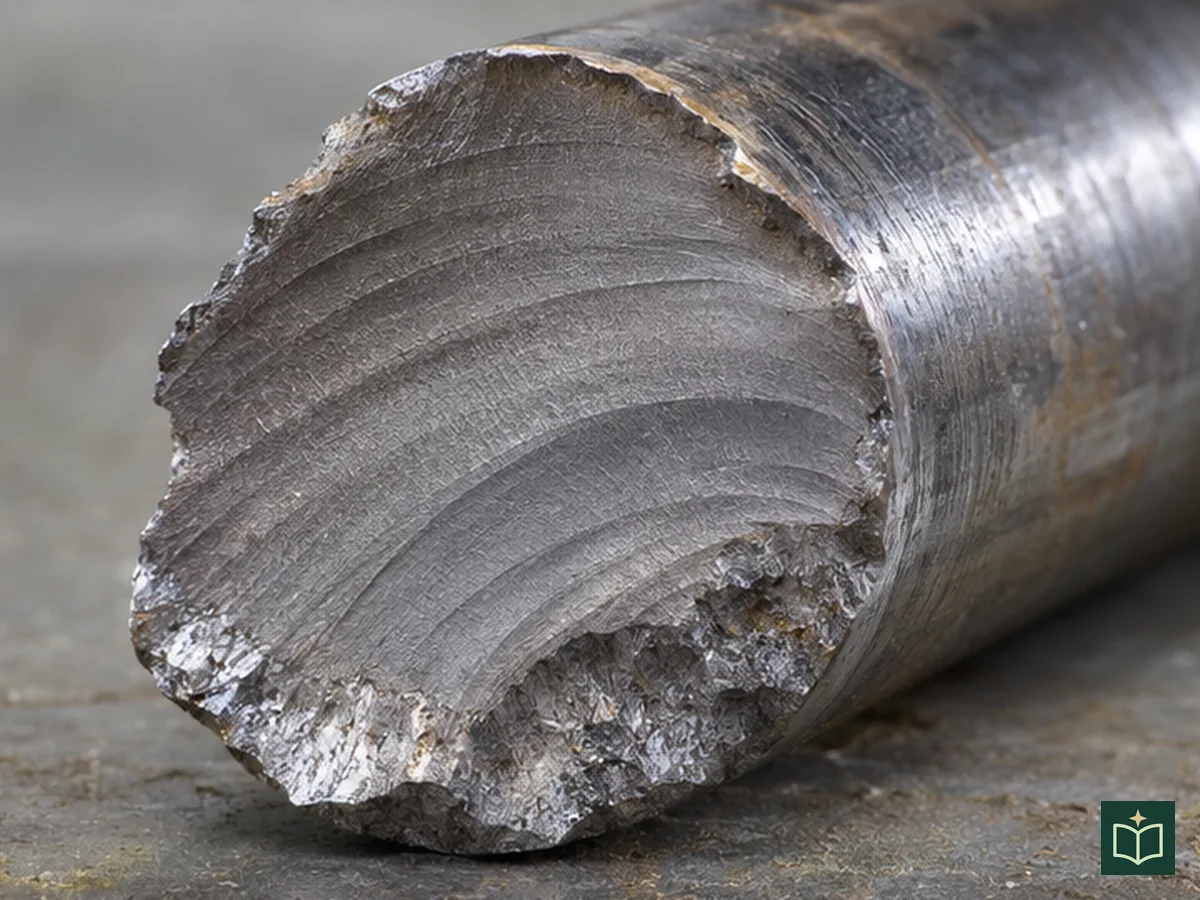
About nine-tenths of niobium goes into steel, usually as ferroniobium, an iron alloy. Steelmakers add only 0.02% to 0.1%. During hot rolling, niobium combines with carbon and nitrogen to form tiny particles that block the growth of steel grains as the metal is squeezed and cooled. Finer grains make steel both stronger and tougher, a rare combination, because cracks struggle to cross many small grains. This approach, called microalloying, produces high-strength low-alloy steels. They let engineers use thinner, lighter sections for car bodies, bridges, ships and buildings, saving steel, energy and weight while maintaining safety. Niobium also appears in stainless steels and jet-engine superalloys.
Inside a pipeline
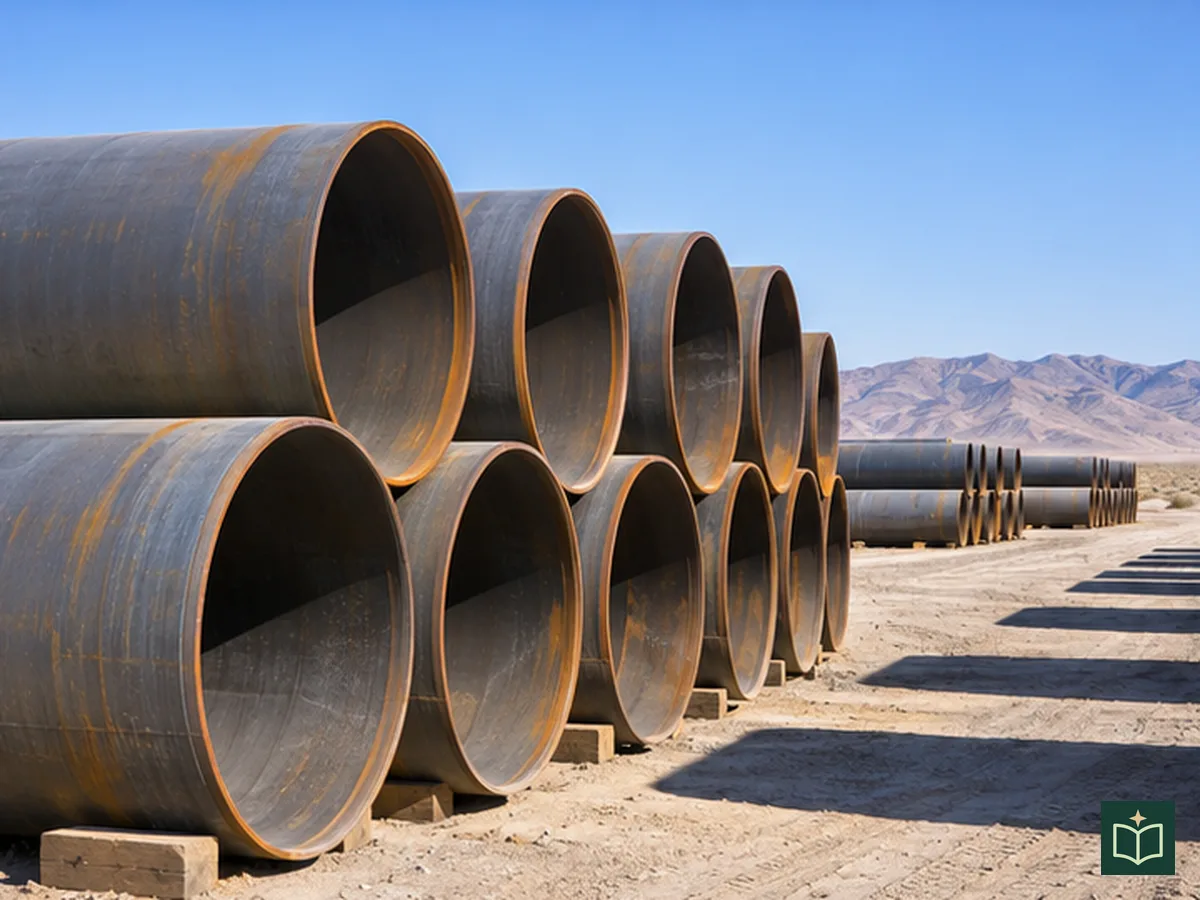
Pipelines are a classic use. Long-distance gas and oil lines run at high pressure, sometimes through Arctic cold or desert heat, so their steel must be strong yet resist cracking. Microalloyed grades allow thinner walls and faster welding. Consider a pipe 1.22 metres across with walls 20 millimetres thick. Its steel weighs about 600 kilograms per metre, so a standard 12-metre length weighs around 7.2 tonnes. At 0.05% niobium, that pipe contains about 3.6 kilograms of niobium. Across a few hundred kilometres of large export pipeline, such as those that carry oil and gas across the Gulf region, the total adds up, though each pipe holds only a pinch.
Superconducting wire
Niobium’s second great role is in superconductors, materials that carry electricity with zero resistance when cold enough. An alloy of niobium and titanium becomes superconducting below about 10 degrees above absolute zero. Manufacturers draw it into thousands of fine filaments embedded in copper, which stabilises the wire. Wound into coils and bathed in liquid helium at about −269 °C, the wire carries large currents indefinitely without power loss, creating steady, powerful magnetic fields. Most hospital MRI scanners rely on such magnets, typically producing fields of 1.5 or 3 tesla. Particle accelerators and fusion experiments also use niobium-titanium, and the stronger but brittle compound niobium-tin for higher fields.
One mine leads the world
Niobium supply is unusually concentrated. Brazil produces around 90% of the world’s niobium, and most of that comes from a single deposit near Araxá in Minas Gerais state, where tropical weathering has enriched niobium-bearing rock over millions of years. Canada’s Niobec mine in Quebec is the main producer outside Brazil, with smaller output elsewhere. Niobium also occurs with tantalum in coltan ore mined in Central Africa. Because of this concentration, several governments, including the United States and the European Union, list niobium as a critical raw material. Large known reserves in Brazil mean shortages are not expected, but buyers watch the dependence on one source.
Why it matters
Niobium is a quiet enabler. It saves weight in cars, which reduces fuel use, and it allows lighter, stronger buildings and pipelines that use less steel overall. In medicine, it makes possible the high-field magnets behind detailed MRI images. Research continues into niobium-based battery materials that may allow faster charging, and into improved superconducting wires for future accelerators and fusion reactors. Pure niobium is also used in superconducting radio-frequency cavities that accelerate particles in research facilities. Because it is effective in such small amounts, niobium shows how a minor metal can shape major industries without most people ever hearing its name.
Sources & further reading
- USGS · Niobium and tantalum statistics ↗
- Royal Society of Chemistry · Niobium ↗
- NIBIB · Magnetic Resonance Imaging (MRI) ↗
Figures are rounded and widely published; check the linked organisations for the latest editions. These organisations do not endorse this website.