An iron column in a mosque courtyard
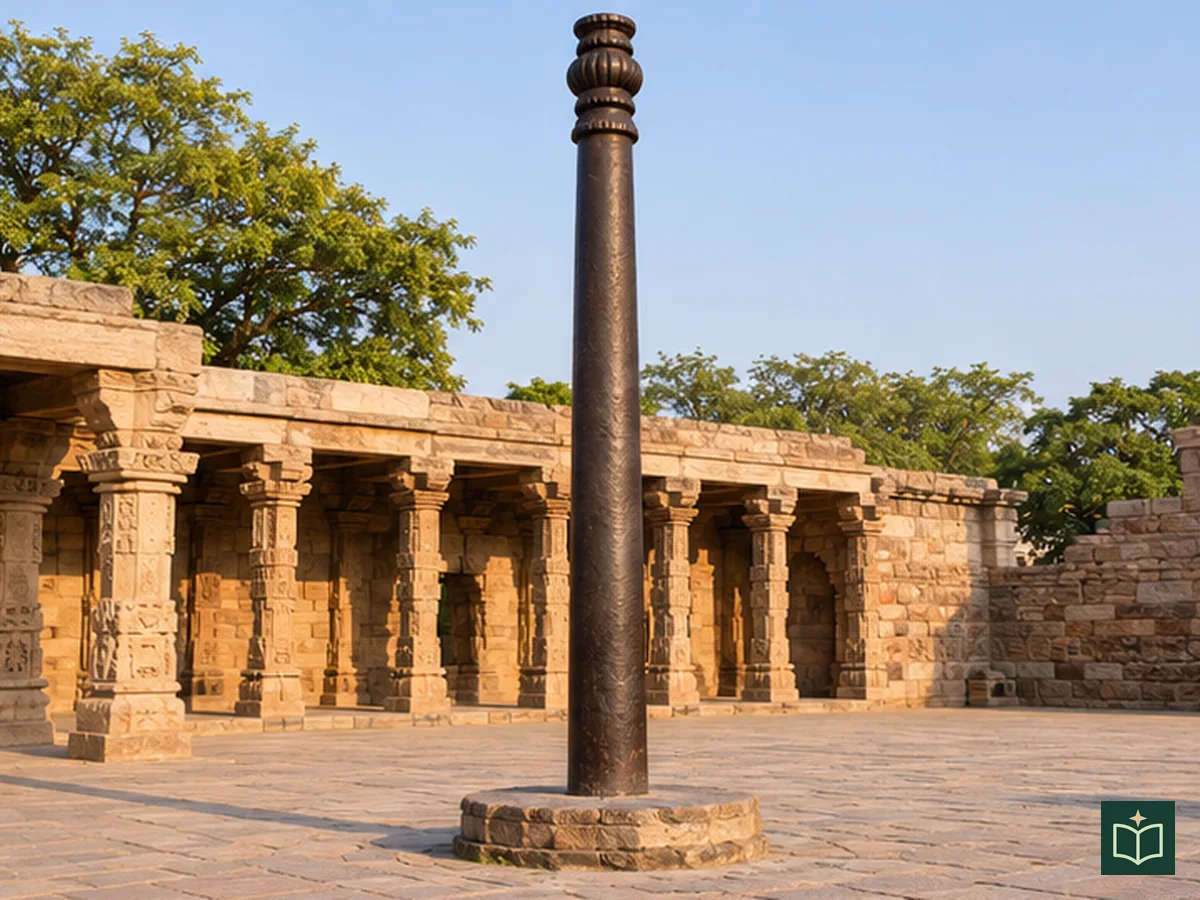
In the courtyard of the Quwwat-ul-Islam mosque, within the Qutb Minar complex in Delhi, stands a dark iron column about 7.2 metres long, of which roughly a metre is buried below ground. It tapers from around 42 centimetres across at the base to about 30 at the top, beneath a decorative bell-shaped capital. A Sanskrit inscription, in the Brahmi script, honours a king named Chandra, usually identified as Chandragupta II, who ruled the Gupta Empire around 375 to 415 CE. It originally stood elsewhere, probably in central India, and was moved to Delhi centuries later. The complex is now a UNESCO World Heritage Site.
Made by hammer, not mould
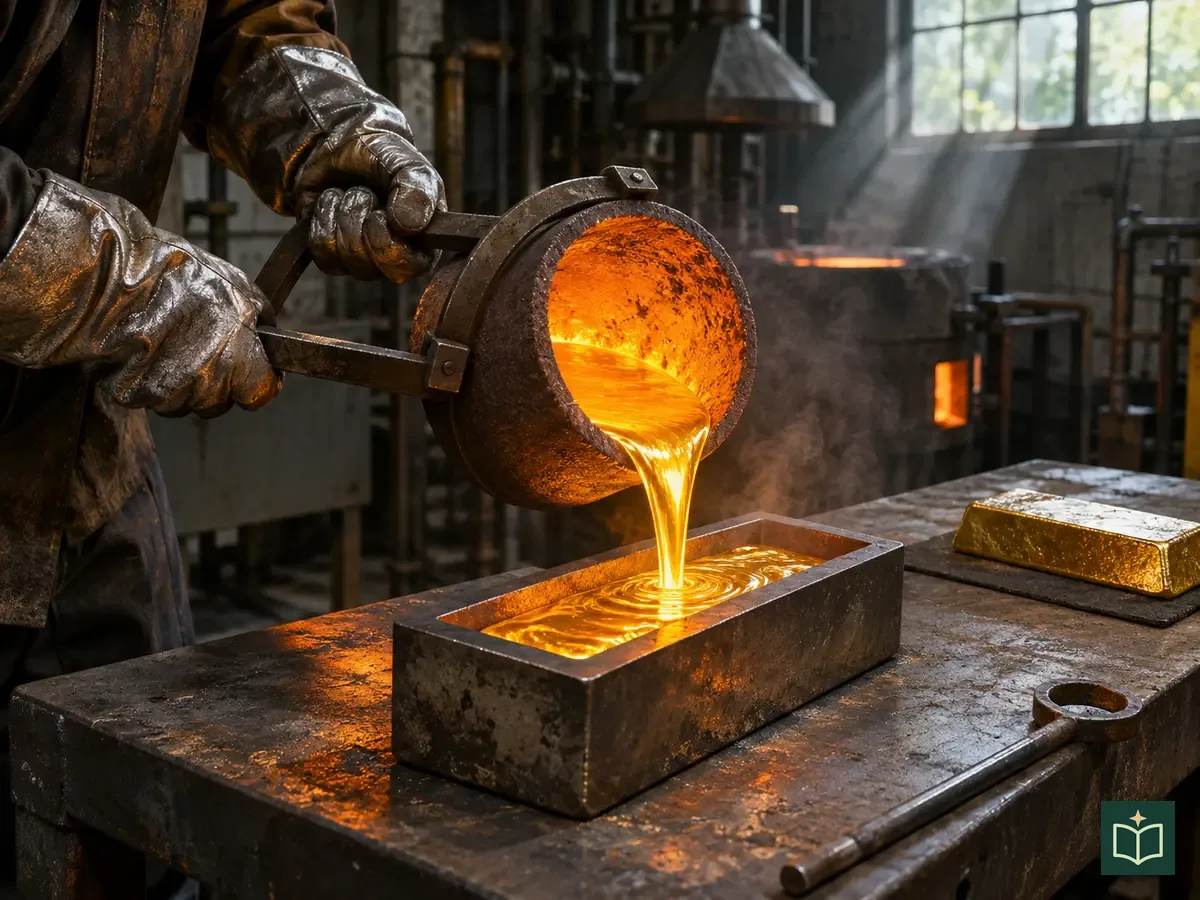
The pillar was not cast. India’s smiths of the period could not melt iron in bulk; instead they smelted ore with charcoal in small furnaces, producing spongy lumps of wrought iron called blooms, mixed with slag. The pillar was built by heating many such blooms and hammering them together, forge-welding them into a single shaft. Faint lines and slag inclusions mark the joins. Estimating its mass is straightforward: a tapered shaft of these dimensions holds about 0.74 cubic metres of iron, which at 7,800 kilograms per cubic metre weighs roughly 5.8 tonnes. With its capital, the total is usually put at more than six tonnes.
The phosphorus secret
For decades the pillar’s good condition invited wild theories, from secret alloys to extraterrestrial origins. Careful analysis tells a simpler story. The iron is nearly pure, with very little carbon and sulphur but about 0.1% phosphorus, far more than modern steel. Phosphorus came from the ore and from the smelting method, which did not remove it. Research led by the metallurgist R. Balasubramaniam at the Indian Institute of Technology Kanpur showed how it helps. As the surface rusts, phosphorus promotes a dense, adherent layer containing iron phosphates and a form of iron oxyhydroxide called misawite. This film seals the metal and greatly slows further corrosion.
Climate and care
Delhi’s climate also helps. Air there is relatively dry for much of the year, and the pillar’s mass keeps its surface from staying wet for long. Alternating wet and dry spells appear to be important for building the protective layer, which thickens very slowly over centuries. The pillar is not untouched by corrosion. The part buried in the ground, kept moist, rusted more noticeably, and a band at the base has suffered from repeated handling. Visitors once tried to wrap their arms around the column behind their backs for good luck, rubbing its surface; a fence installed in the late 1990s now keeps them at a distance.
A wider tradition
The Delhi pillar is the most famous product of a long Indian tradition of large forged iron. A larger, broken iron pillar survives at Dhar in Madhya Pradesh, and massive iron beams were used in the Sun Temple at Konark in Odisha. Indian smiths were also renowned for crucible steel, later called wootz, which was traded across the Middle East for blades. Making a six-tonne column by hand required organising teams of workers, controlling furnaces and handling great masses of hot metal. The pillar is therefore evidence not only of clever chemistry, much of it unintended, but of considerable engineering skill and organisation in Gupta-era India.
Lessons for modern steel
Modern metallurgists study the pillar for practical reasons. Weathering steels, used for bridges and sculptures, also rely on a stable, tight rust layer to protect the metal beneath, though they achieve it with copper, chromium and nickel rather than phosphorus. Phosphorus is normally avoided in structural steel because it makes it brittle, especially in the cold, but the pillar suggests ways it might help in specific applications. The column also cautions against myths: it is iron, it does rust, and it survives through chemistry and climate rather than mystery. For visitors to the Qutb complex, it is a quiet reminder of how long good metalwork can last.
Sources & further reading
- UNESCO World Heritage · Qutb Minar and its Monuments, Delhi ↗
- Britannica · Qutb Minar ↗
- Britannica · Corrosion ↗
Figures are rounded and widely published; check the linked organisations for the latest editions. These organisations do not endorse this website.