A desert beside the sea
The Namib runs for about 2,000 kilometres along the Atlantic coast of southern Africa, from Angola through Namibia into South Africa. In places it is only a few dozen kilometres wide, squeezed between the ocean and the Great Escarpment inland. Parts of it receive on average less than 20 millimetres of rain a year. Yet it lies right beside a vast source of water. The explanation is not a lack of moisture in the air but the temperature of the sea. The same pattern, with a cold current alongside a coastal desert, explains Chile’s Atacama and the coastal desert of Peru.
The cold Benguela Current
The Benguela Current flows northwards along the coast, and steady south-easterly winds drive strong upwelling, lifting cold water from below. Sea temperatures here can be 10°C or more below those at the same latitude on the Indian Ocean side of the continent. The cold sea chills the air in contact with it, creating a layer of cool, dense air near the surface capped by warmer air above, an arrangement called a temperature inversion. Rain clouds need rising air, and the inversion prevents it. Add the sinking air of the subtropical high-pressure belt, and rain becomes a rare event, arriving only when unusual weather breaks the pattern.
Fog instead of rain
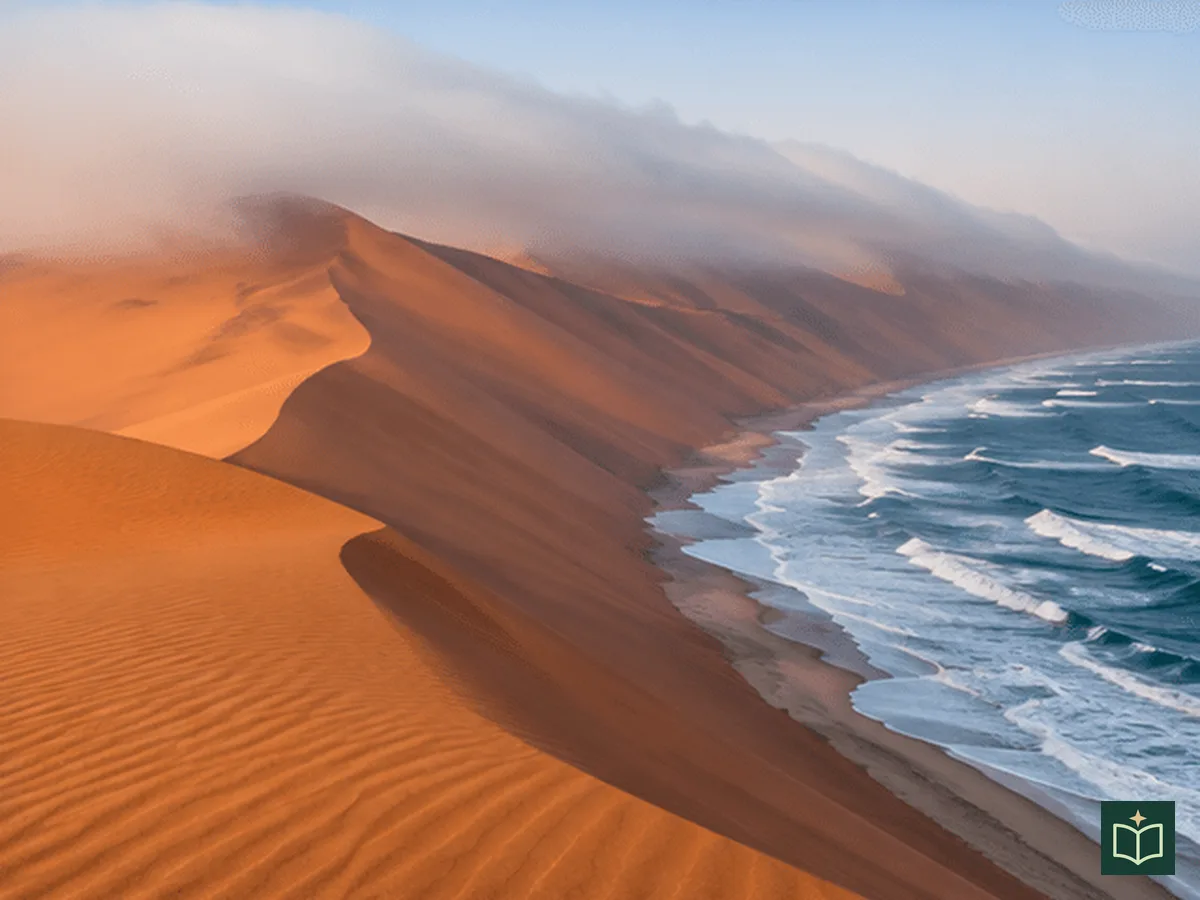
What the Namib lacks in rain it gains in fog. When moist sea air drifts over the cold current, it cools to its dew point and condenses into low banks of fog that roll inland on many nights and mornings, sometimes reaching 50 kilometres or more from the coast. Near the coast, fog can deliver more water each year than rainfall does. Researchers at the Gobabeb station in the central Namib have measured this fog for decades, showing how plants, lichens and animals depend on it. Lichen fields on the gravel plains, some of the richest anywhere, survive almost entirely on fog moisture.
Beetles that drink the air
Some of the Namib’s animals have become famous for harvesting fog. Certain tenebrionid beetles climb dune crests on foggy mornings and stand head-down facing the wind, letting droplets collect on their backs and run towards their mouths. Others dig trenches in the sand that trap condensation. The welwitschia, a strange plant with only two long, ragged leaves, grows on the gravel plains and can live for well over a thousand years, possibly absorbing some moisture through its leaves. Small reptiles lick droplets from their own skin and from stones. Engineers have studied the beetles’ textured shells while designing fog-collecting surfaces for dry regions elsewhere.
Red dunes and an ancient desert
The Namib is often described as the oldest desert on Earth, arid or nearly so for at least 55 million years. Its sand sea, a World Heritage site, contains some of the tallest dunes in the world. Around Sossusvlei, star dunes rise more than 300 metres above dry clay pans. The sand is thought to come largely from the Orange River, carried north by currents and wind. Inland dunes glow deep red because their grains are coated in iron oxide, a rust-like film that thickens with age. Near the coast the sand is paler, having had less time to weather.
Where sand meets surf
Along stretches of the coast, such as Sandwich Harbour south of Walvis Bay, the dunes descend straight into the Atlantic, so the desert has no gentle shore at all. Further north lies the Skeleton Coast, named for the whale bones and shipwrecks scattered along a shore where fog, currents and hidden sandbars made navigation treacherous. The cold sea that keeps the land dry also feeds rich fisheries and large seal colonies offshore. For visitors from the Gulf, the Namib offers a striking contrast: a desert by the sea, yet cool and foggy on summer mornings rather than hot and humid.
Sources & further reading
Figures are rounded and widely published; check the linked organisations for the latest editions. These organisations do not endorse this website.