What makes a wetland
A wetland is land that is waterlogged or shallowly flooded for long enough that its soils and plants are shaped by water. The international Ramsar Convention defines wetlands broadly, including marshes, peatlands, mangroves, river floodplains and even shallow coastal waters. In everyday speech, terms such as marsh, swamp and bog are used loosely and differ between countries. Ecologists use them more precisely, based on three questions: what kind of plants dominate, what the soil is made of, and where the water comes from. The answers separate four main types of inland wetland, and they matter because each type behaves differently.
Marshes: reeds and grasses
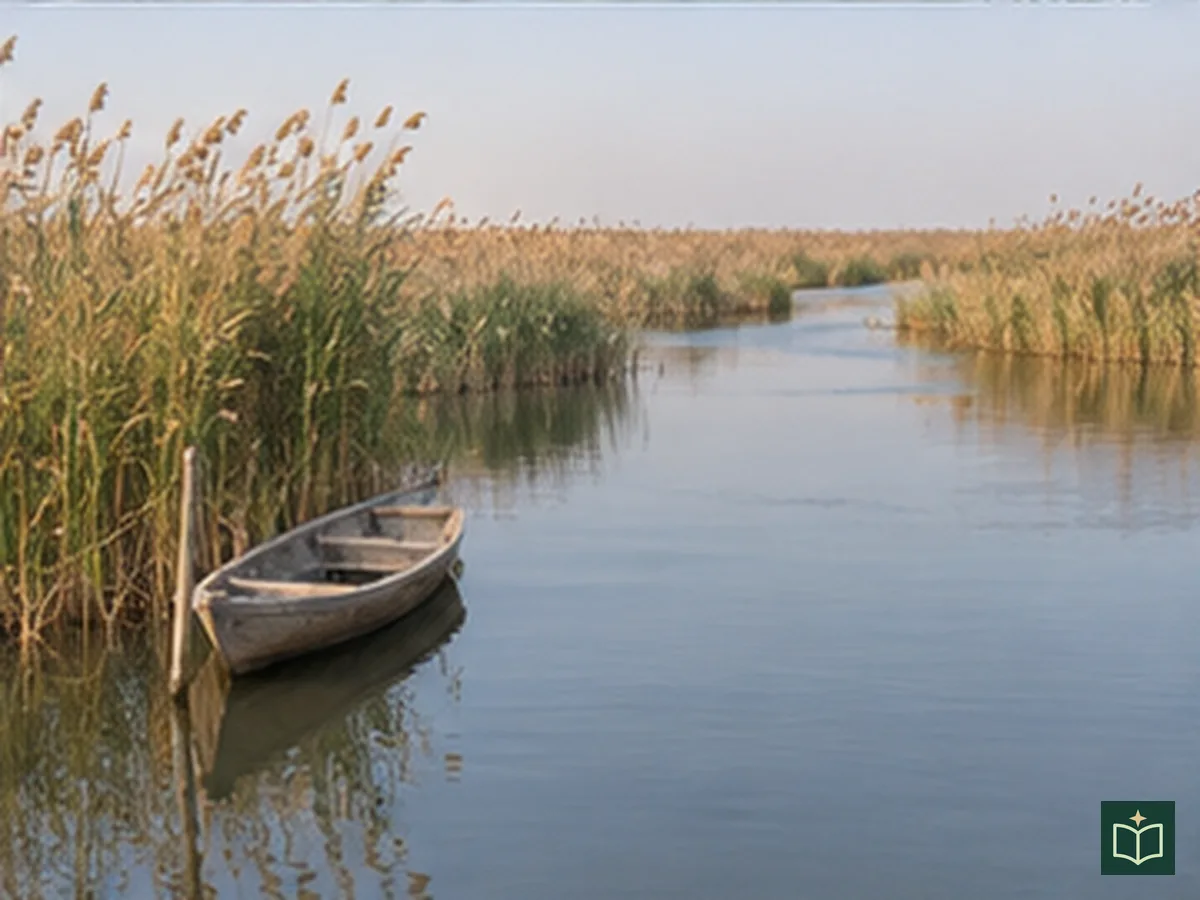
A marsh is a wetland dominated by soft-stemmed, non-woody plants such as reeds, rushes, sedges and grasses. Its soils are usually mineral-rich mud or silt delivered by rivers or tides, and its water is often relatively rich in nutrients, so marshes are highly productive. Freshwater marshes border lakes and rivers, while salt marshes line sheltered coasts where tides flood them regularly. Water levels may rise and fall with the seasons. Marshes support abundant birds, fish and insects, and their dense vegetation slows floodwater and traps sediment. A landscape of open water and tall reeds without a tree canopy is almost always a marsh.
Swamps: wetlands with trees
A swamp is a wetland dominated by woody plants: trees or shrubs. Examples include the cypress swamps of the south-eastern United States, flooded forests along the Amazon and Congo rivers, and mangrove swamps on tropical coasts. Like marshes, swamps generally have mineral soils and are fed by rivers, groundwater or tides. Their trees are adapted to waterlogged ground, often with buttressed trunks or roots that rise above the mud to take in air. The distinction from a marsh is simply the dominant vegetation, so a marsh can turn into a swamp over time if trees colonise it as sediment builds up.
Bogs and fens: wetlands of peat
Bogs and fens are peatlands. In them, plant material builds up faster than it decays, because waterlogged, low-oxygen conditions slow the microbes that would break it down. The result is peat, which accumulates very slowly, often around a millimetre a year. A bog receives its water mainly from rain, so it is poor in nutrients and acidic, and it is dominated by sphagnum mosses, along with specialists such as carnivorous sundews that obtain nutrients from insects. A fen is fed by groundwater that has passed through mineral soils, making it less acidic and richer in nutrients, and sedges and grasses often dominate.
Iraq's great marsh
The Mesopotamian Marshes of southern Iraq, where the Tigris and Euphrates meet, form one of the largest wetlands in the Middle East. They are a marsh by definition: vast reed beds and open lakes on river-borne silt, with no forest canopy. For thousands of years the Ma'dan, or Marsh Arabs, built homes and arched guest houses called mudhif entirely from reeds and moved by narrow boats. In the 1990s the marshes were deliberately drained, and by the early 2000s only a small fraction remained. After 2003 many embankments were broken and water partly returned. In 2016 UNESCO listed the Ahwar of Southern Iraq as a World Heritage site.
Why the differences matter
Each wetland type stores and releases water and carbon in its own way. Marshes and swamps buffer floods, filter pollutants and support fisheries. Peatlands are the planet's most concentrated land carbon store: draining them for farming or forestry exposes peat to air, so it oxidises and releases carbon dioxide for decades, and dry peat can burn for months. Conservation therefore depends on knowing which kind of wetland is being protected. Water returned to a drained marsh can revive reeds within a few seasons, while a damaged bog may need centuries to rebuild the peat it lost, because peat forms so slowly.
Sources & further reading
- Ramsar Convention on Wetlands ↗
- US EPA · Classification and types of wetlands ↗
- UNESCO · The Ahwar of Southern Iraq ↗
Figures are rounded and widely published; check the linked organisations for the latest editions. These organisations do not endorse this website.