A sea in the desert
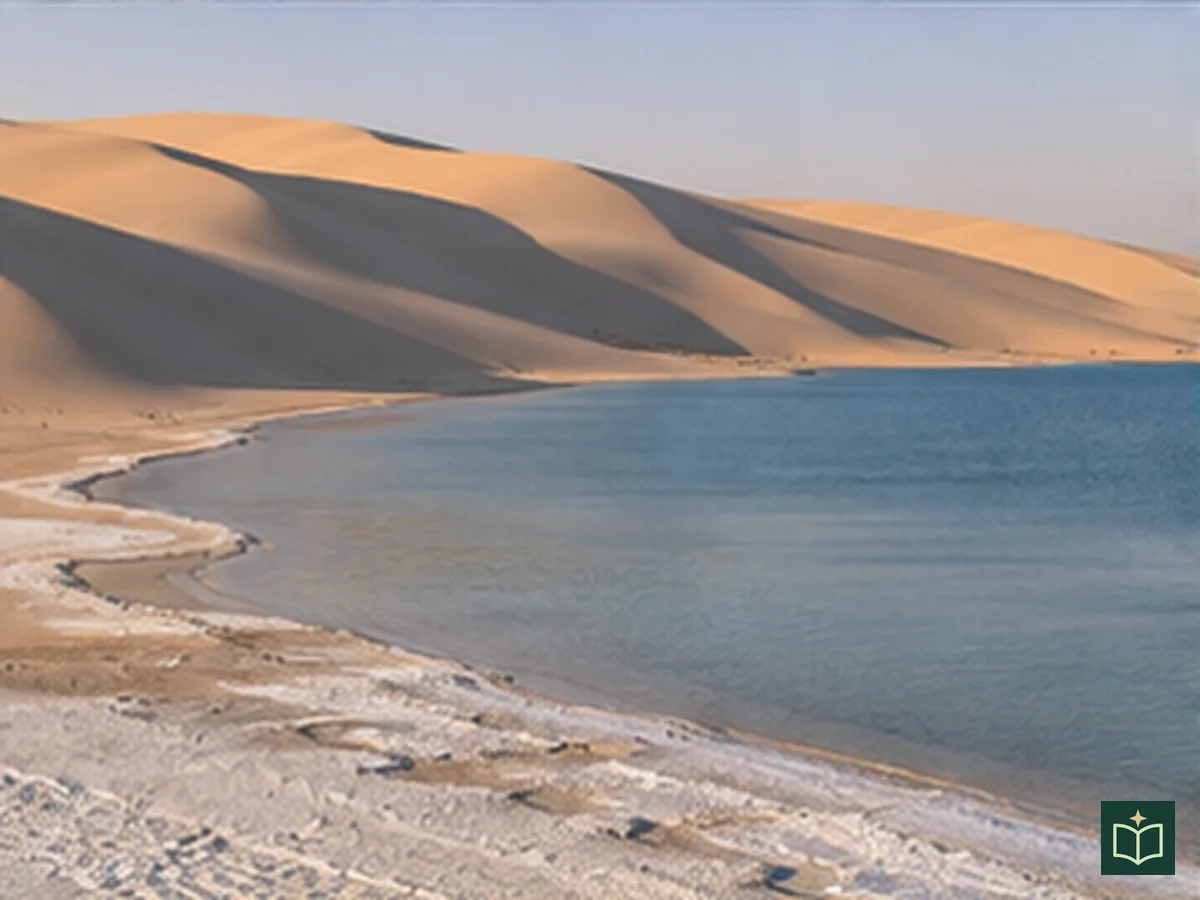
Khor Al Adaid, known in English as the Inland Sea, lies in the far south-east of Qatar, close to the border with Saudi Arabia. A khor is an inlet or creek, and this one is unusual. From the Gulf, a narrow channel winds inland and opens into a wide, shallow lagoon, surrounded on almost every side by tall, pale sand dunes. There are no roads into the heart of it; visitors arrive in four-wheel-drive vehicles across the sand. From a dune crest, the view is of blue water stretching between waves of sand, a landscape few deserts anywhere can match.
How the inlet formed
The shape of Khor Al Adaid reflects the Gulf's recent history. At the end of the last ice age, sea level rose by more than 100 metres, flooding the shallow Gulf basin. Along Qatar's low south-eastern coast, the sea spread into hollows between dunes and over flat ground. Tidal currents flowing in and out twice a day have kept a channel open, preventing the lagoon from being sealed off. At the same time, sand carried by the prevailing north-westerly winds keeps advancing towards the water, so the boundary between dune and sea is constantly being rebuilt. The result is a lagoon held open by the sea and pressed by the desert.
Dunes that touch the water
Dunes reaching all the way to the sea are rare. Most coastal dunes are small ridges behind beaches, built from sand that waves have washed ashore. At Khor Al Adaid, large crescent-shaped barchan dunes formed inland by the wind slide directly into the lagoon, their slip faces dipping into the water. Comparable scenes are found only in a handful of places, such as the Namib Desert's Atlantic coast. Around the lagoon's edges lie sabkha, salt flats formed where seawater evaporates and leaves crusts of salt and gypsum, adding white and grey patches to the gold of the dunes. It is a scene that seems almost designed to surprise.
A haven for wildlife
The lagoon is warm, shallow and salty, especially in summer, yet it supports a varied community. Seagrass and algae grow on its bed, providing food and shelter for fish and invertebrates. Birds such as ospreys and herons hunt in the shallows, and migratory waders pass through in spring and autumn. Green turtles and dugongs have been recorded in the wider coastal waters. The desert around the lagoon holds its own specialists, from lizards and beetles to plants adapted to salt and drifting sand. The combination of marine, coastal and desert habitats in one small area is a large part of its value.
Protecting a fragile place
Khor Al Adaid has been declared a nature reserve by Qatar and placed on the country's tentative list for possible World Heritage nomination. Its popularity creates pressure. Dune driving and camping at weekends can compact sand, disturb wildlife, and leave litter. Vehicle tracks scar sabkha surfaces that take years to recover. Authorities have introduced rules on where vehicles may go and on camping in the reserve, and tour operators increasingly emphasise leaving no trace. The aim is to balance access for visitors, who come for the scenery, with protection for a landscape that is unusual on a global scale. Visitors are encouraged to stay on established tracks.
Why it matters
Khor Al Adaid shows in one view several processes that shape the Gulf: rising post-glacial seas, tides working through a shallow coast, wind moving sand inland, and evaporation building salt flats. Its features are closely related to those found along the UAE's Abu Dhabi coast, where similar sabkhas and lagoons exist, though dunes rarely meet the water so directly. As sea level continues to rise and as coastal development expands across the region, sites like this are useful places to observe how Gulf coastlines respond to change, as well as reminders that the desert and the sea here have always been close neighbours.
Sources & further reading
Figures are rounded and widely published; check the linked organisations for the latest editions. These organisations do not endorse this website.