The rise of Mali
The empire of Mali emerged in West Africa in the thirteenth century, in the region of the upper Niger River. Oral traditions, preserved by griots, who are hereditary historians and musicians, credit its foundation to Sundiata Keita, who is said to have defeated a rival ruler around 1235. The Epic of Sundiata remains one of Africa’s great oral works. At its height in the fourteenth century, Mali stretched from the Atlantic coast inland across much of today’s Mali, Senegal, Gambia, Guinea and Mauritania. Its rulers carried the title mansa, and its cities included important centres such as Niani, Timbuktu and Gao.
Gold meets salt
Mali’s wealth rested on trade. To the south lay goldfields, such as Bambuk and Bure, which supplied a large share of the gold circulating in North Africa, the Middle East and Europe in the medieval period. To the north, across the Sahara, lay salt mines such as Taghaza, where slabs of rock salt were cut and carried by camel. Salt was essential for diet and food preservation in the hot savannah. Caravans also brought cloth, copper, horses and books. By controlling and taxing the routes between these zones, and providing security for merchants, Mali’s rulers turned a geographical advantage into imperial power.
The famous pilgrimage
Mansa Musa ruled from around 1312 to 1337 and is the best-known mansa. In 1324 he made the pilgrimage to Mecca, travelling with a large retinue and great quantities of gold. Arab writers, notably al-Umari, who wrote in Cairo a few years later, reported that his generosity there was so lavish that the value of gold in the city fell and took years to recover. Contemporary accounts of the size of his caravan vary widely and should be treated with caution. What is certain is that the journey made Mali’s wealth famous across the Islamic world and, through traders, in Europe.
Timbuktu and learning
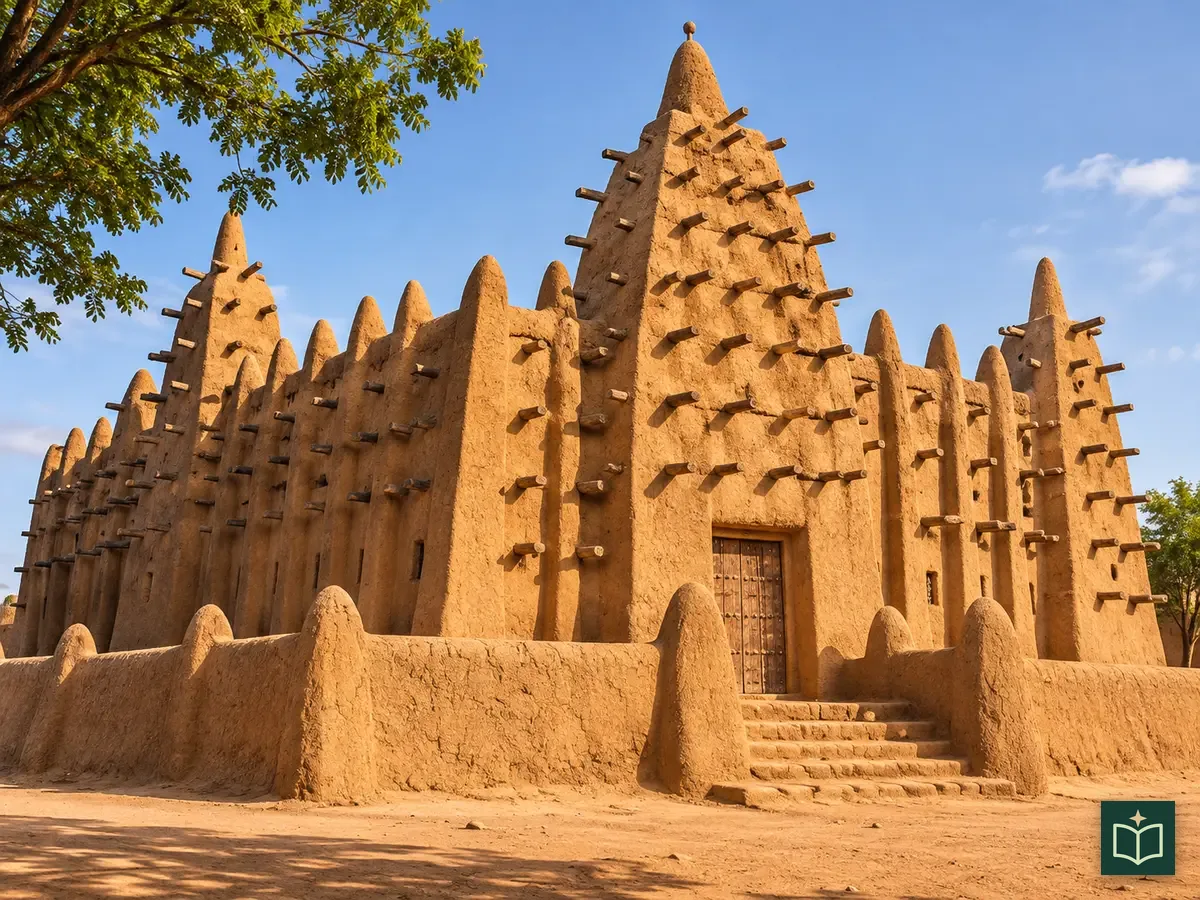
Mansa Musa returned with scholars and an architect often identified as Abu Ishaq al-Sahili, who is associated with building works including the Djinguereber Mosque in Timbuktu. Over the following centuries, Timbuktu became a renowned centre of Islamic scholarship, with mosques, teachers and private libraries holding thousands of manuscripts on law, theology, astronomy, medicine and mathematics. Much of this flowering took place under the later Songhai empire, which succeeded Mali in the region. Timbuktu’s mosques were inscribed by UNESCO as a World Heritage Site in 1988, and efforts continue to preserve its manuscripts, which face threats from climate, conflict and decay.
Myths and measuring wealth
Mansa Musa is often described online as the richest person who ever lived. That makes a striking headline, but it cannot be measured meaningfully. His wealth was bound up with the resources and revenues of an empire, and there is no reliable way to convert fourteenth-century gold, land and power into modern currency. The more useful point is what his fame reveals. In 1375, the Catalan Atlas, made in Majorca, showed a West African ruler holding a gold nugget, an image widely identified with Mansa Musa. Europeans knew that some of their gold came from Africa, even if they did not know the routes.
Why Mali matters
The story of Mali corrects an outdated view of Africa’s past as isolated. Medieval West Africa was tightly connected to the Mediterranean and the Middle East through the Sahara, which acted less as a barrier than as a sea crossed by caravans. Its gold underpinned coinage far beyond its borders. Its cities supported scholarship and architecture that still impress visitors. The empire declined in the fifteenth century as rival powers, especially Songhai, rose and as trade patterns shifted towards Atlantic routes. Yet the legacy of Mali survives in oral tradition, in Timbuktu’s manuscripts and in the name of the modern state that adopted it in 1960.
Sources & further reading
Figures are rounded and widely published; check the linked organisations for the latest editions. These organisations do not endorse this website.