A city on a granite plateau
Great Zimbabwe lies in south-eastern Zimbabwe, near the modern town of Masvingo. It was built and occupied mainly between the eleventh and fifteenth centuries by Bantu-speaking ancestors of the Shona people. At its height, probably in the thirteenth and fourteenth centuries, it was the capital of a state that controlled a large area of the plateau between the Zambezi and Limpopo rivers. The word zimbabwe is generally understood to mean houses of stone or venerated houses in Shona. The site covers several square kilometres and includes three main groups of ruins: the Hill Complex, the Great Enclosure and the Valley Ruins.
How the walls were built
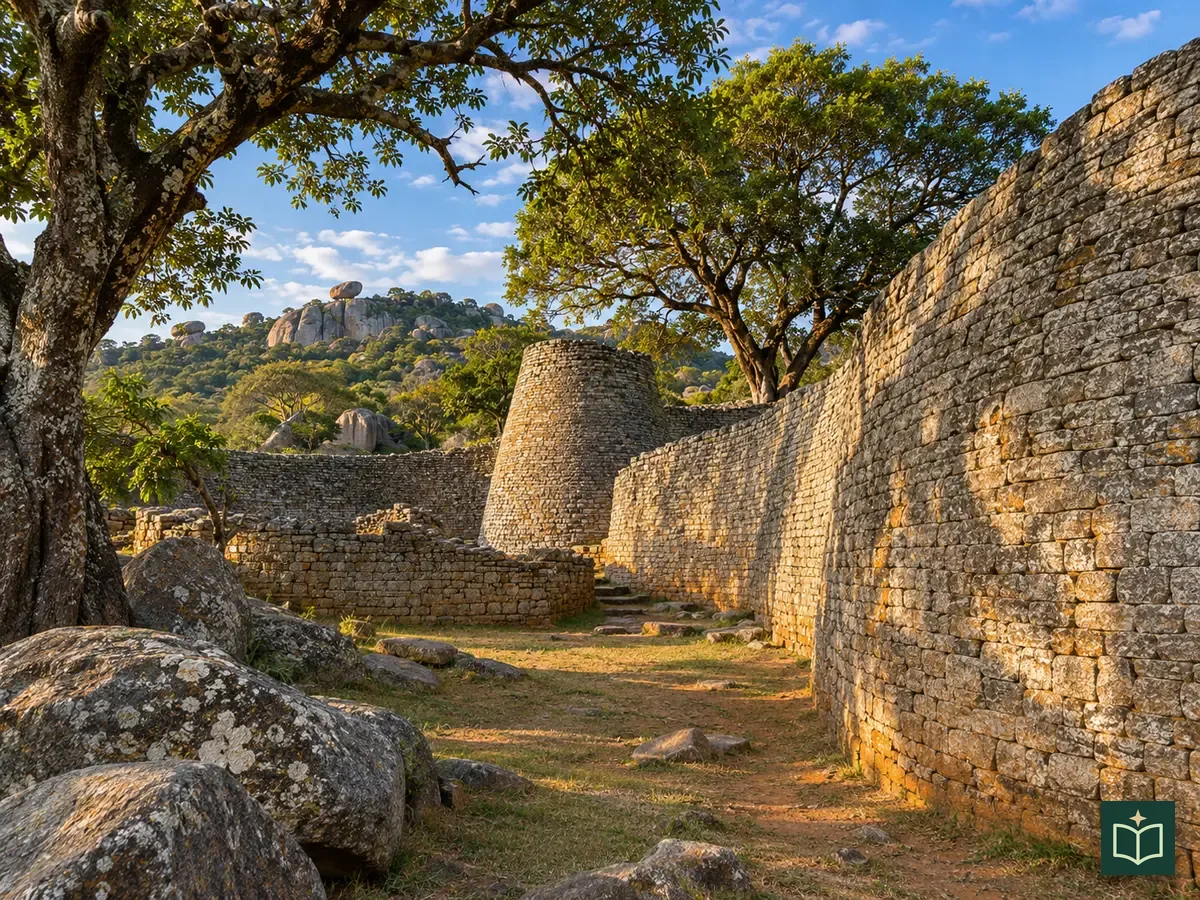
The walls are the site’s most famous feature. Builders took advantage of the local granite, which naturally splits into slabs as it heats and cools. They shaped these into fairly regular blocks and laid them in horizontal courses without any mortar. Walls were made thicker at the base and tapered upwards, giving stability, and many follow smooth curves rather than straight lines. The outer wall of the Great Enclosure is around 11 metres high in places and roughly 250 metres long, making it the largest ancient structure in sub-Saharan Africa. Decorative chevron patterns run along parts of the top. The skill is still admired.
Gold and the Indian Ocean
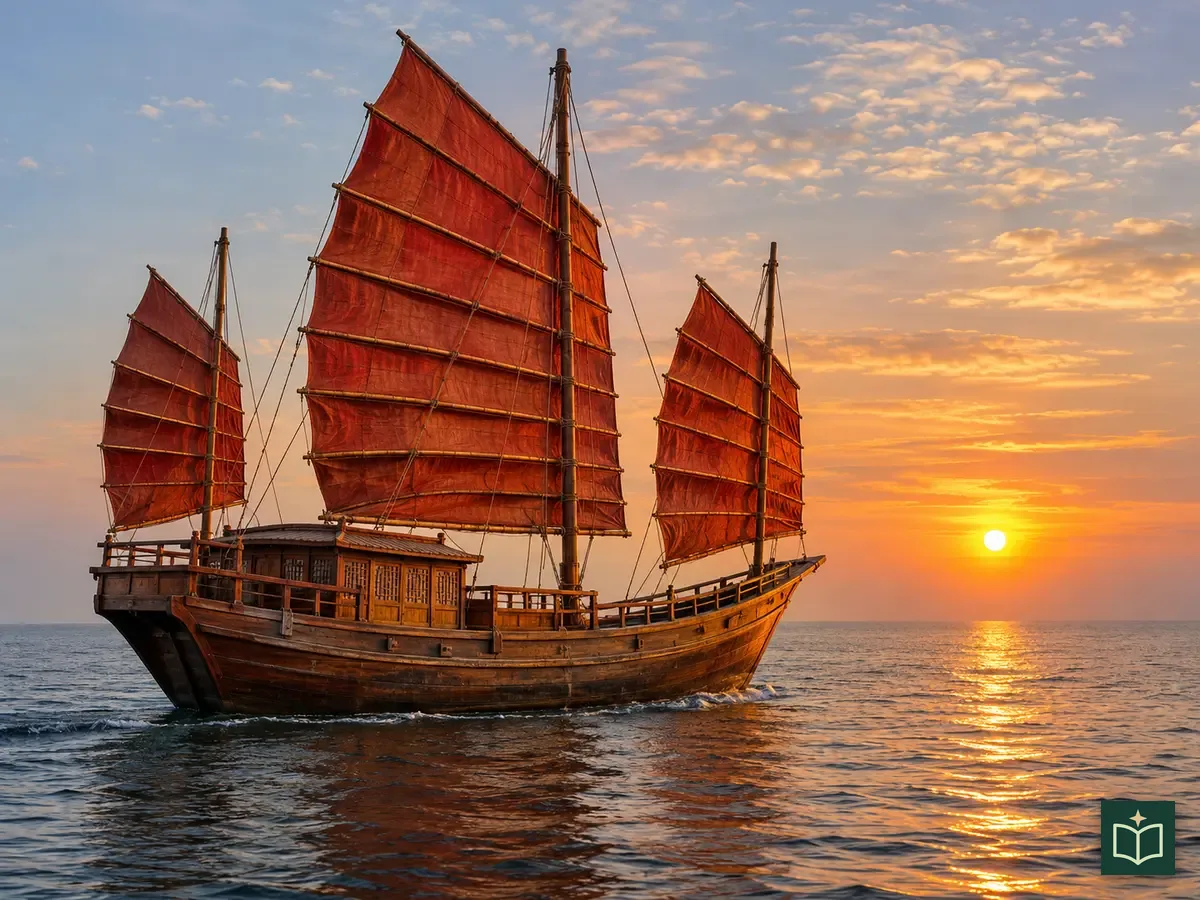
Great Zimbabwe’s power was linked to trade. Its rulers controlled access to gold produced on the plateau and to cattle, a key measure of wealth. Gold travelled to the coast, especially through the Swahili port of Sofala, and on to Kilwa, which dominated much of the East African gold trade. In return came luxury imports. Excavations at Great Zimbabwe have found glass beads from India, Persian pottery, Chinese celadon and porcelain and a coin minted at Kilwa. These objects show that a city deep in the interior of southern Africa was part of an Indian Ocean network stretching to Arabia, India and China.
The soapstone birds
Among the most remarkable finds are eight carved soapstone birds, each set on top of a column about a metre high. They are unique to the site and probably had ritual or political meaning, perhaps linked to royal ancestors. Several were removed during the colonial period and taken abroad; most have since been returned to Zimbabwe. The bird has become a national emblem and appears on the country’s flag and coat of arms. When the country became independent in 1980, it took the name Zimbabwe, a deliberate statement linking the new nation to a great African achievement of the past.
A history once denied
During the colonial era, some European writers refused to believe that Africans had built Great Zimbabwe. They attributed it to Phoenicians, the Queen of Sheba or other outsiders, and early treasure-hunting damaged parts of the site and destroyed evidence. Professional archaeologists rejected these claims. David Randall-MacIver in 1905 and Gertrude Caton-Thompson in 1929 showed that the city was medieval and African. Yet the colonial government of Rhodesia continued to discourage this conclusion for political reasons. Today, the African origin of Great Zimbabwe is the firm consensus, supported by radiocarbon dating, architecture and comparisons with related sites. The debate is now closed.
Decline and legacy
Great Zimbabwe declined in the fifteenth century. Possible reasons include the exhaustion of soils, firewood and grazing around a large population, along with shifts in trade routes towards the north, where the Mutapa state rose to prominence. Population estimates for the city at its peak vary, with figures in the range of about 10,000 to 18,000 often cited, and should be treated as uncertain. UNESCO inscribed the site as a World Heritage Site in 1986. Great Zimbabwe remains one of the clearest examples of the scale and sophistication of pre-colonial African states, and it continues to shape national identity. Its walls still stand.
Sources & further reading
Figures are rounded and widely published; check the linked organisations for the latest editions. These organisations do not endorse this website.