A land named by its customers
Magan is the name Mesopotamian scribes used for a land that supplied copper and hard stone. Like Dilmun, it is known first from cuneiform texts, written by buyers rather than by the people who lived there. Most historians now identify Magan with the Oman peninsula, covering today’s UAE and northern Oman. The case rests on geology and archaeology: the Hajar mountains contain one of the richest copper deposits in the ancient Near East, and excavations have found Bronze Age mining sites, smelting debris and settlements that match the period when Magan appears in the records, especially the later third millennium BCE.
How the copper was made
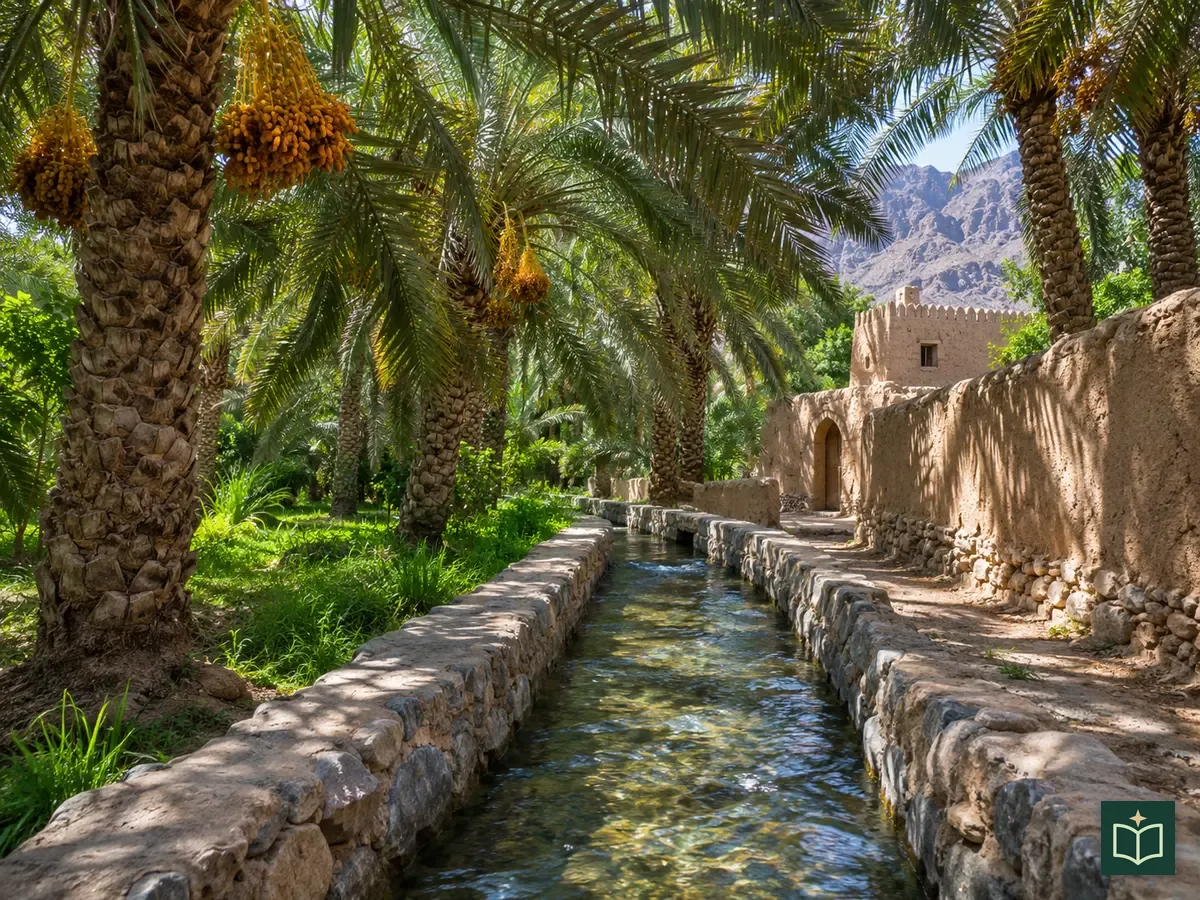
Copper rarely occurs as pure metal. Miners broke out ore-bearing rock, crushed it and heated it with charcoal in small furnaces until the metal separated from the waste, which was left behind as slag. Heaps of slag still mark ancient smelting sites in the mountains of Oman and the UAE. The metal was then cast into bun-shaped or bar ingots that could be carried and weighed. Making charcoal demanded large amounts of wood, which suggests that local woodland was heavily exploited. The work required organisation, skill and steady supplies of food and water, often from oases at the mountain foot.
The Umm an-Nar world
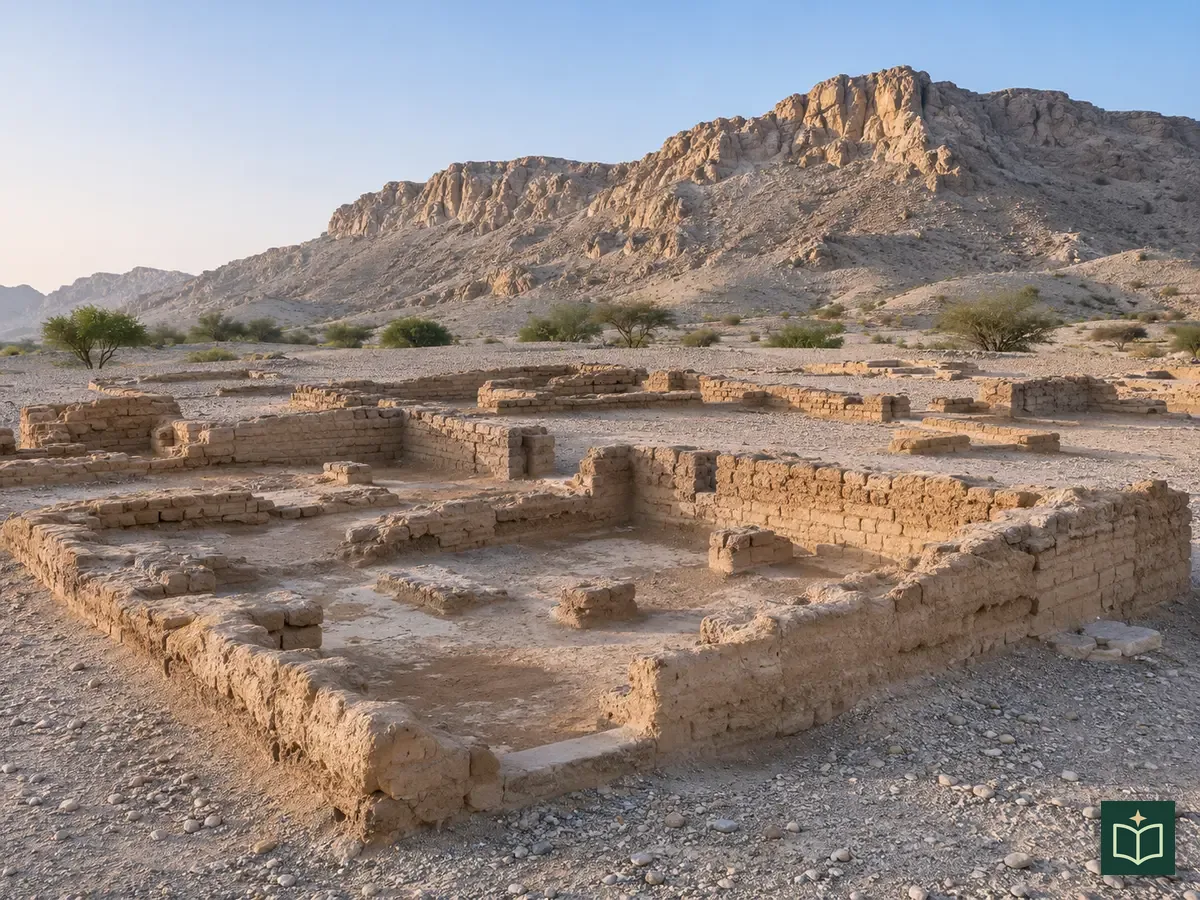
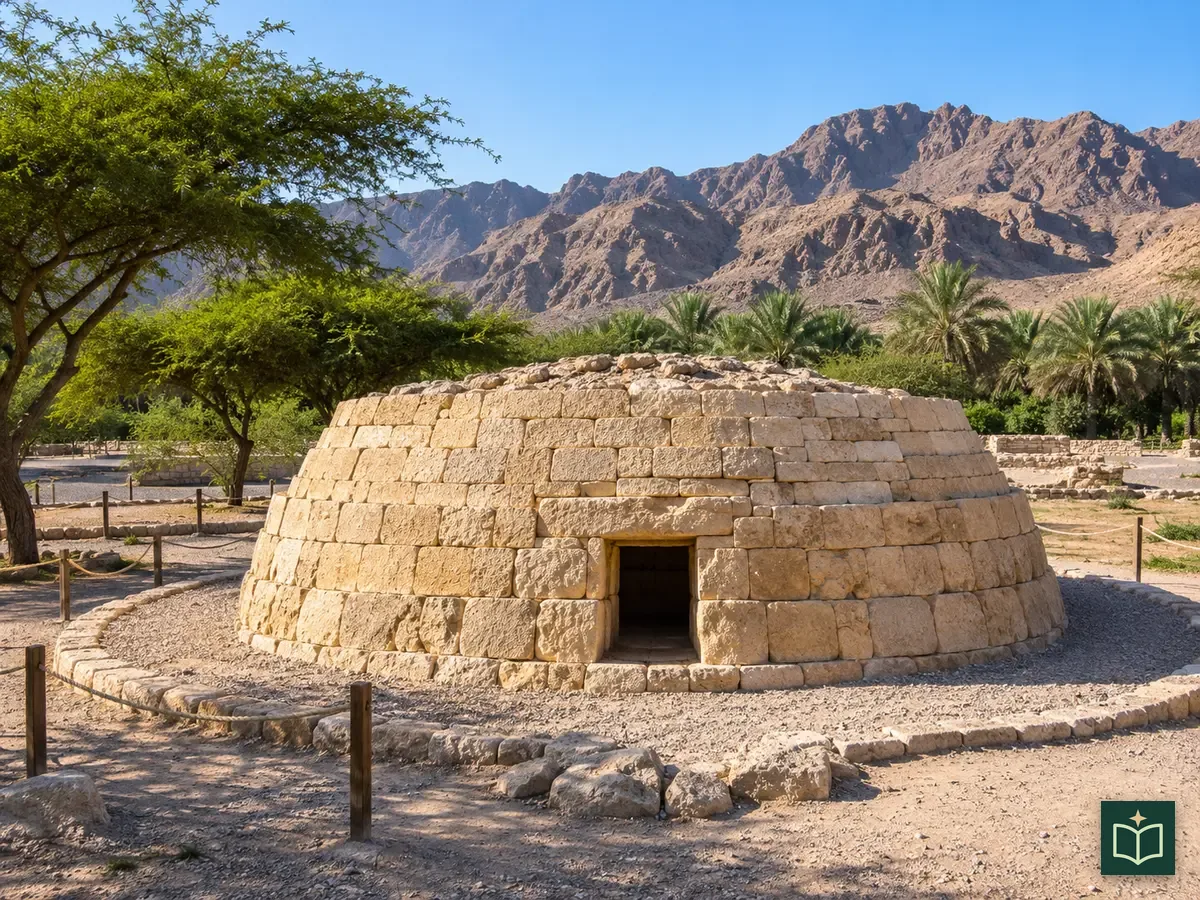
The people of this period are known to archaeologists as the Umm an-Nar culture, named after a small island beside Abu Dhabi where Danish teams excavated from 1959. It flourished roughly from 2600 to 2000 BCE. Its most recognisable monuments are large circular communal tombs built of carefully dressed stone, used for generations. A restored example, the Hili Grand Tomb, stands in Al Ain, part of a UNESCO World Heritage Site. Settlements often included round stone towers near water sources. Finds of Mesopotamian pottery, Indus beads and weights show that these communities were connected to a wide trading network. It was a sophisticated, outward-looking society.
What Magan received
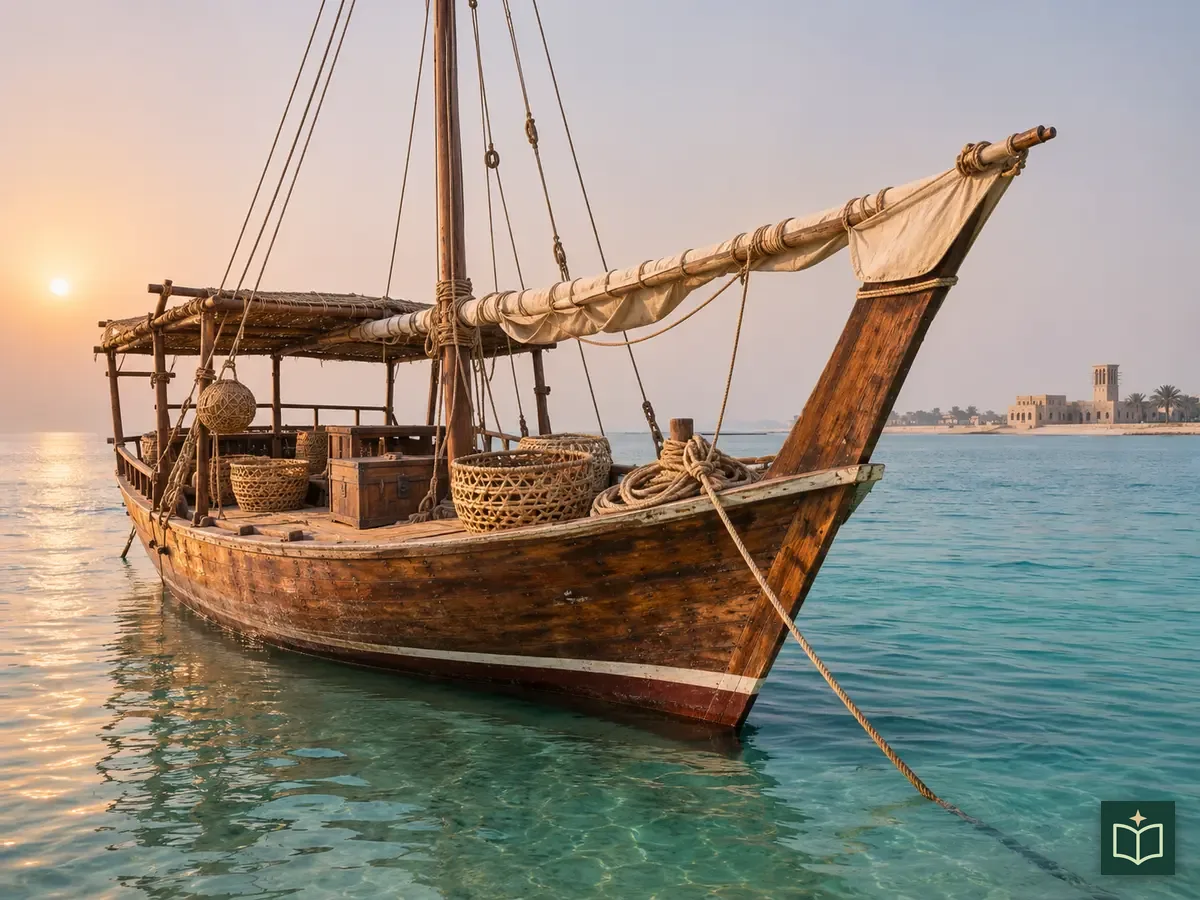
Trade is a two-way street. Mesopotamian records show that boats sailing to Magan carried barley, wool, garments, sesame oil and leather goods. Southern Mesopotamia had fertile irrigated land but almost no metal, timber or hard stone, so the exchange suited both sides. Ruler Gudea of Lagash, around 2100 BCE, wrote that he obtained dark stone from Magan for his statues. Some trade passed directly; at other times it went through Dilmun as an intermediary. The famous claim of Sargon of Akkad that ships from Magan moored at his capital shows how prestigious this maritime connection had become. Both sides valued a reliable partner across the water.
Limits of the evidence
Because Magan left no written records of its own, much remains uncertain. We do not know what its people called themselves or whether they were ruled by one authority or many local leaders. Some Mesopotamian texts describe campaigns against kings of Magan, but these were written to glorify the conquerors. Estimates of how much copper was produced are also difficult, because ancient slag heaps have been disturbed and dated unevenly. Researchers increasingly use chemical analysis of metal objects to trace where copper came from, which is helping to confirm links between Hajar ores and finds in Mesopotamia. Each new analysis adds a little more certainty to an old story.
Why it matters today
The story of Magan reframes the UAE and Oman as ancient producers rather than late arrivals to global trade. Thousands of years before pearls or petroleum, the region exported a strategic raw material, organised specialist labour and shipped goods across the Gulf. Museums in Al Ain, Abu Dhabi and Muscat display tombs, ingots and pottery from this era, and new excavations continue to add detail. For visitors, the stone tombs of Hili and the Umm an-Nar island site are tangible reminders that the region’s mountains and harbours were part of one of the world’s earliest long-distance commercial networks. The copper road was the region’s first great export story.
Sources & further reading
- UNESCO World Heritage · Cultural Sites of Al Ain ↗
- UNESCO World Heritage · Archaeological sites of Bat, Al-Khutm and Al-Ayn ↗
Figures are rounded and widely published; check the linked organisations for the latest editions. These organisations do not endorse this website.