What a falaj is
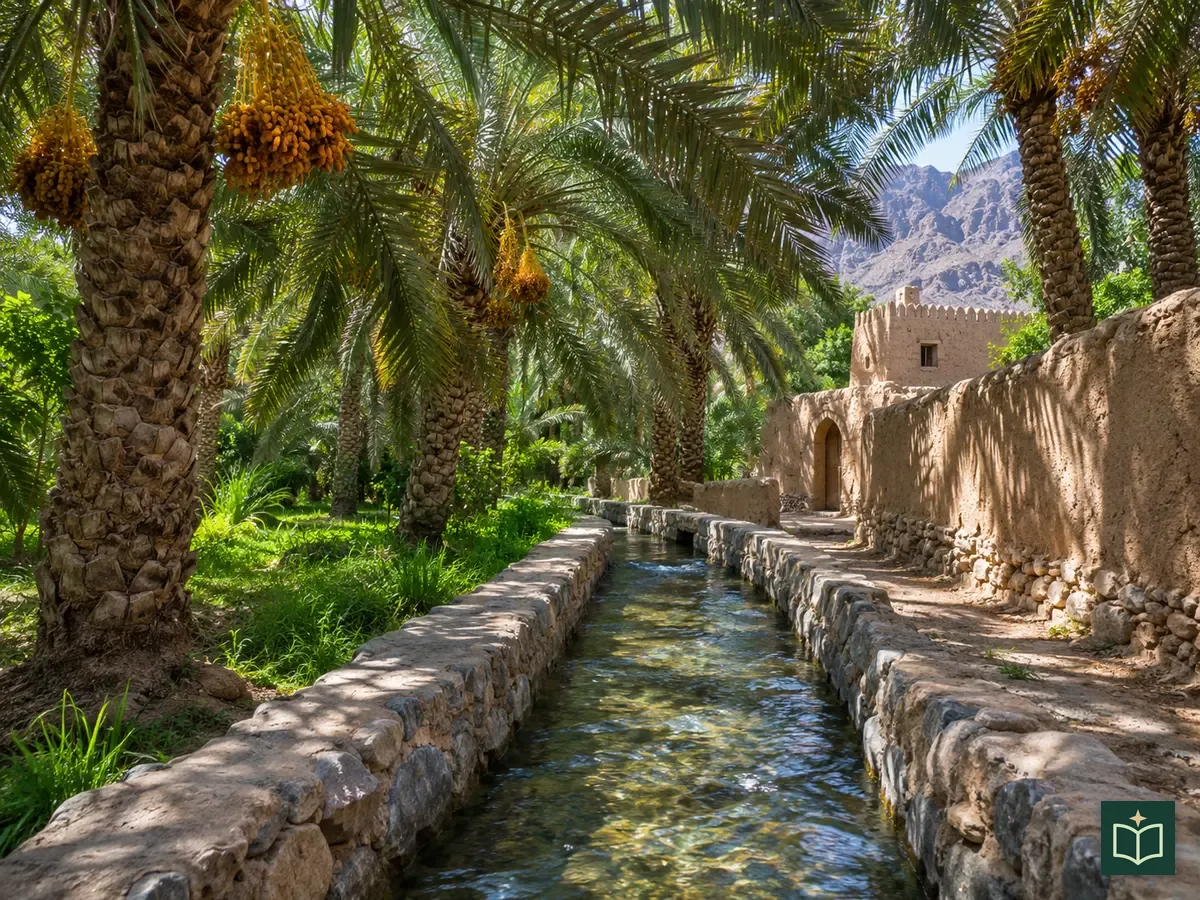
A falaj, plural aflaj, is a channel that brings water from a source to an oasis using only gravity. The word comes from an Arabic root meaning to divide, which hints at the system’s social side. Aflaj are found across Oman and in the UAE, especially around Al Ain. They supplied date gardens, crops and households in places where rainfall is low and irregular. Many date back centuries, and archaeological work in the region suggests that the technique has very old roots. Oman alone still has thousands of working systems. In effect, a falaj is both a piece of engineering and a social contract.
Three kinds of channel
Not every falaj is the same. A daudi falaj taps an underground aquifer through a tunnel, sometimes kilometres long, with vertical shafts dug along its line for access and maintenance, similar to the qanats of Iran. A ghaili falaj collects water flowing in the gravel of a wadi and leads it along an open channel. An aini falaj draws from a spring. In each case the builders must give the channel a slope steep enough to keep water moving, but gentle enough to avoid erosion, a delicate piece of surveying done without modern instruments. Errors could leave a channel dry or flooded.
Dividing water by time
Once water reaches the oasis, it is shared. Users hold rights to a certain number of time units, which can be inherited, sold or rented. Traditionally, turns were measured by the shadow of a marker during the day and by the rising of particular stars at night. A manager, often called the arif, oversees the timetable and maintenance. Water first serves drinking and mosques, then bathing areas, then fields. Spare shares were sometimes auctioned, and income paid for upkeep. The system is a working example of collective management of a scarce resource. Disputes were settled by custom and local authority.
Old roots in the UAE
The UAE’s Al Ain region is an important part of this story. Excavations around Hili have uncovered remains of channels associated with the Iron Age, roughly three thousand years ago, which researchers cite as early evidence of falaj-type irrigation in southeast Arabia. Al Ain’s aflaj, including those in its oases, are part of the Cultural Sites of Al Ain inscribed by UNESCO in 2011. In Oman, five representative systems were inscribed in 2006 as the Aflaj Irrigation Systems of Oman, standing for some 3,000 that are still in use. Some channels in both countries still carry water today, more than a thousand years after similar systems were first dug.
Pressures and limits
Aflaj depend on groundwater that recharges slowly from scarce rain. Since the mid-twentieth century, motorised pumps and deep wells have allowed farmers to draw water faster than aflaj ever could, lowering water tables in some areas and drying up channels. Urban growth, changing livelihoods and the cost of maintenance add pressure. Romantic images of aflaj sometimes suggest a perfectly balanced system, but they also produced disputes and depended on hard labour. Their resilience came from rules, cooperation and regular repair rather than from engineering alone, and those social foundations are harder to preserve. Many communities now combine old channels with modern supply.
Why it matters
As the Gulf faces water scarcity, aflaj are more than heritage. They show how communities lived within the limits of a desert climate, allocating a fluctuating resource transparently and maintaining shared infrastructure for generations. Governments in Oman and the UAE fund restoration, and visitors can walk beside working channels in oases such as Al Ain. Engineers and planners study them as examples of low-energy water delivery. The central lesson is simple: when water is scarce, the arrangements that decide who gets it, and when, matter as much as the channels that carry it. Good rules can outlast any single generation of builders.
Sources & further reading
- UNESCO World Heritage · Aflaj Irrigation Systems of Oman ↗
- UNESCO World Heritage · Cultural Sites of Al Ain ↗
Figures are rounded and widely published; check the linked organisations for the latest editions. These organisations do not endorse this website.