A universal translator
Science fiction has long imagined devices that instantly translate any language, from the universal translator in Star Trek to the Babel fish in The Hitchhiker's Guide to the Galaxy, a fish placed in the ear. For most of history, people who did not share a language relied on interpreters, phrasebooks or gestures. AI has brought something close to the fictional devices into everyday life, using phones and earbuds that many people already own.
Three technologies combined
Live translation combines three AI technologies. Speech recognition converts spoken words into text. Machine translation converts that text into another language. Text-to-speech turns the translation back into spoken words. Each of these has improved dramatically with deep learning, trained on huge amounts of speech and text, and modern devices can run all three quickly enough to keep a conversation flowing, with only a short delay.
Google's early start
Google introduced real-time conversation translation with its first Pixel Buds earbuds in 2017, using its Google Translate service, and has since expanded translation features on Pixel phones. In 2025, Google introduced call translation on its Pixel 10 phones that can speak translations in a version of the user's own voice. Google Translate's conversation mode on smartphones is used by travellers worldwide and supports many languages, including Arabic.
Samsung's calls
In January 2024, Samsung introduced Galaxy AI with its Galaxy S24 phones, including Live Translate, which translates phone calls in real time, and an Interpreter mode for face-to-face conversations. Some processing happens directly on the phone, which means certain translations can work without an internet connection and keep conversations private. Samsung has added more languages over time.
Apple's AirPods
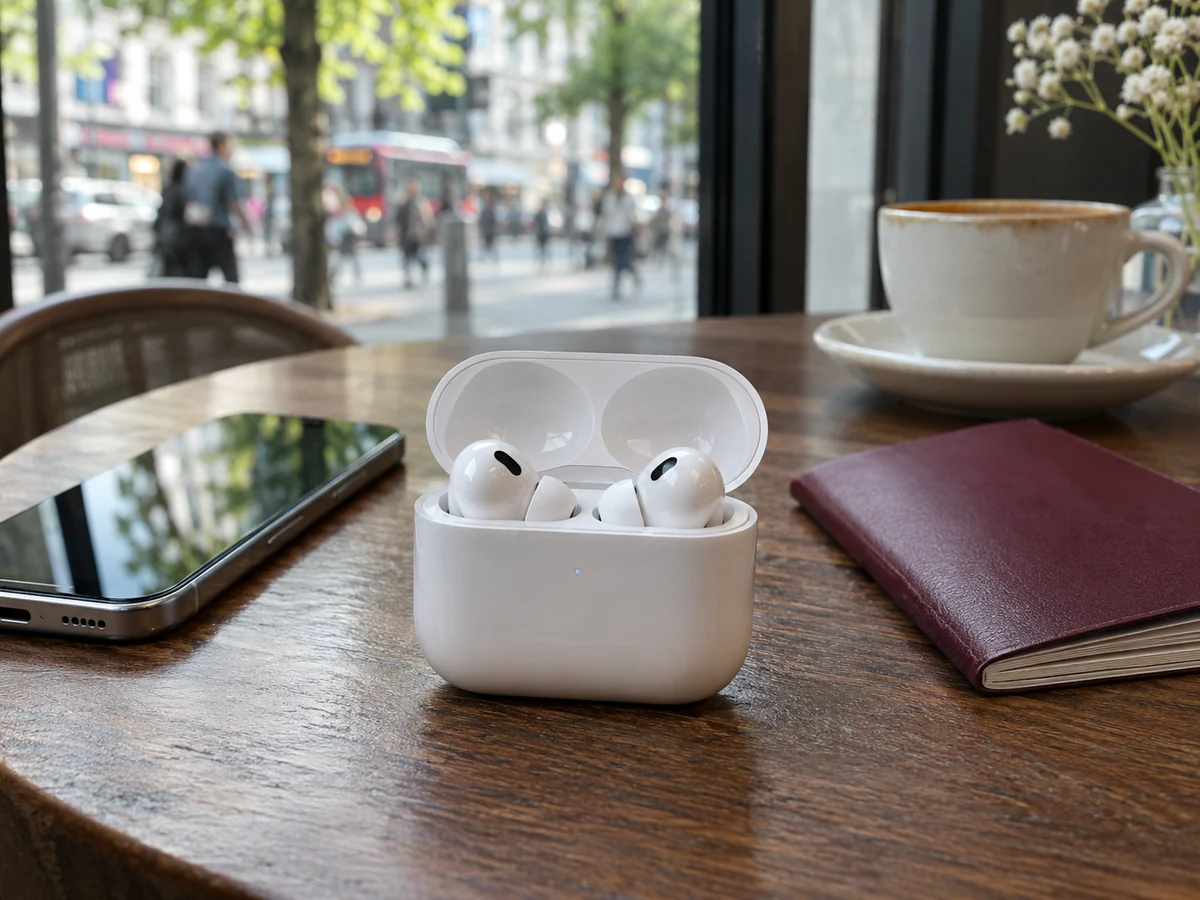
In September 2025, Apple announced Live Translation for AirPods alongside AirPods Pro 3, also available on AirPods Pro 2 and AirPods 4 with noise cancellation, when paired with a recent iPhone. Users press both earbud stems to start translating. Noise cancellation lowers the other person's voice so the translation is easier to hear, and if the other person has no AirPods, the iPhone can show a live transcription for them.
Growing language support
At launch, AirPods Live Translation supported English, French, German, Portuguese and Spanish. With an update in late 2025, Apple added Chinese, Italian, Japanese and Korean, bringing the total to about 11 language options, and the feature became available in the European Union in December 2025, after extra engineering work to meet EU digital rules. Language support remains narrower than some rivals', and Apple has said it plans to add more.
Useful in daily life
Live translation can help tourists order food, ask for directions or talk to hotel staff, and helps business people, students and families who speak different languages. In multilingual places like the UAE, where residents come from more than 200 nationalities, translation tools can help in shops, clinics and workplaces. Translation features in messaging apps and video calls also let people chat across languages in writing.
Not perfect yet
AI translation still makes mistakes, especially with accents, background noise, slang, humour and languages with less training data. Short delays can make conversations feel less natural. Important nuances, such as politeness or cultural references, can be lost. For medical, legal or other high-stakes situations, professional human interpreters remain essential, as errors could have serious consequences.
Arabic and dialects
Arabic presents special challenges for translation technology, because spoken Arabic varies widely between countries and regions, while formal Modern Standard Arabic is used in writing. AI models trained mainly on formal Arabic may struggle with dialects such as Emirati, Egyptian or Levantine Arabic. Regional efforts to build Arabic AI, including models developed in the UAE and Saudi Arabia, aim to improve how technology understands everyday Arabic speech.
Why it matters
Language barriers affect travel, work, education and relationships. AI live translation is making it easier for people to understand one another, even without a shared language. While it will not replace the value of learning languages or the skill of professional interpreters, it brings the dream of a universal translator much closer to reality for millions of people, wherever they live, work or travel, and whatever languages they speak.
Sources & further reading
- Apple Newsroom · New Apple Intelligence features are available today (2025) ↗
- Apple Newsroom · Live Translation on AirPods expands to the EU (2025) ↗
- 9to5Mac · iOS 26.1 makes AirPods Pro's latest feature even better (2025) ↗
Feature availability varies by device, software version, language and region. Photograph: original AI-generated illustration (Adobe Firefly). Reference organisations do not endorse this website.