Sharing the same ground
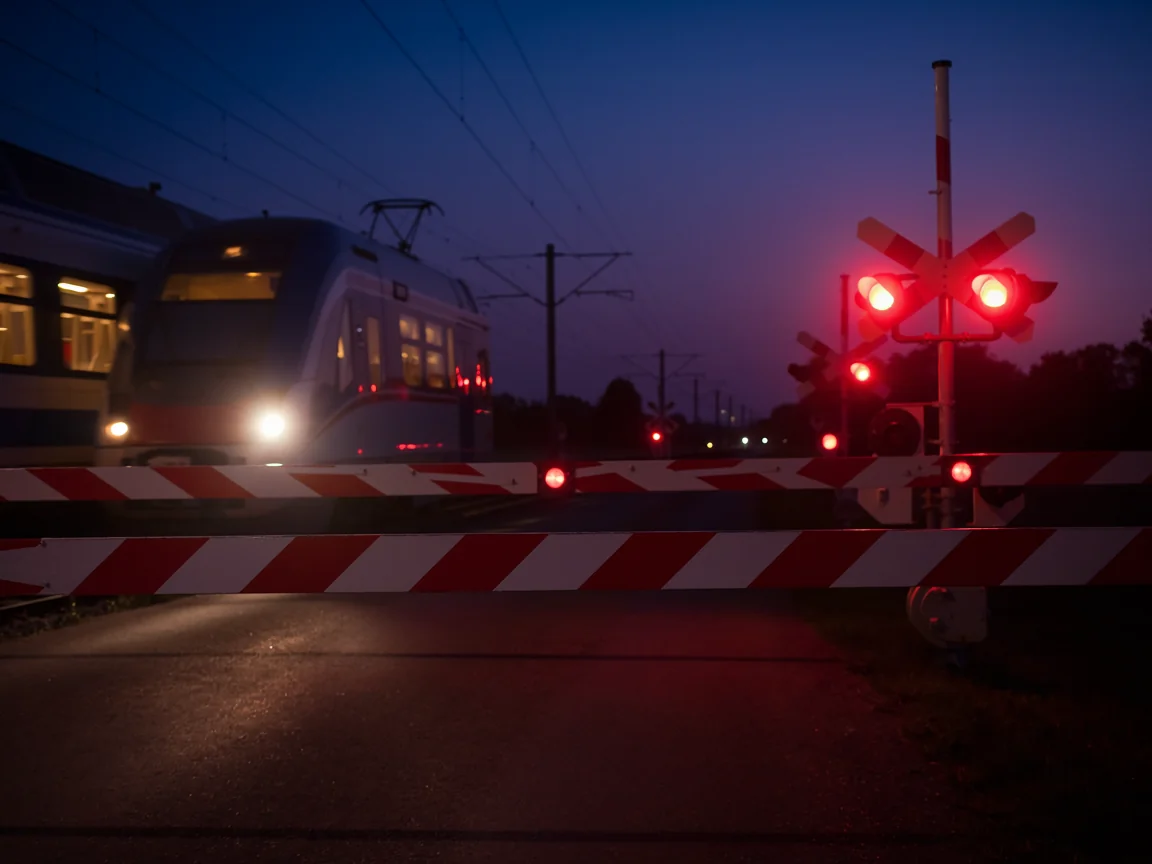
Building bridges or tunnels for every road crossing a railway is expensive, so many places use level crossings, where road and rail cross at the same height. They range from simple signs on rural tracks to fully automated crossings with full barriers and CCTV on busy roads.
How the system knows
Track circuits—low electrical currents through the rails—or axle counters detect a train approaching. They trigger lights, bells and barriers well before it arrives. Some crossings are monitored by signallers who confirm the crossing is clear before allowing trains through.
Why accidents happen
Most crossing collisions involve drivers or pedestrians ignoring warnings, zigzagging around half-barriers or stopping on the tracks in traffic queues. Trains are heavy and fast; even with emergency brakes they may need over a kilometre to stop, so the driver cannot avoid an obstruction.
Making them safer
Railways close crossings where possible, replacing them with bridges and underpasses. Others add obstacle detection systems, cameras that fine drivers who jump the lights and warnings for pedestrians. The simplest safety rule remains: stop when lights flash, never stop on the tracks, and wait for barriers to rise fully.
Sources & further reading
Distances are illustrative; always follow local railway safety signs. Photograph: original AI-generated illustration (Adobe Firefly). Reference organisations do not endorse this website.