Circles of old
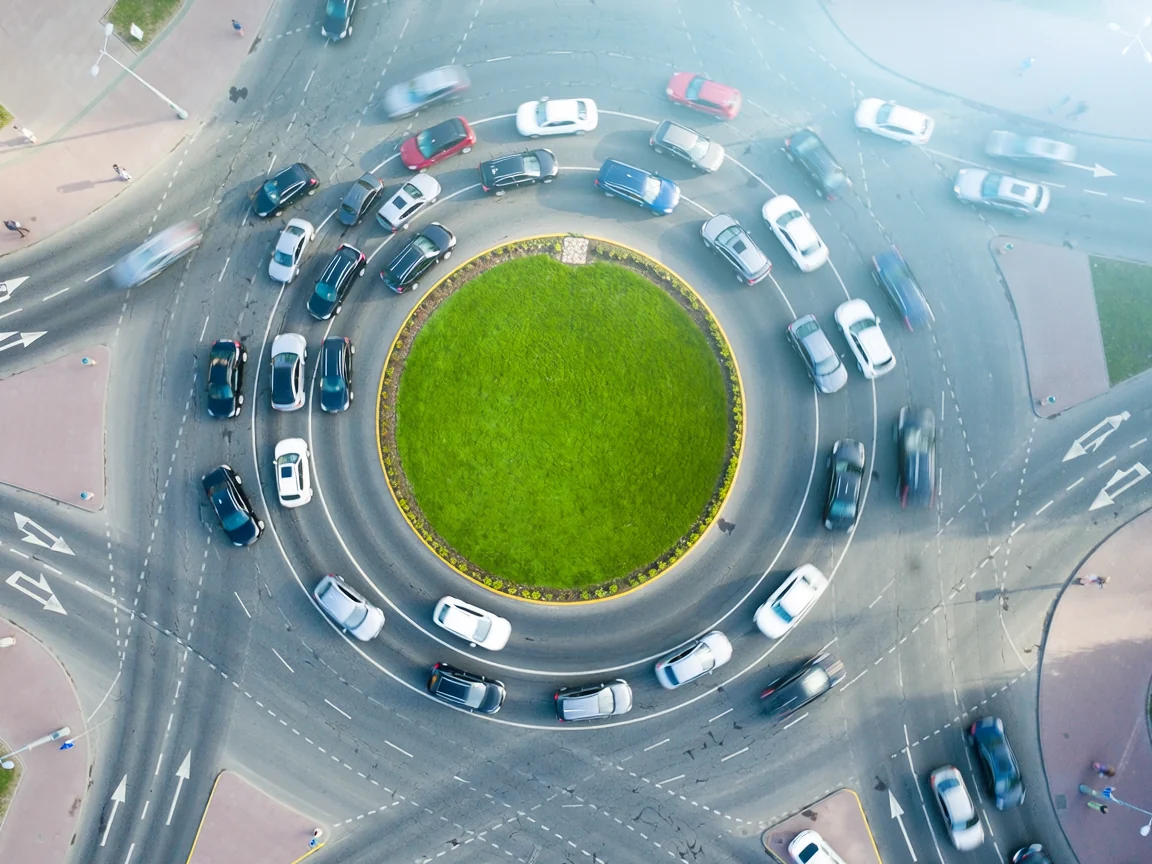
Traffic circles were built in Paris and New York in the early twentieth century, but many gave priority to entering vehicles and became jammed. In the 1960s, British engineers introduced the 'offside priority' rule—traffic on the roundabout goes first—which transformed their efficiency. The modern roundabout spread worldwide.
Why they are safer
At a crossroads, vehicles cross paths at right angles, causing side-impact and head-on crashes. A roundabout turns these into merges at low speed. Studies by road safety agencies have found that converting junctions to roundabouts sharply reduces injury and fatal crashes.
Why they flow
Traffic lights stop everyone in turn, even when roads are empty. At a roundabout, drivers enter whenever there is a gap, so delays are often shorter, especially outside peak times. They also cope well with U-turns. Very busy roundabouts sometimes add traffic lights to manage peak flows.
Using one well
Approach slowly, pick the correct lane from the signs, give way to traffic already circulating, and signal before exiting. Watch for cyclists and pedestrians. In countries that drive on the left, traffic circulates clockwise; where people drive on the right, it goes anticlockwise.
Sources & further reading
Driving rules vary by country; follow local road signs and laws. Photograph: original AI-generated illustration (Adobe Firefly). Reference organisations do not endorse this website.