A hillside of silver
Laurion, now Lavrio, lies at the south-eastern tip of Attica, about 60 kilometres from central Athens. Its hills contain ore rich in lead with a valuable share of silver, mainly in the mineral galena. People were digging there in the Bronze Age, but output became significant in the 6th century BC, when Athens began striking silver coins in quantity. The Athenian state owned the mineral rights and leased mining concessions to private operators, who paid fees for the right to dig. That arrangement turned the district into a busy industrial landscape of shafts, workshops, cisterns and furnaces, and gave the city a steady income that its rivals lacked.
The windfall and the warships
Around 483 BC miners struck a much richer deposit in the Maroneia area. According to the historian Herodotus, the Athenians planned to divide the surplus among citizens, about ten drachmas each. The politician Themistocles argued instead for building warships, pointing to a war with the island of Aegina and, more quietly, to the threat from Persia. The assembly agreed, and Herodotus says 200 triremes were built. Each needed about 170 rowers and a full crew of around 200, so a fleet that size required some 40,000 men. In 480 BC that navy, with allied ships, defeated the Persian fleet of Xerxes in the strait of Salamis.
Working underground
The mines themselves were grim places. Vertical shafts, some descending more than 100 metres, gave access to galleries that were often under a metre high, where workers lay on their sides to cut ore by lamplight with iron picks and chisels. Ventilation was poor and the lead-laden dust harmful. The labour was done mostly by enslaved people, many of them captives from Thrace and Asia Minor. Wealthy Athenians owned gangs of slaves and hired them out to mine operators; the general Nicias was said to rent out 1,000. Estimates of the total workforce at the peak vary widely, but it probably ran to many thousands.
From ore to owls
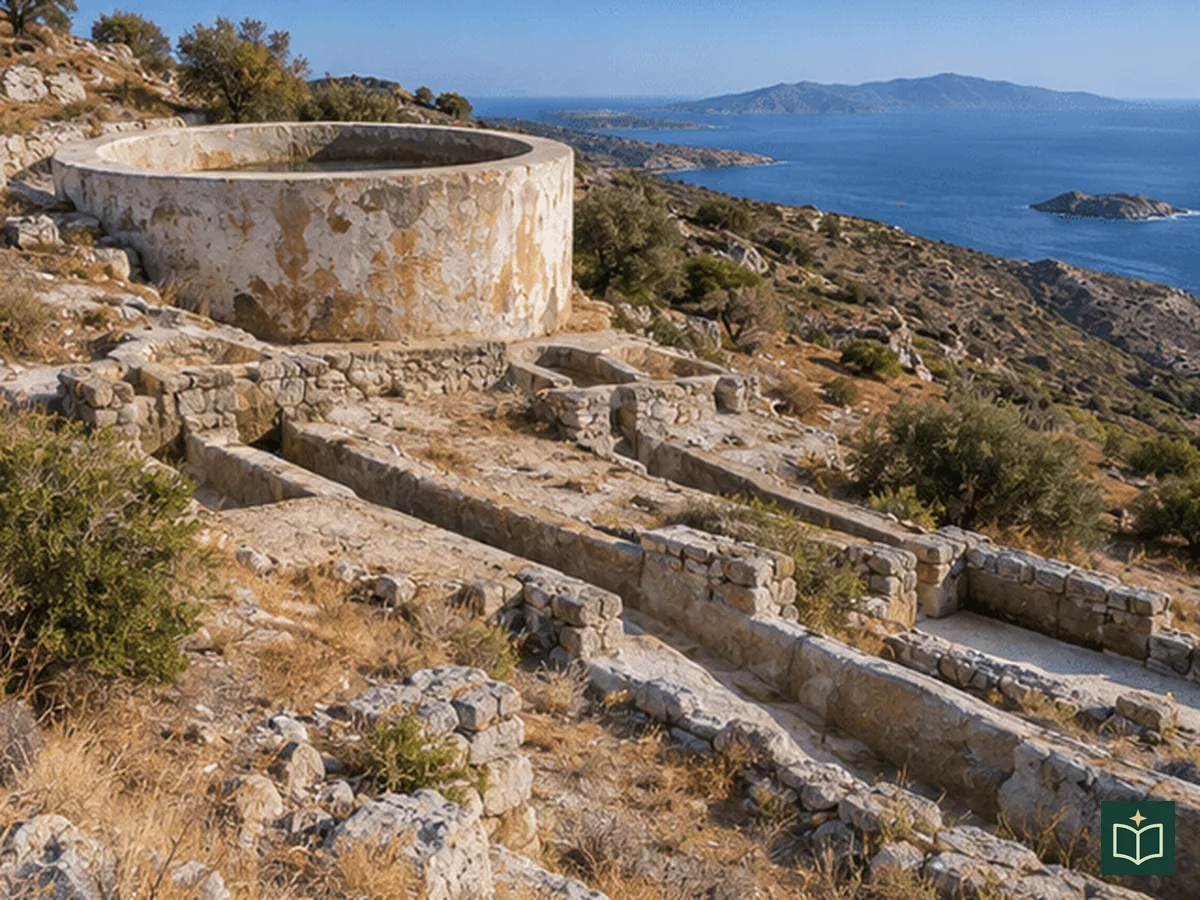
On the surface, ore was crushed and ground, then washed in sloping stone channels where water carried off lighter rock and left heavy mineral grains behind. Water was scarce in dry Attica, so workshops stored rain in plastered cisterns and recycled it. The concentrate was smelted, and the silver was separated from lead in a further refining step. The metal went to the Athens mint, where it became the famous tetradrachm, a four-drachma coin weighing about 17 grams, with Athena on one side and her owl on the other. Its reliable purity made the owl one of the most widely trusted coins of the ancient Mediterranean.
Wealth, war and decline
Laurion silver underpinned Athens' golden age. It helped pay rowers in a navy that dominated the Aegean and supported the costly building programme of the 5th century BC. The mines were also a weakness. During the Peloponnesian War, Sparta fortified Decelea in Attica from 413 BC, and the historian Thucydides reports that more than 20,000 slaves deserted, many of them skilled workers. Mining was badly disrupted. Production revived in the 4th century BC but faded in later centuries as richer ores ran out. In the 19th century companies returned to reprocess ancient slag and spoil heaps, which still held recoverable lead and silver.
What remains at Lavrio
Today the district preserves one of the best surviving ancient industrial landscapes in the Mediterranean. Visitors can see shaft mouths, ore-washing tables, cisterns and the remains of workshops, along with the nearby ancient theatre of Thorikos. Archaeologists use the site to estimate how much silver was produced and how labour was organised, though figures remain debated. Laurion is a reminder that classical Athens, admired for its democracy, drama and philosophy, rested partly on mineral wealth extracted by people who had no share in that democracy. Silver gave the city its fleet, its coins and its confidence, and the hills still bear the marks of that work.
Sources & further reading
Figures are rounded and widely published; check the linked organisations for the latest editions. These organisations do not endorse this website.