An old material, a modern standard
Copper has carried water for a very long time. Archaeologists found copper drainage pipe at the pyramid temple of the pharaoh Sahure in Egypt, built more than 4,000 years ago. Yet copper became the everyday choice for household water only in the 20th century. Before then, many homes relied on lead pipes, which slowly poisoned drinking water, or galvanised steel, which rusted and narrowed inside over the years. After the Second World War, mass-produced thin-walled copper tube and standard fittings made it affordable. In much of Europe and North America it became the default for hot and cold water, heating systems and gas lines.
What makes copper suitable
Copper is a noble enough metal that it corrodes very slowly in most water. A thin oxide layer forms on the inner surface and protects the metal beneath. It is also strong, so a tube with walls around a millimetre thick can hold mains pressure and hot water for decades. Copper does not burn, does not soften in a hot loft and is impermeable, so gases and contaminants in the soil cannot pass through it. It discourages the growth of some bacteria on its surface. And because scrap copper keeps a high value, old pipework is almost always recovered and recycled when buildings are renovated.
How the joints are made
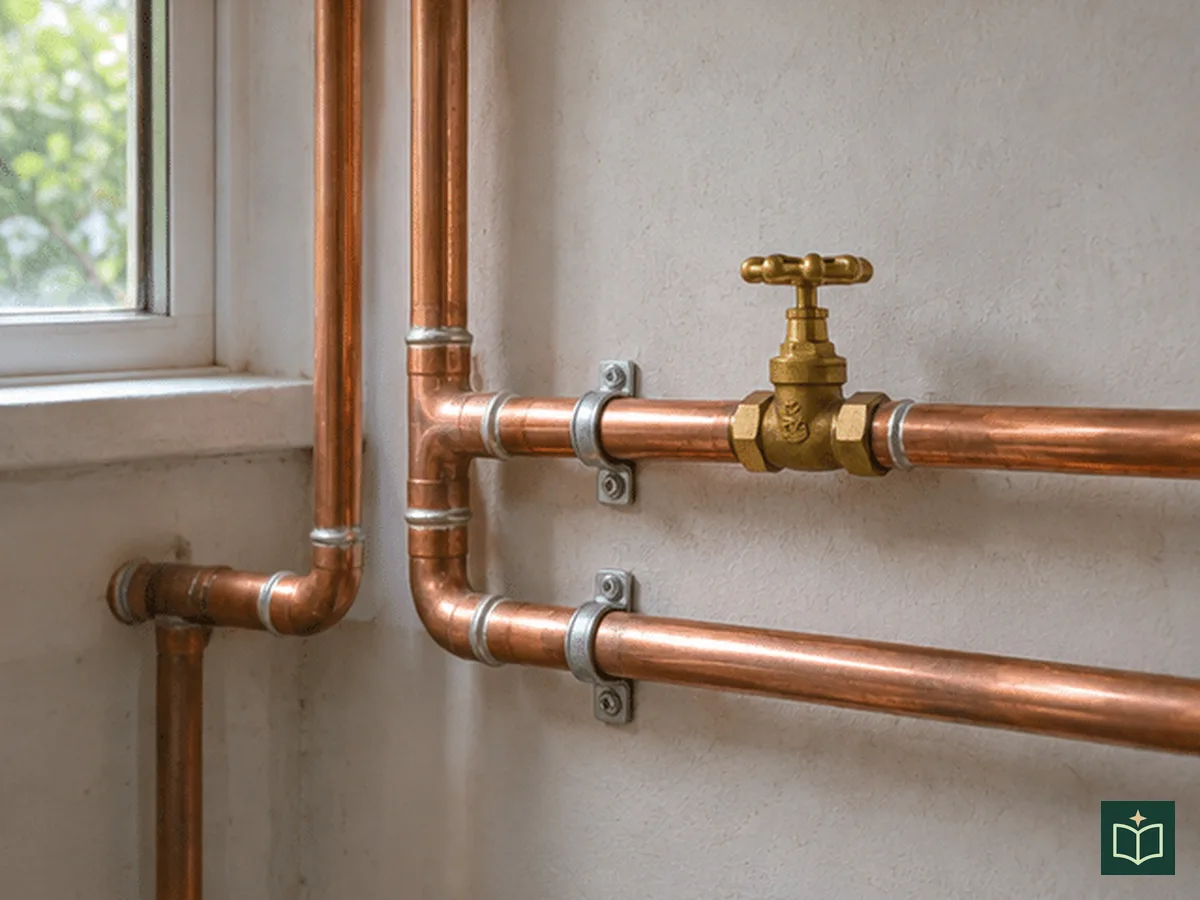
Most traditional copper plumbing uses capillary joints. The tube end and fitting are cleaned, coated with flux and heated with a torch until molten solder is drawn into the narrow gap between them. Since the 1980s, solder for drinking water in many countries has had to be lead-free, usually tin with small amounts of copper or silver. Brazing uses a hotter, stronger filler for refrigerant and gas lines. Compression fittings seal with a brass ring squeezed by a nut, without heat. Increasingly, installers use press fittings, which contain a rubber seal and are crimped onto the tube with a powered tool in seconds.
A worked example: expansion
Hot water makes pipes grow. Copper expands by about 0.017 millimetres per metre for each degree Celsius. A 20-metre hot-water run warming from 20 °C to 60 °C therefore lengthens by about 20,000 × 0.000017 × 40, or roughly 14 millimetres. A plastic such as PEX expands roughly ten times as much, so the same run could grow by around 120 millimetres. That is why long plastic runs need loops, slack or anchoring, while copper runs need fewer allowances. These figures are approximate and vary by product, but they show why installers treat the two materials differently, especially in hot climates where pipes may also warm up in roof spaces.
Where plastic is winning
Copper's main drawbacks are cost, skilled labour and occasional corrosion problems. Very soft or acidic water, or water flowing too fast, can cause pinhole leaks or a bluish stain on fixtures. Copper pipes are also a target for theft. Plastics have taken much of the market. PEX, a cross-linked polyethylene, comes in flexible coils that can run long distances with few joints and tolerate freezing. In the Gulf and many other regions, polypropylene pipe called PP-R, joined by melting the pipe and fitting together, is widely used in apartment buildings. Copper remains standard for air-conditioning refrigerant lines, where heat, pressure and leak-tightness matter most.
Health and good practice
Properly installed copper pipework is safe for drinking water. Copper is an essential nutrient, and the small amounts that dissolve normally sit well below the World Health Organization's guideline of 2 milligrams per litre. Levels can rise when water stands for long periods in new pipes or in corrosive water, which can cause a metallic taste or, at high levels, stomach upset. Running the cold tap briefly after water has stood overnight reduces this. Using approved lead-free solder and fittings, and certified materials for any pipe, matters more than the choice of metal or plastic. Anyone concerned about water quality should ask a qualified plumber or their water supplier.
Sources & further reading
- Copper Development Association ↗
- Britannica · Copper ↗
- World Health Organization · Water, sanitation and hygiene ↗
Figures are rounded and widely published; check the linked organisations for the latest editions. These organisations do not endorse this website.