What is a sea?
In everyday speech sea and ocean are often interchangeable, but geographers use sea for a smaller part of an ocean that is partly enclosed by land, islands or undersea ridges. The boundaries are largely conventional. The International Hydrographic Organization publishes the limits of oceans and seas used in nautical charting, but its main reference edition dates from 1953 and a later revision was never formally adopted. As a result, published areas differ by hundreds of thousands of square kilometres. This table excludes bodies of water named as bays or gulfs, such as the Bay of Bengal, and the Sargasso Sea, which is defined by ocean currents and has no coastline.
The Pacific giants
Four of the ten seas belong to the Pacific. The Philippine Sea, the largest, lies east of the Philippines and Taiwan and south of Japan. Its eastern edge holds the Mariana Trench, and it sits on a tectonic plate of its own. The Coral Sea, second, lies north-east of Australia and contains the Great Barrier Reef along its western margin. The South China Sea, fourth, is bordered by several countries and carries some of the world’s busiest shipping lanes; it is also the subject of overlapping territorial claims. The Tasman Sea, eighth, separates Australia from New Zealand and is known for its strong winds and heavy swells.
The Arabian Sea and the Gulf
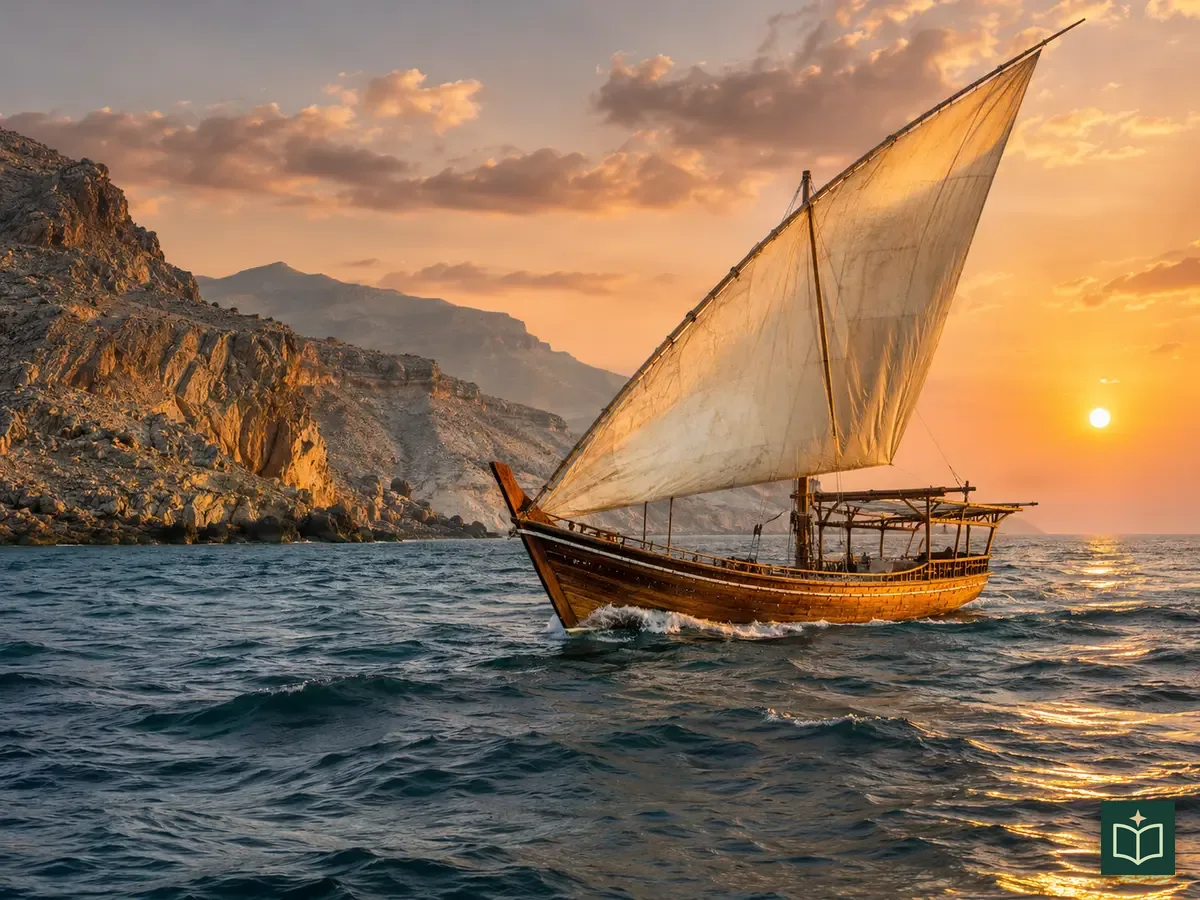
The Arabian Sea, third, is the region of the Indian Ocean bounded by the Arabian Peninsula, the Horn of Africa and the Indian subcontinent. Its seasonal monsoon winds powered dhow trade between Arabia, East Africa and India for centuries. To the north it narrows into the Gulf of Oman and, through the Strait of Hormuz, into the Gulf itself. The Gulf covers only about 250,000 square kilometres and averages roughly 50 metres deep, making it a shallow, warm and very salty basin by global standards. The Red Sea, on the other side of the peninsula, covers about 440,000 square kilometres and connects to the Arabian Sea through the Bab el-Mandeb strait.
Polar and Atlantic seas
The Weddell Sea, fifth, lies off Antarctica and is one of the main places where cold, dense water sinks to the deep ocean, helping to drive global ocean circulation. Much of it is covered by sea ice for most of the year. The Caribbean Sea, sixth, is bounded by the islands of the Antilles and the coasts of Central and South America. The Mediterranean, seventh, is almost entirely enclosed by land and connects to the Atlantic only through the Strait of Gibraltar, about 14 kilometres wide at its narrowest. In the north Pacific, the Bering Sea and the Sea of Okhotsk are both known for winter sea ice and rich fisheries.
Why the numbers disagree
Several entries are close enough for their order to change between sources. Estimates for the Bering Sea range from about 2.0 to 2.3 million square kilometres, which can place it level with or ahead of the Tasman Sea. If bays and gulfs were included, the Bay of Bengal, at roughly 2.2 million square kilometres, would enter the top ten, and some lists also include the Sargasso Sea near the top. Areas also depend on whether straits and smaller inner seas are counted as part of a larger one. The figures in this table are therefore rounded, and the ranking should be read as a broad picture rather than a precise league table.
Why seas matter
Seas are where most human interaction with the ocean happens. Their relatively shallow waters over continental shelves support many of the world’s most productive fisheries, and their coasts host major ports and cities. Shipping routes through the South China Sea, the Mediterranean and the Arabian Sea carry a large share of global trade, including much of the oil and gas exported from the Gulf. For Gulf states, the surrounding seas are also a source of drinking water, because desalination plants supply most of the water used in cities such as Dubai and Abu Dhabi. That makes the health of these marine environments a matter of everyday importance.
Sources & further reading
Figures are rounded and widely published; check the linked organisations for the latest editions. These organisations do not endorse this website.