How the ranking works
Cities are not flat, so giving a single elevation for a capital is an approximation. The figures in this table refer roughly to each city centre; outlying districts can be hundreds of metres higher or lower. La Paz, for example, spreads down a steep canyon from above 4,000 metres to around 3,200 metres. Thimphu, in Bhutan, climbs the sides of a Himalayan valley. Definitions of a capital also vary. Bolivia has two: Sucre is the constitutional capital, while La Paz is the seat of government, and both are included here. Using different reference points can shift a city’s figure by tens of metres, so the closest pairs on the list are effectively tied.
The Andean capitals
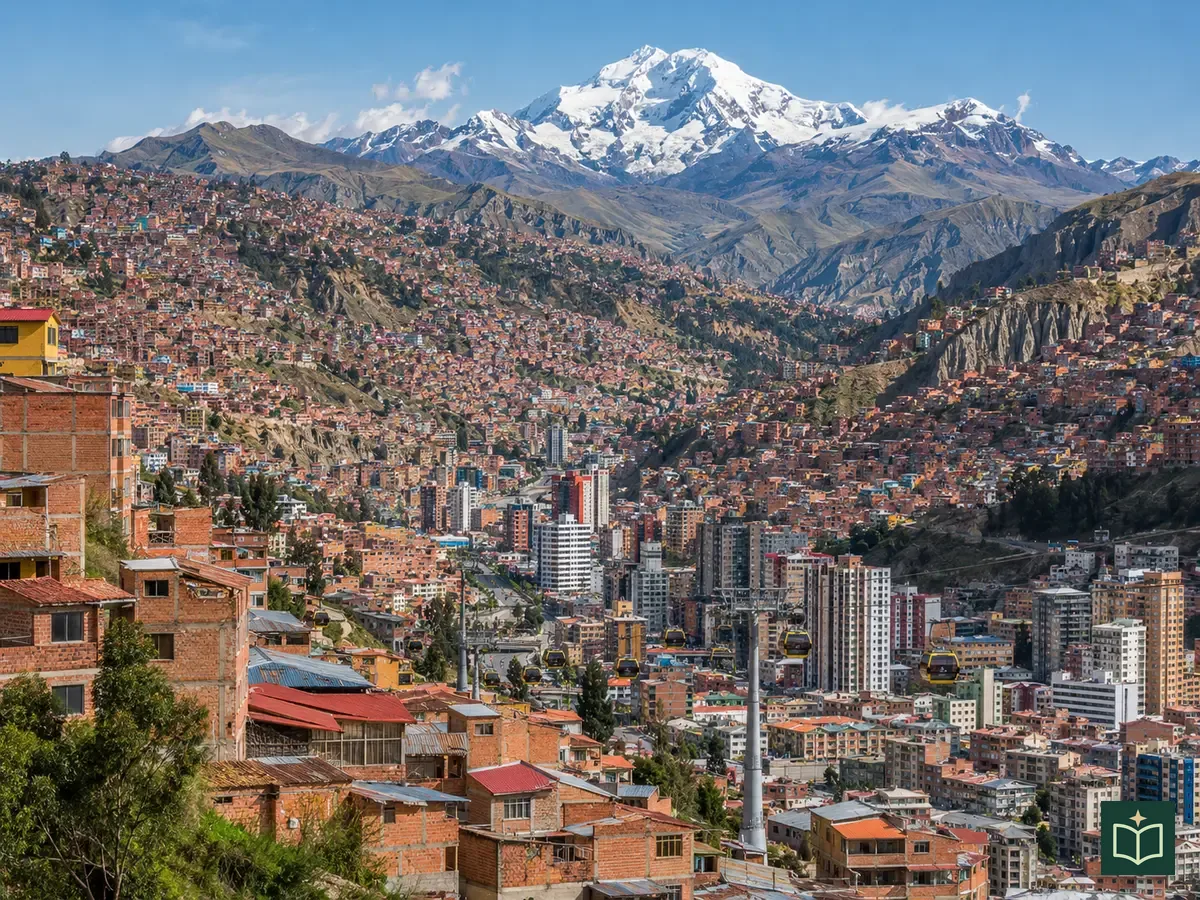
Four of the five highest capitals lie in the Andes. La Paz, the highest seat of government in the world, sits in a deep bowl below the Altiplano plateau, overlooked by the snow-capped peak of Illimani. Quito, in Ecuador, stands only a few kilometres from the equator, and its altitude gives it a mild climate year-round; its historic centre was among the first places inscribed on UNESCO’s World Heritage List. Sucre, Bolivia’s constitutional capital, is known for its whitewashed colonial architecture. Bogotá, with millions of residents, is one of the largest cities in the world at such a height and lies on a high plateau in the Colombian Andes.
Africa’s highland capitals
East Africa supplies three entries. Addis Ababa, founded in the late 19th century, is the capital of Ethiopia and the headquarters of the African Union; its name means new flower in Amharic. Asmara, the capital of Eritrea, sits on the edge of the highlands overlooking the Red Sea coast and is known for its early 20th-century modernist buildings, recognised by UNESCO as a World Heritage Site. Nairobi, Kenya’s capital, lies just below 1,800 metres, high enough to give the city a temperate climate despite being close to the equator. Kabul, in Afghanistan, is almost exactly the same height, and some lists place it tenth instead.
Asia and Mexico
Thimphu, Bhutan’s capital, lies in a Himalayan river valley and is one of the smaller capitals on the list. Sana’a, in Yemen, is one of the oldest continuously inhabited cities in the world; its old city, with distinctive multi-storey tower houses decorated in white gypsum, is a UNESCO World Heritage Site. Mexico City, ninth, is by far the largest city on the list. It was built on the bed of a former lake, Lake Texcoco, where the Aztec capital Tenochtitlan once stood. Pumping groundwater from the soft lake sediments has caused parts of the city to sink by many metres over the past century.
Altitude and the body
At high altitude air pressure is lower, so each breath carries fewer oxygen molecules. Visitors arriving quickly at La Paz or Quito often feel breathless, tired or headachy for the first few days, symptoms of mild altitude sickness. Doctors generally advise ascending gradually where possible, drinking enough water and avoiding heavy exertion at first, and people with heart or lung conditions should seek medical advice before travelling. Over weeks the body adapts by producing more red blood cells. Lower pressure also lowers the boiling point of water by roughly 1 °C for every 300 metres of height, which is why cooking times are longer in high capitals.
The view from the Gulf
Gulf cities such as Dubai, Abu Dhabi and Doha sit almost at sea level, so travellers from the region experience a large change when they fly to high capitals. Riyadh, at about 600 metres, is higher than most Gulf capitals but still far below the cities in this table. Within the Arabian Peninsula itself, Sana’a is the highest capital, and Saudi Arabia’s mountain city of Abha, at more than 2,000 metres, is a popular summer escape because its altitude keeps temperatures much cooler than on the coast. Altitude, in other words, is one of the simplest ways nature offers relief from heat in a hot region.
Sources & further reading
Figures are rounded and widely published; check the linked organisations for the latest editions. These organisations do not endorse this website.