An inland sea of islands
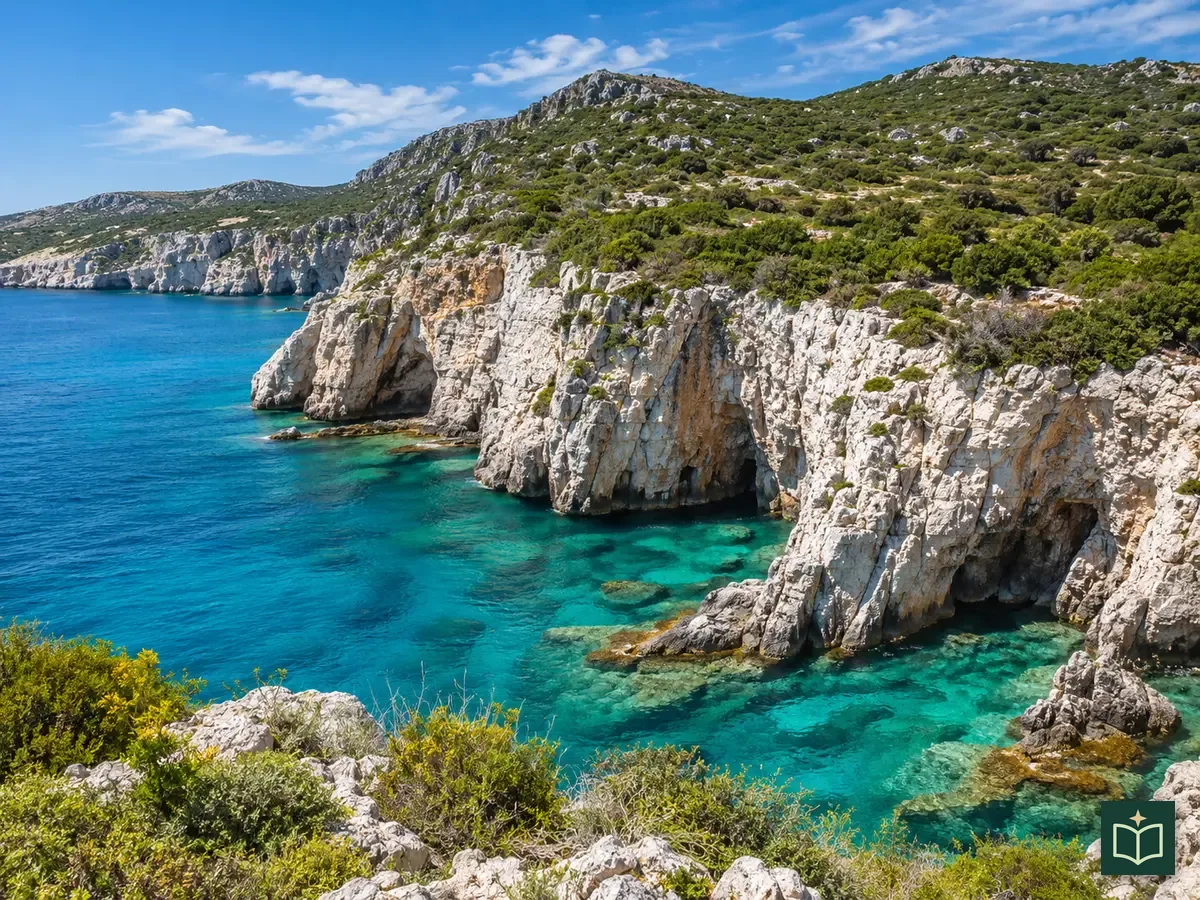
The Mediterranean covers about 2.5 million square kilometres and contains thousands of islands and islets, most of them tiny. The ten largest account for the great majority of its island land. They belong to five countries: Italy, Cyprus, France, Spain and Greece, which has five entries on its own. Figures here are the land area of each main island, excluding small offshore islets, and can vary by a few per cent between sources depending on how intricately the coastline is measured. The size gap is striking. Sicily and Sardinia are each more than two and a half times the size of Cyprus, the third-largest island in the sea.
Sicily and Sardinia
Sicily, at the toe of Italy’s boot, is the largest island in the Mediterranean and home to Mount Etna, one of the most active volcanoes on Earth. Etna stands at around 3,300 metres, a height that changes with its eruptions. Sardinia, only slightly smaller, is far less densely populated, with roughly 1.6 million people. Geologically the two are very different. Sicily lies close to the boundary where the African and Eurasian plates converge. Sardinia and neighbouring Corsica, by contrast, are a block of old continental crust that broke away from the coast of what is now southern France and Spain and rotated eastwards some 20 million years ago.
Cyprus, Corsica and Crete
Cyprus, third, lies in the eastern Mediterranean about 75 kilometres south of the Turkish coast. Its Troodos Mountains preserve one of the best-studied slices of ancient ocean floor pushed up onto land, and the copper ores found there were so famous in antiquity that the Latin word for copper derives from the island’s name. The area given here covers the whole island, regardless of its political divisions. Corsica, fourth, is the most mountainous of the large islands, with peaks above 2,700 metres. Crete, fifth, stretches about 260 kilometres from west to east and was the heartland of the Minoan civilisation more than 3,500 years ago.
Greek and Spanish islands
Euboea, sixth, lies so close to the Greek mainland that bridges cross the narrow Euripus Strait, a channel famous since antiquity for its rapidly reversing currents. Mallorca, the largest of Spain’s Balearic Islands, is almost exactly the same size and is one of Europe’s busiest holiday destinations. The remaining three entries, Lesbos, Rhodes and Chios, lie in the eastern Aegean, within sight of the Turkish coast. Each has a long history as a trading hub between Europe and Asia. Just below the top ten sit Kefalonia and Menorca, a reminder of how quickly island size falls away once the largest Mediterranean islands have been counted.
Why the numbers vary
Several pairs on this list are close enough for sources to disagree about their order. Euboea and Mallorca differ by less than 100 square kilometres, and some references place Crete ahead of Corsica because they measure Crete’s area slightly more generously. Coastline detail is the main reason: rocky, indented shores such as those of the Greek islands can yield different totals depending on map scale. Shifting shorelines at river mouths and lagoons add small uncertainties. Rounding, as here, avoids implying precision that the data cannot support, while still showing the overall shape of the ranking: two giants, three mid-sized islands and then a long tail of smaller ones.
Crossroads of civilisations
Because of their positions, these islands have been crossroads for traders, empires and faiths for thousands of years. Phoenicians, Greeks, Romans, Byzantines, Arabs, Normans and Venetians all left their marks. Arab rule in Sicily from the 9th to the 11th centuries brought new crops, irrigation methods and words that still shape Sicilian farming, cuisine and place names. Today the islands are popular with travellers from the Gulf, with direct and one-stop flights from the UAE reaching most of them within a few hours. They also face shared modern pressures, including water scarcity, wildfires and heavy summer tourism, which make them closely watched case studies of Mediterranean climate change.
Sources & further reading
Figures are rounded and widely published; check the linked organisations for the latest editions. These organisations do not endorse this website.