The Cullinan
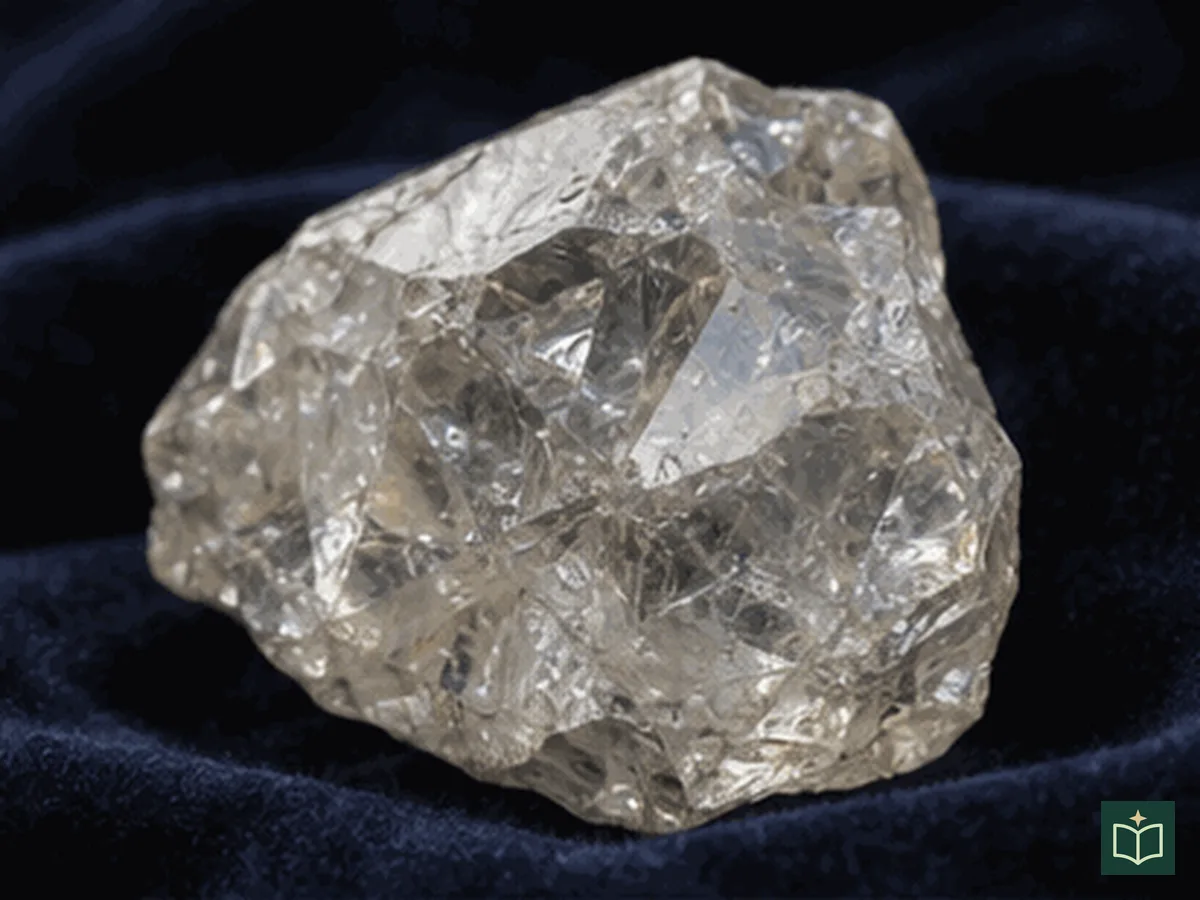
In January 1905 a mine manager at the Premier mine near Pretoria, South Africa, noticed a glint in the wall of the open pit and pulled out a diamond weighing 3,106 carats, about 621 grams. It was named after the mine’s owner, Thomas Cullinan. The Transvaal government bought it and presented it to King Edward VII. In 1908 it was cut in Amsterdam into nine major stones and about 100 smaller ones. The two largest, Cullinan I, also called the Great Star of Africa, at about 530 carats, and Cullinan II, at about 317 carats, are set in the British Crown Jewels, displayed at the Tower of London.
Botswana’s remarkable mine
Five of the ten stones in the table come from Botswana, and four from a single mine, Karowe, operated by Lucara Diamond. In 2015 Karowe produced Lesedi La Rona, at 1,109 carats, then the largest gem-quality diamond found in more than a century. It was sold to the jeweller Graff, which cut it into a 302-carat stone and many smaller gems. Sewelô, at 1,758 carats, followed in 2019, but it is coated with dark carbon and its quality is lower. In 2024 the mine produced a 2,492-carat diamond, the second-largest ever recorded. Botswana’s President described it as the largest diamond found in more than 100 years.
Finding stones before they break
Why have so many giant diamonds been found recently? Part of the answer is technology. Traditional processing crushes ore into small pieces to release diamonds, which can break large stones. Karowe and other mines have installed X-ray sorting machines, which detect diamonds by the way they glow under X-rays, allowing large stones to be removed before crushing. Lucara has said its 2024 stone was recovered by X-ray technology installed in 2017. Some large finds are pieces of even bigger crystals. Lucara’s 1,174-carat stone of 2021, for example, appears to have been part of a much larger diamond that broke during mining or processing.
Old finds and their fates
Before the Botswana discoveries, the largest stones were found mainly in South Africa and West Africa. The Excelsior, at 995 carats, was found in 1893 at Jagersfontein in South Africa and was later cut into about twenty smaller diamonds. The Star of Sierra Leone, at 969 carats, came from alluvial gravels in 1972 and was cut into seventeen stones. The Incomparable, at 890 carats, was reportedly found by a girl in a pile of mining waste in what is now the Democratic Republic of the Congo; its largest cut stone is a 407-carat yellow diamond. The Lesotho Legend, at 910 carats, sold for about 40 million US dollars in 2018.
How a diamond becomes a gem
A rough diamond loses much of its weight when cut. Cutters study the stone’s shape, internal flaws and colour, often for months, before deciding how to divide it. They use lasers and diamond-tipped saws, and the final facets are polished on a spinning wheel coated with diamond powder, since only diamond can grind diamond. It is common to lose half or more of the rough weight. The aim is to produce stones that reflect and scatter light well, not to keep as much weight as possible. That is why a 3,106-carat rough diamond became a largest cut stone of about 530 carats, and many smaller gems besides.
Limits of the list
The table ranks gem diamonds and near-gem stones by rough weight. It leaves out carbonados, porous black diamonds found in Brazil and Central Africa, one of which, the Sergio, weighed about 3,167 carats. Carbonados are aggregates of tiny crystals rather than single gem crystals, so they are usually treated separately. Some historical stones, such as the Great Mogul described by a seventeenth-century traveller in India, are known only from written accounts and cannot be verified. Records also depend on miners making finds public, and some large stones may never have been announced. Even so, the Cullinan’s record has stood for well over a century.
Sources & further reading
- Royal Collection Trust · The Cullinan diamonds ↗
- Gemological Institute of America · Diamond ↗
- Britannica · Cullinan diamond ↗
Figures are rounded and widely published; check the linked organisations for the latest editions. These organisations do not endorse this website.