The material recovery facility
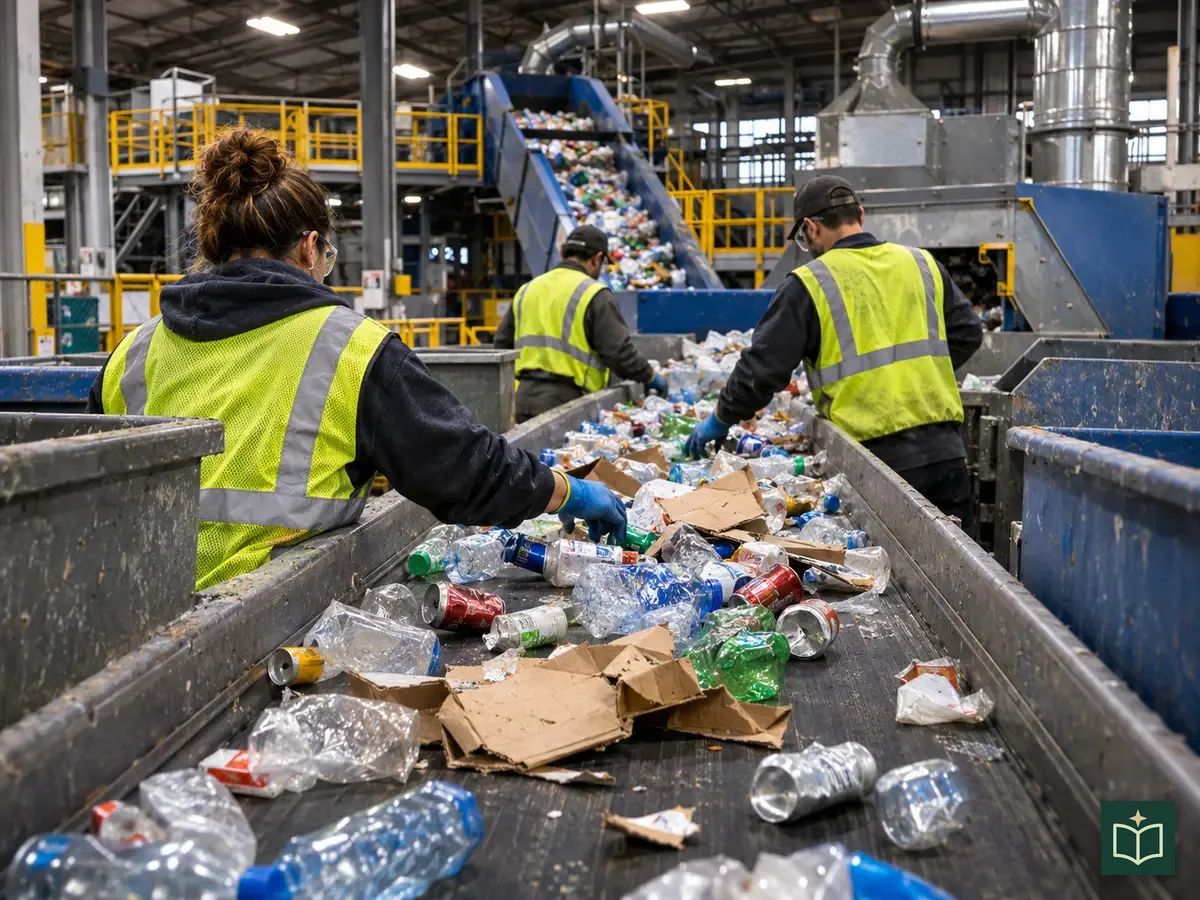
Mixed recycling collected from homes goes to a material recovery facility, often abbreviated to MRF. Here a mixture of paper, cardboard, plastic bottles, cans, cartons and sometimes glass must be divided into separate, clean streams that manufacturers will buy. The plant is essentially a long sequence of machines, each exploiting a different physical property to pull one material out of the flow. Lorries tip their loads onto a floor, and loaders push the material onto conveyors. Workers at the first station remove items that could damage machinery or harm staff, such as plastic bags, hoses, textiles and, increasingly, batteries, which can start fires when crushed.
Shape, size and weight
Early stages separate by shape. Large rotating drums with holes, called trommels, let small items fall through. Inclined screens made of spinning discs carry flat paper and card upwards while round bottles and cans roll or bounce down. Air classifiers blow light material away from heavier items. These steps produce a paper stream and a container stream, though neither is yet pure. Cardboard, which is valuable, may be pulled off early by a dedicated screen. Throughout the plant, conveyors move material at carefully controlled speeds, because separation works best when items are spread out in a single layer rather than piled on top of one another.
Magnets, currents and light
Metals are separated using physics. An overhead magnet lifts steel cans out of the container stream. Aluminium is not magnetic, so plants use an eddy current separator, a rapidly spinning magnetic rotor that induces currents in aluminium cans and briefly turns them into magnets that repel themselves off the belt. Plastics are separated by optical sorters, which shine light on each item and read its reflected near-infrared signature to identify the polymer, such as PET from water bottles or HDPE from milk containers. Within milliseconds, a precisely timed jet of compressed air knocks the identified item into the correct bin. Workers then check quality by hand.
Contamination is the enemy
The biggest problem for recycling plants is contamination: food waste, liquids, the wrong materials and items that look recyclable but are not. A greasy pizza box can spoil paper fibres; a bottle of liquid can soak a bale of card. The numbered triangle on plastic packaging identifies the resin type, but it does not mean the item is accepted in your local scheme. Buyers pay according to purity, and heavily contaminated bales may be rejected and sent to landfill or incineration. In the UAE, where municipalities and emirates run different collection systems, checking local guidance on what goes in each bin makes the whole chain work better.
Where materials go next
Sorted materials are compressed into dense bales and sold on commodity markets. Paper and card go to mills to be pulped into new paper. Aluminium cans can be melted and turned into new cans, saving around 95 per cent of the energy needed to make metal from ore. Glass is crushed into cullet and remelted. Clear PET bottles can become new bottles or polyester fibre, while mixed plastics have fewer and lower-value uses. Prices for these materials rise and fall with demand, which affects whether recycling makes money. When markets for a material collapse, as happened for some plastics in the late 2010s, councils and operators face difficult choices.
Limits and what to watch
Recycling rates vary enormously between materials. Metals and glass can be recycled repeatedly with little loss of quality, while paper fibres shorten each time and most plastics degrade. Globally, only a small share of all plastic ever produced has been recycled. Policies such as deposit return schemes for bottles and cans, now operating in many countries, produce cleaner material by collecting it separately. Extended producer responsibility rules make manufacturers pay for the waste their packaging creates. Chemical recycling of plastics is being developed but remains debated. Reducing and reusing materials still sit above recycling in the waste hierarchy, because they avoid the costs of collection and processing.
Sources & further reading
Figures are rounded and widely published; check the linked organisations for the latest editions. These organisations do not endorse this website.