Why networks use cells
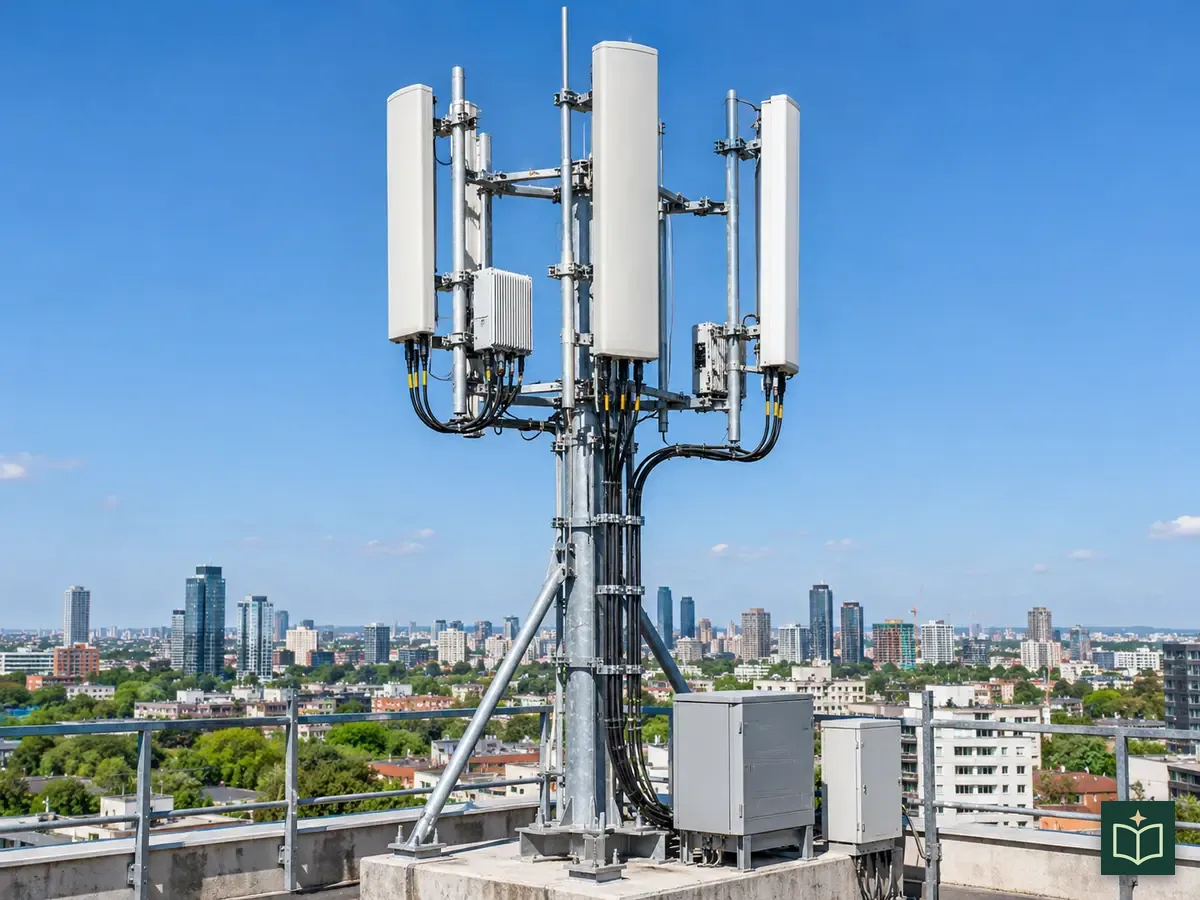
Radio spectrum is limited, so a mobile network cannot give every user a dedicated frequency across a whole country. The solution, developed in the mid twentieth century, is to divide an area into small zones called cells, each served by an antenna site, often loosely called a mast. Each cell uses a portion of the available frequencies at low power, and cells far enough apart can reuse the same frequencies without interfering. Small cells allow far more users in a given area. That is why dense city centres have masts on rooftops and lamp posts every few hundred metres, while rural cells can stretch for many kilometres.
Finding your phone
When your phone is switched on, it listens for nearby cells and attaches to the best one. It does not report its exact position constantly, which would waste battery and network capacity. Instead, cells are grouped into tracking areas, and your phone updates the network only when it enters a new one, or at regular intervals. When someone calls you, the network pages your phone across the cells of your last known tracking area. Your phone hears the page, responds and a connection is set up. A central database holds your subscription details and current location, allowing calls and messages to find you anywhere on the network.
The handover
During a call or data session, your phone continuously measures signal quality from its serving cell and from neighbouring cells, reporting the results to the network. When a neighbour becomes clearly stronger, perhaps because you are driving along a motorway, the network instructs your phone to switch. Modern networks prepare the new cell in advance and complete the switch in a fraction of a second, so the conversation continues without a noticeable gap. Handover can also move a phone between frequency bands or between generations of technology, for example from a 5G layer to a 4G layer when coverage thins out. Engineers tune these settings carefully.
Roaming across borders
When you travel abroad, your phone attaches to a foreign network that has a roaming agreement with your home operator. The visited network contacts your home network’s database to check your subscription, and calls and data are then routed and billed between the two operators. Industry bodies such as the GSMA set technical and commercial standards that make this possible worldwide. In the Gulf, where many residents travel frequently and regional roaming arrangements exist between some countries, roaming is a significant part of mobile use. Charges can still be high in some cases, so many travellers buy local SIM cards or digital eSIM plans on arrival.
Misconceptions and limits
Signal bars on your phone are only a rough guide, showing received signal strength rather than how fast your connection will be. A strong signal in a crowded stadium may still be slow because many people share the same cell’s capacity. Calls drop when handover fails, often at the edge of coverage, in lifts or underground, or when a neighbouring cell is full. Masts emit radio waves at power levels well within international exposure guidelines, according to health and radiation protection bodies. Phone location data held by networks is also more approximate than satellite positioning, although it can be refined, for example for emergency calls.
What to watch
Networks are adding more small cells and using higher frequencies to increase capacity, which makes handover management more complex and more important. Software increasingly decides how to balance load between cells and frequencies automatically. Satellite connections to ordinary smartphones are beginning to fill gaps in remote areas, initially for messaging and emergencies. Older 2G and 3G networks are being switched off in many countries, including some Gulf markets, to free up spectrum for newer technology, which matters for older devices and some machines that rely on them. Behind each smooth call lies a carefully engineered relay that most people never think about.
Sources & further reading
- ITU · International Telecommunication Union ↗
- GSMA · Mobile industry ↗
- Britannica · Mobile telephone ↗
Figures are rounded and widely published; check the linked organisations for the latest editions. These organisations do not endorse this website.