A patchwork of plugs
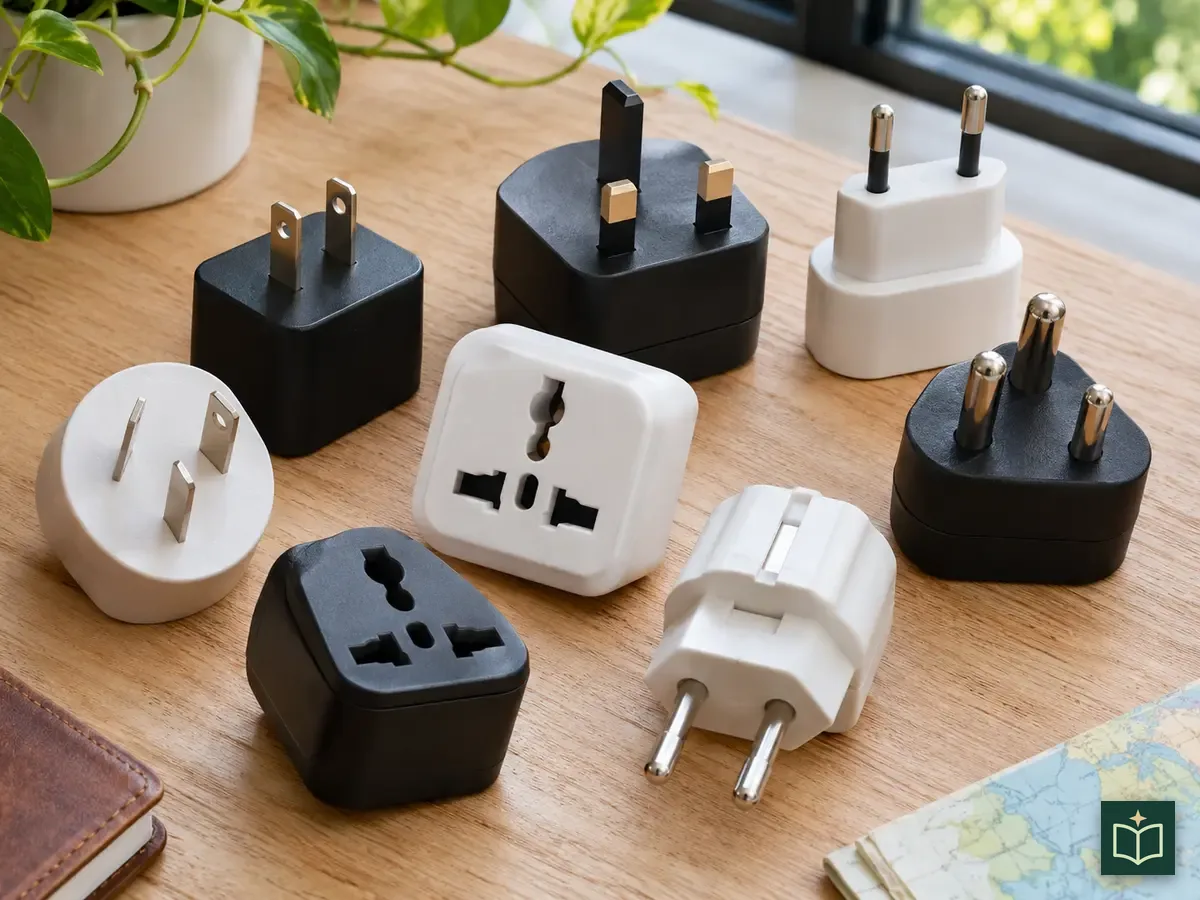
Travel between a few countries and you will meet sockets with flat pins, round pins, angled pins and three rectangular pins. The International Electrotechnical Commission catalogues more than a dozen common types, labelled with letters from A onwards. Type A and B, with flat parallel pins, are used in North America and Japan. Types C, E and F, with round pins, dominate continental Europe. Type G, with three rectangular pins, is standard in the United Kingdom, Ireland, the UAE and several other Gulf and Commonwealth countries. India and parts of Africa use Type D, and Australia uses Type I. Some countries have several types in use at once.
Why the differences arose
Electricity spread to homes in the late nineteenth and early twentieth centuries, long before international standards bodies existed. Early appliances were often wired directly or plugged into light sockets. Manufacturers and national utilities then developed their own plugs, and governments wrote rules around them. The voltages also differed. Many early American systems used around 110 volts, a legacy of Thomas Edison’s direct-current networks, while European utilities later chose higher voltages around 220 to 240 volts, which allowed thinner wires to carry the same power. Once millions of buildings had been wired, changing their sockets became prohibitively expensive, so early decisions hardened into lasting national standards.
Voltage and frequency
Shape is only part of the story. Most of the world supplies alternating current at 220 to 240 volts, while North America, parts of Central and South America, and Japan use 100 to 127 volts. Frequency also varies: 50 hertz in most countries and 60 hertz in the Americas and some others. Japan is unusual in using both, with 50 hertz in the east and 60 hertz in the west, because different regions originally bought generators from German and American suppliers. Saudi Arabia historically used a mix of voltages and has been converting to a single standard. These differences matter for motors, clocks and equipment that is not designed to adapt.
Safety by design
Some plug designs include safety features that others lack. The British-style Type G plug, defined by a standard known as BS 1363 and used in the UAE, contains a fuse inside the plug that protects the cable of the appliance. Its sockets have shutters that open only when the longer earth pin is inserted, making it harder for children to push objects into live holes. The pins are partly sleeved so that fingers cannot touch live metal when a plug is half-inserted. Other systems use different approaches, such as recessed sockets in Europe. Using poorly made adapters or overloading extension leads undermines these protections and is a common cause of electrical fires.
Adapters and converters
A travel adapter changes only the shape of the connection; it does not change voltage. Most phone chargers and laptop power supplies accept a wide range from about 100 to 240 volts, so an adapter is enough, and the rating is usually printed on the charger. Appliances with heating elements or motors, such as hair dryers, kettles and some kitchen equipment, may be designed for one voltage only and can be damaged, or become dangerous, if plugged into the wrong supply. They require a voltage converter or a dual-voltage model. Checking the label on the device before travelling is the simplest way to avoid problems, and avoiding cheap, uncertified adapters is wise.
Will the world ever agree?
There have been attempts at a universal plug. The IEC published a design known as Type N, adopted mainly by Brazil and South Africa, but most countries saw little reason to replace existing sockets. The cost of rewiring buildings, retraining electricians and replacing appliances far outweighs the inconvenience to travellers. Instead, convergence is happening at the device level. USB-C charging, now required for many small electronic devices in the European Union, means that the same charging cable works almost everywhere, with the wall adapter alone varying. For the foreseeable future, though, the patchwork of sockets will remain a familiar reminder that infrastructure outlives the decisions that created it.
Sources & further reading
Figures are rounded and widely published; check the linked organisations for the latest editions. These organisations do not endorse this website.