From plant to pipe
Once water has been treated, whether from rivers, groundwater or desalination plants, it must travel to millions of taps. Large trunk mains carry it from the treatment works to service reservoirs, which store a day or more of supply and smooth the gap between steady production and fluctuating demand. Demand peaks in the morning and evening and dips overnight, so reservoirs fill when use is low and empty when it is high. From these reservoirs, a branching network of smaller pipes runs beneath streets to individual buildings. A city’s pipe network can stretch for thousands of kilometres, much of it decades old and almost entirely out of sight.
Why pressure matters
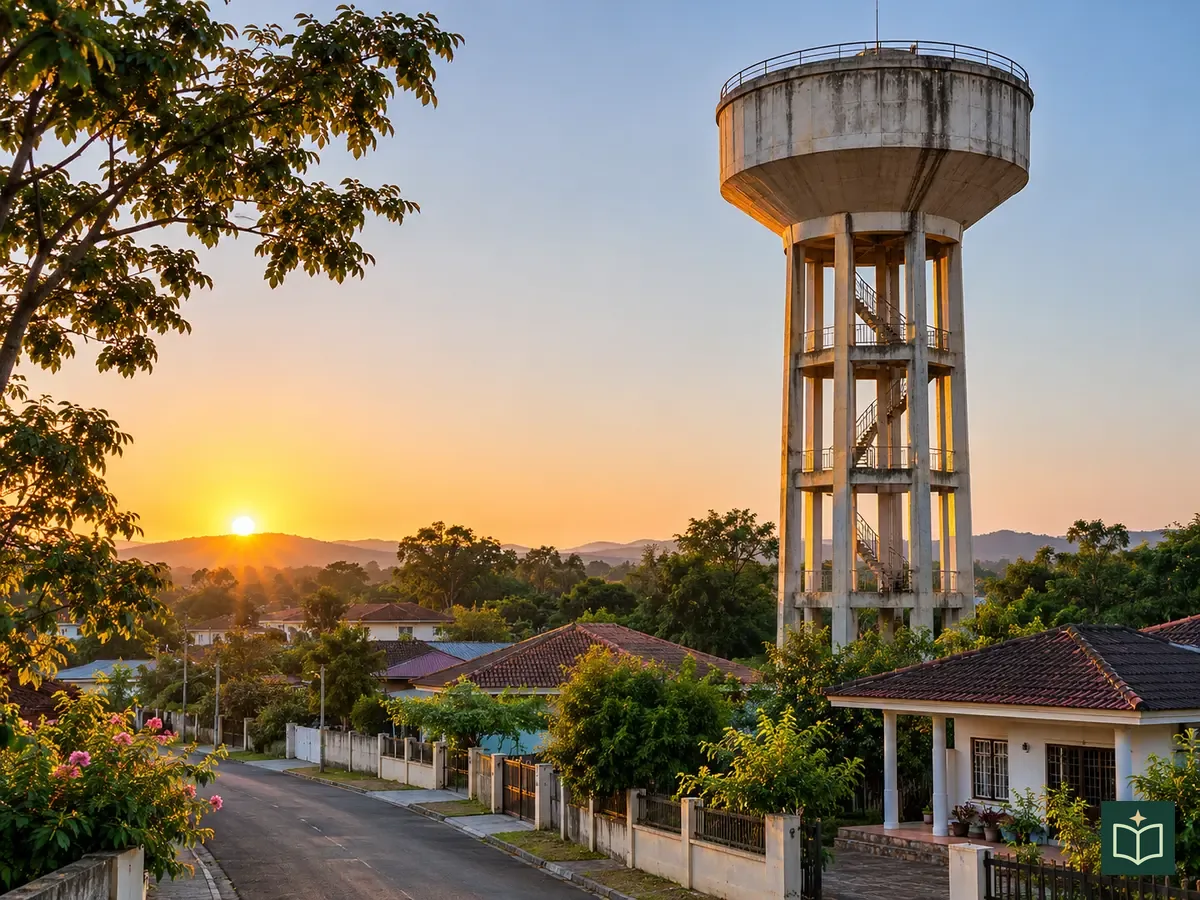
Water flows from high pressure to low. Utilities create pressure either by height or by pumping. A water tower or hilltop reservoir uses gravity: every 10 metres of height adds about one bar of pressure at ground level. Flat cities rely more on pumping stations, which push water into the network and into elevated tanks. Pressure must be high enough to reach upper floors and supply firefighting hydrants, but not so high that it strains pipes and increases leakage. Tall buildings, common in Gulf cities, usually have their own pumps and rooftop or intermediate tanks to lift water to upper floors, as the street network alone cannot reach them.
Keeping water safe
Treated water can become contaminated on its way to the tap, so networks are designed to prevent that. Most utilities leave a small residual of chlorine or a related disinfectant in the water to suppress microbes along the pipes. Positive pressure is itself a safety feature: as long as water is pushing outwards, dirty groundwater cannot seep in through cracks. Utilities sample water at many points across the network, testing for bacteria and chemical quality. Valves called backflow preventers stop water from buildings or irrigation systems flowing back into the mains. The World Health Organization publishes guidelines that many countries use as the basis for their drinking water standards.
The battle against leaks
Every water network leaks to some degree. Water that is produced but not billed, through leaks, bursts, theft or faulty meters, is called non-revenue water, and in some cities it reaches a large fraction of total supply. Finding leaks is difficult because pipes are buried. Utilities divide networks into zones with meters at their boundaries, so a rise in night-time flow, when few people use water, points to a leak. Acoustic sensors listen for the hiss of escaping water, and some utilities use satellite data and smart meters. Dubai’s utility has invested heavily in monitoring and has reported low loss levels by international standards.
Misconceptions
Many people assume that low pressure means a shortage, but it is often caused by a local fault, a closed valve or high demand in a particular area. Discoloured water after works usually comes from disturbed sediment rather than contamination, though utilities advise reporting it. Tap water in many cities meets strict standards, yet building tanks and internal plumbing can affect quality between the meter and the tap, which is why landlords and building managers are responsible for maintaining them. In the UAE, building tanks should be cleaned regularly. If you have concerns about your tap water, your local utility or health authority is the best source of advice.
Why it matters
Water networks are among the most valuable assets a city owns, yet they are easy to neglect because they are buried. Pipes laid generations ago are reaching the end of their lives in many countries, and replacing them is costly and disruptive. Climate change, population growth and rising demand make every litre lost more expensive, especially where water comes from energy-intensive desalination. Smart meters, pressure management and better data are helping utilities squeeze more out of existing networks. For residents, fixing dripping taps and leaking cisterns matters too: a small, constant leak inside a home can waste a surprising amount of water over a year.
Sources & further reading
Figures are rounded and widely published; check the linked organisations for the latest editions. These organisations do not endorse this website.